I’ll never forget the exact moment my stomach dropped into my shoes. I was at a neighborhood potluck, enjoying a piece of crusty sourdough, when I felt a subtle, sickening “squish” under my gums. My dental bridge—the one I’d barely thought about for five years—had shifted. My first instinct wasn’t to call my dentist; it was to tell myself a lie. “It’s fine,” I thought. “I’ll just be careful.” I spent the next three weeks playing a dangerous game of “wait and see,” treating my mouth like a fragile vase. I made the classic mistake of thinking that if it didn’t hurt yet, it wasn’t an emergency. By the time I finally sat in that chair, a simple recementing job had turned into a much more expensive fight to save the anchor teeth. Today, I’m going to show you why that “wiggle” is actually a ticking clock and how you can save your smile before the damage becomes permanent. [image_placeholder]
The hidden damage happening while you wait
The reality is that a bridge doesn’t just get “a little loose” and stay that way. When that seal breaks, it creates a microscopic playground for bacteria. I learned the hard way that food trapped under a bridge you can’t even see is basically a slow-motion wrecking ball for your oral health. When my bridge started feeling off, I thought I could just clean under the bridge better to fix it. I was wrong. The gap allowed plaque to reach parts of my natural teeth that hadn’t seen the light of day in years, leading to decay that was nearly impossible to treat without removing the whole structure. Have you ever felt that tiny shift while chewing and tried to convince yourself it was just your imagination? Or maybe your bridge feels loose every time you eat sticky bread, but then it seems to “settle” back into place? Don’t let that fool you.
Will this really cost me my whole smile if I wait?
It might not feel like a “bleeding and screaming” emergency, but from a clinical perspective, it absolutely is. According to the American Academy of Periodontology, untreated infections in the oral cavity can lead to significant bone loss in a surprisingly short amount of time. If you wait until the bridge actually falls out in your hand, you might discover that the risk of leaving a missing tooth unreplaced has doubled because the anchor teeth are now too weak to support a new one. I once thought I was saving money by skipping an “unnecessary” visit, but I ended up facing the prospect of dental implants instead of a simple repair. We’re going to walk through the signs you need to look for right now so you don’t end up in my old shoes.
Give it the gentle finger test
You need to know exactly how much movement you are dealing with. Don’t use your tongue to poke at it; your tongue is surprisingly strong and can actually worsen the leverage that is prying the bridge loose. Instead, wash your hands and use your index finger to apply very light pressure to the pontic—that is the fake tooth in the middle. If you see bubbles at the gum line or feel a slight ‘click,’ the cement seal has failed. I remember trying to ‘re-seat’ mine by biting down hard on a piece of folded paper towel, thinking I could just press it back into place. That was a huge mistake. All I did was put uneven pressure on the anchor teeth, which made the underlying sensitivity much worse. If you notice a gap that appeared between your gums and your new bridge, you are likely looking at a structural shift rather than just a loose bond.
Whatever you do, put the superglue away
It sounds like a joke, but dentists see this all the time. People get desperate on a Friday night and reach for household adhesives. Do not do this. Household glues are toxic, and more importantly, they are permanent in all the wrong ways. If you glue that bridge back in crooked, your dentist might have to literally break it—and possibly your anchor teeth—to get it back off. If your bridge actually comes out, clean it gently with a toothbrush and store it in a plastic baggie. You can find temporary dental cement at most pharmacies, which is a much safer ‘band-aid’ solution. I once tried using sugar-free gum as a temporary adhesive when I was out at dinner; it lasted exactly ten minutes before I almost swallowed the entire bridge while trying to drink water. It was embarrassing and dangerous. 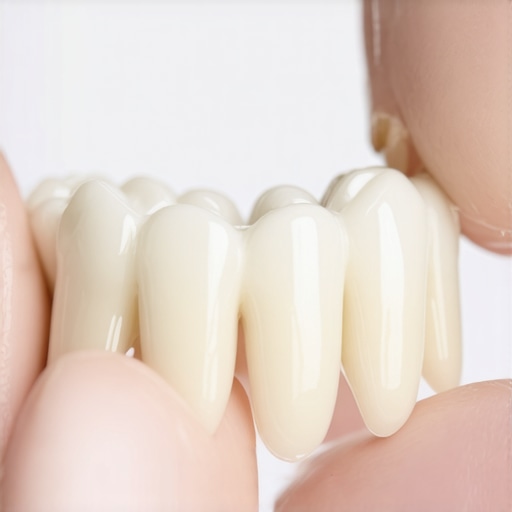
Keep the area sterile until you reach the chair
Since you now have an open gateway for bacteria, your hygiene game needs to level up instantly. You are essentially managing a ‘semi-open’ wound. Use a salt-water rinse three times a day to keep the bacterial load down. This is also the time to be incredibly meticulous about how you clean under a dental bridge. Use a water flosser on the lowest setting or a very soft proxy brush. Avoid the ‘shredding’ effect of cheap floss, which can get caught in the loose cement and pull the bridge further away from the abutment. This is a core part of family dentistry—teaching that prevention during a crisis is just as important as the repair itself.
Fixing the seal or starting fresh
When you finally get into the office, the solution usually falls into two camps: recementing or replacement. If the anchor teeth are still healthy and the bridge itself isn’t damaged, a professional cleaning and high-grade dental cement can have you back to normal in thirty minutes. However, if decay has started under the crown, you might be looking at veneers vs crowns discussions to rebuild the support. In cases where the anchor tooth has snapped, we often look toward the future of dental implants as a more permanent fix. It is important to remember that the lifespan of a dental implant often exceeds that of a traditional bridge because it doesn’t rely on the health of neighboring teeth. If you find that your dental implant feels loose later on, that’s a different protocol entirely, but for a traditional bridge, the goal is always to protect the natural roots first.
Let’s dig deeper into the biggest lie told in the waiting room: the word “permanent.” We often treat high-end cosmetic dentistry like a one-time purchase, a set-it-and-forget-it solution. But here is the contrarian truth: your dental work is only as permanent as the bone and gums supporting it. I’ve seen patients assume that because a crown or a bridge is made of porcelain, it’s invincible. While the ceramic can’t get a cavity, the living tooth underneath is more vulnerable than ever. If you don’t master the 3 secrets to making your porcelain veneers last twenty years, you are essentially building a mansion on a foundation of sand.
Stop treating your new smile like a bulletproof vest
The most common “oops” factor I see is the psychological trap of perceived strength. People get a bridge or a set of veneers and suddenly feel they can skip the meticulous care they gave their natural teeth. A study published in the Journal of Prosthodontic Research indicates that the primary failure point for fixed prosthodontics isn’t mechanical breakage, but rather secondary caries—decay that sneaks in at the margin where the bridge meets the gum. When you use your teeth as tools to open plastic bags, you aren’t just risking a chip; you are creating microscopic fractures in the cement seal that allow bacteria to migrate inward.
Can you actually feel the difference between an implant and a natural root?
This is the question that separates the beginners from those truly invested in their oral health. Natural teeth are surrounded by a periodontal ligament that acts like a shock absorber and sends sensory feedback to your brain. Dental implants lack this ligament, which is exactly the reason your dental implant feels different than a natural tooth when you bite down. Because you lose that “tactile sense,” it is dangerously easy to exert too much pressure on an implant-supported bridge without realizing it. This mechanical overload is a silent killer of many beautiful smiles. 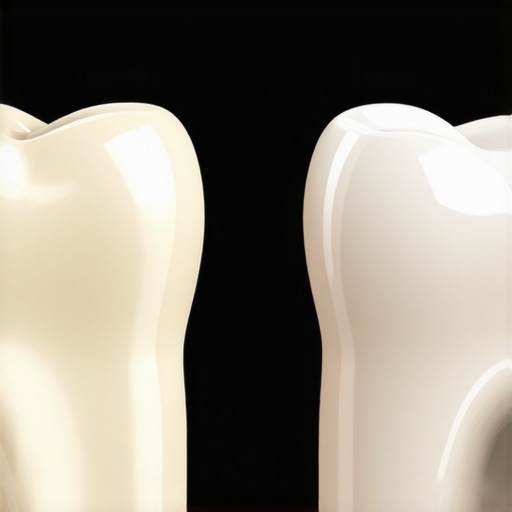
The trap of opaque and bulky restorations
Another nuance that many people miss in the pursuit of perfection is the “Chiclet effect.” We often want the whitest teeth possible, but why your veneers look too opaque usually comes down to a lack of translucency. Real teeth have depth; they reflect light in layers. If a bridge or veneer is made too thick to cover up a dark anchor tooth, it looks artificial and can even lead to speech issues, such as why your veneers feel thick and bulky when you try to say the letter s. Choosing between veneers vs crowns isn’t just about aesthetics; it’s a structural decision that affects how your bite distributes weight across your entire jaw. Have you ever fallen into the trap of choosing the “whitest” shade only to regret how it looks in the sun? Let me know in the comments. If you’re ready to fix a shift or just want a second opinion on a loose bridge, don’t wait for the pain—contact us today to save your smile.
I used to think that once the check was written and the bridge was seated, my job was done. I treat my dental work differently now because I’ve seen what happens when you treat a $5,000 restoration like a standard tooth. To keep your work pristine, you need a specific kit. I personally swear by the combination of a high-end sonic toothbrush and a cordless water flosser. But here is the trick: most people use their water flosser on a high setting, thinking more pressure equals more clean. In reality, you should be using a medium setting directed at a 90-degree angle to the gum line to avoid prying at the cement seal. If you don’t, you might find that your breath still smells bad after brushing and flossing because you’re just pushing debris deeper instead of flushing it out.
The tool kit I actually use every morning
I don’t just use any brush; you have to learn how to pick a toothbrush that won’t destroy your enamel or the glaze on your porcelain. I prefer a brush with a pressure sensor because it’s surprisingly easy to scrub away the delicate gum tissue that anchors your bridge. Along with that, I use interdental brushes—those tiny Christmas tree-looking things. They are non-negotiable for anyone with a bridge or an implant. While traditional floss is great for natural teeth, these brushes physically scrub the sides of the abutment teeth where a string just slides past. This is a core part of family dentistry—the realization that the right tools make the habit sustainable.
#IMAGE_PLACE_HOLDER_D#
How do I keep my dental work from failing over time?
The secret isn’t just in the cleaning; it’s in the monitoring. I perform what I call the ‘dry-air check’ once a month. I use a small handheld fan or just a deep breath to dry the area around my bridge or veneers. When the porcelain is bone-dry, any cracks or ‘leakage’ at the margins become much easier to see. This is what Dr. Gordon Christensen, a world-renowned expert in restorative dentistry, often emphasizes in his Clinicians Report: the margin is the most vulnerable point of any restoration. If you see a tiny brown line where the tooth meets the gum, that is your early warning signal. Catching it then is the difference between a simple repair and learning how to fix a chipped veneer without replacing the whole unit later.
Looking toward the future of your smile
As we move into the next decade, we are seeing incredible shifts in how we maintain these smiles. We’re looking at dental implants 2025 innovations that include smart sensors embedded in the crown to alert you to early signs of inflammation or loose screws before you can even feel them. This shift toward ‘preventative technology’ means we won’t have to guess anymore. Until those are standard, you have to be your own advocate. Don’t underestimate the real cost of skipping your six-month checkup. Your dentist has high-magnification loupes that can see things your bathroom mirror never will. If you want expert tips for perfect results, the best one is simply showing up for professional maintenance. I challenge you to try the ‘dry-air check’ tonight—if you see anything suspicious, contact us immediately to get ahead of the problem.
The Hardest Lessons My Bridge Ever Taught Me
Reflecting on my dental journey, I realized the biggest trap is the illusion of permanence. I used to think a bridge was like a car part you swap once and forget. But the hardest lesson I learned is that the real cost of skipping your six-month checkup isn’t the fee—it’s the lost chance to catch a failing seal before it rots the root. I now know that family dentistry tips for a lifetime of healthy smiles are essentially the owner’s manual for my mouth. If it feels weird, it is weird; trust your gut before you trust your pain threshold. My lightbulb moment came when I realized that dental work doesn’t fail; the biology around it does.
[image_placeholder]
My Daily Arsenal for a Bridge That Won’t Budge
I stopped treating my oral care like a chore and started treating it like a preservation project. My toolkit is specific: I learned how to pick a toothbrush that won’t destroy your enamel, specifically looking for high-density, soft-bristle heads that sweep the margins without scratching the porcelain. I also swear by interdental brushes over string floss for bridges; they reach the ‘tunnel’ under the fake tooth where bacteria love to hide. This level of care is one of those cosmetic dentistry secrets to boost your confidence—knowing your breath is fresh and your smile is secure provides peace of mind that no whitening strip can match.
Why Your Smile’s Future Starts Today
Your dental work is a masterpiece, but even the finest art needs a stable gallery. Whether you’re maintaining expert tips for perfect results with veneers or managing a bridge, the goal is proactive preservation. Don’t wait for the ‘squish’ I felt at that neighborhood potluck. If you suspect your bridge is moving, even slightly, contact us today to get ahead of it. Have you ever felt a sudden shift in your dental work and didn’t know what to do? Share your experience in the comments below!