I’ll never forget the look on my aunt’s face when her lower denture popped loose during her 75th birthday toast. It wasn’t just the embarrassment; it was the sudden, sharp realization that she felt like her body was failing her before she was done living. I sat there, someone who is supposed to be the ‘helpful neighbor’ with all the answers, and I realized I had given her the worst advice possible. I had told her to just ‘buy a stronger adhesive.’ I was wrong. Completely wrong. For years, I believed the myth that once you hit seventy, your jaw just isn’t up for the task of surgery. Today, I want to pull back the curtain on why that’s simply not true and show you how to regain a smile that doesn’t move when you’re trying to enjoy a meal. We’re going to talk about the real-world safety of these procedures and why your age is actually a reason to get them, not a reason to avoid them. Have you ever felt like you had to choose between a ‘senior-friendly’ soft diet and the foods you actually love? [IMAGE_PLACEHOLDER]
Stop Believing the Lie That Your Jawbone Has an Expiration Date
Many people think that aging means inevitable bone loss that makes surgery impossible. I made this exact mistake with my own father—I assumed his jaw wouldn’t support anything new, so he struggled with uncomfortable dentures for a decade. What I didn’t know then was that dental implants in 2025 are designed to work with the bone you have, often stimulating it to stay healthy rather than letting it waste away. The reality is that how dental implants reshape your oral health is more about your overall vitality than the number on your birth certificate. It’s about being able to bite into an apple without fear or embarrassment. The truth is, modern techniques have made it possible for nearly anyone to be a candidate, regardless of their age.
Will My Body Actually Accept the Implant at My Age?
This is the biggest hurdle for most of my friends and neighbors. We worry that our healing isn’t what it used to be. However, a landmark study published in the Journal of the American Dental Association confirmed that dental implants in patients over seventy have success rates exceeding 90%, which is nearly identical to younger adults. If you are reasonably healthy, your body is much more resilient than you think. If you’ve been curious about the truth about all-on-4 implants, you should know they are often less invasive than you’d imagine and can be completed faster than traditional methods. It’s time to stop letting fear dictate your menu or your confidence. If you’re unsure where to start or if your specific health history is a factor, you can always contact us to chat about your options. We’re just getting started on how to make this transition smooth, but first, let’s address the recovery process that actually works for seniors.
The Digital Blueprint That Stops the Guesswork
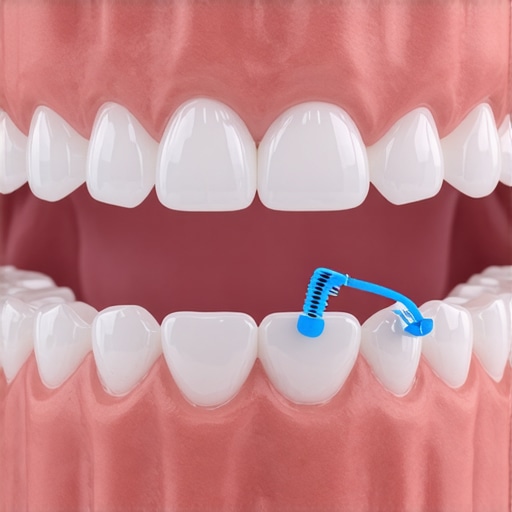
The journey to a permanent smile doesn’t start with a scalpel; it starts with a high-definition map of your anatomy. I remember when my neighbor, Martha, finally decided to take the plunge. She sat in my kitchen, clutching a pamphlet like it was a shield, convinced the surgery would be a ‘brutal’ ordeal. What changed her mind was seeing the precision of modern diagnostics. We no longer rely on grainy, flat images. Instead, what your Culpeper dentist sees on a CBCT scan is a 3D architecture of your nerves, bone density, and sinus cavities. This allows for ‘guided surgery,’ where the implant is placed virtually before you even sit in the chair. This level of cutting-edge techniques in cosmetic dentistry ensures that the procedure is minimally invasive, often requiring significantly less recovery time than traditional extractions.
Placement Feels More Like a Small Renovation Than a Demolition
Think of the implant process like installing a high-quality anchor in a wall to hang a heavy mirror. It is about stability and integration, not trauma. During the actual procedure, you aren’t feeling ‘pain’ in the traditional sense; you are feeling pressure. Because the bone itself has very few nerve endings, the post-op discomfort is usually centered in the gum tissue. Most seniors find that dental implants in 2025 are far more comfortable than they anticipated. Martha called me the day after her placement, sounding almost bored. ‘It was faster than my last filling,’ she noted. You might notice that your dental implant area feels heavy for the first week, which is a completely normal sensation as your body begins the process of ‘osseointegration’—the fancy term for your bone growing around and hugging that new titanium root.
Tell the Difference Between Normal Healing and a True Red Flag
The bridge between surgery and a functional tooth is the healing phase, and this is where most people get nervous. It is vital to know how to tell if your dental implant is rejecting or just healing. A little bit of soreness? Normal. A slight ‘throb’ when you lie down? Often just a sign of blood flow. In fact, the real reason your dental implant won’t stop throbbing at night is frequently just the way your heart rate interacts with the surgical site, similar to how a cut finger pulses. These are the cosmetic dentistry secrets to boost your confidence that professionals use to ensure long-term success. If you manage your expectations and follow the simple cleaning protocols, you aren’t just getting a new tooth; you’re securing the structural integrity of your entire face for the next twenty years.
While we’ve covered the safety of dental implants, there is a deeper layer to this journey that most dental brochures conveniently leave out. People often believe that cosmetic dentistry is a ‘one-and-done’ aesthetic fix, but the nuance lies in the mechanical harmony of your mouth. I see this all the time: a patient spends a fortune on beautiful porcelain, only to have a veneer pop off six months later because the structural foundation was ignored. If you’ve ever wondered why some dental work looks like ‘false teeth’ while others are indistinguishable from nature, it’s not just the price tag—it’s the attention to technical detail.
Stop Aiming for Bathroom-Sink White
The most common ‘oops’ factor I encounter is the obsession with the whitest possible shade. Everyone says they want a bright smile, but in my experience, choosing a flat, opaque white is the fastest way to make your dental work look fake. Natural teeth have translucency at the edges and subtle color gradients near the gumline. When patients ignore this, they end up wondering why your veneers look like white chiclets and how to fix the texture. You want your smile to reflect light, not absorb it. A landmark study published in the Journal of Prosthetic Dentistry highlights that the most successful aesthetic restorations are those that mimic the optical properties of natural dentin and enamel, rather than just masking them with bleach-colored porcelain.
Why do my veneers feel like they are pushing against my natural teeth?
This is a sophisticated concern that often points to a lack of ‘micro-adjustments’ during the bonding process. If the prep wasn’t handled with extreme precision, you might feel that your veneers feel tight against your natural teeth. It’s a common trap to assume that ‘bigger is better’ for a Hollywood look, but if the veneers are even a fraction of a millimeter too thick, they can interfere with your speech or cause your upper lip to get caught on your brand new veneers. True expertise in cutting-edge techniques in cosmetic dentistry means ensuring the new porcelain integrates seamlessly with your soft tissues, not just your bone.
The Vertical Dimension Trap Most Dentists Skip
Contrarian as it sounds, the secret to a great smile isn’t always found in the front of the mouth. If you have spent decades clenching, you might notice that your teeth look shorter after years of nighttime grinding. The ‘trap’ here is trying to fix this by simply putting long veneers on short, ground-down teeth. Without restoring the ‘vertical dimension’—essentially rebuilding the height of your back teeth—the new veneers will be under too much pressure and will inevitably fail. It is vital to look at veneers vs crowns to see which provides the structural support your specific bite requires. Have you ever fallen into the trap of choosing a quick fix over a foundation-first approach? Let me know in the comments below. If you’re ready to look at a comprehensive plan that actually lasts, you can always contact us to dive into the specifics of your case.
Once the porcelain is bonded and the implants have integrated, the real work shifts from the dental chair to your bathroom sink. I often tell my friends that a new smile is like a high-performance engine; it requires specific maintenance to keep it running at peak performance. It’s not enough to just brush twice a day. To truly protect your investment, you need to understand that the junction where your restoration meets your natural tissue is the most vulnerable spot in your mouth.
Your Night Guard Is the Insurance Policy You Can’t Skip
If there is one piece of equipment I insist every cosmetic patient uses, it is a custom-fitted occlusal guard. I’ve seen beautiful work shattered in a single night of high-stress grinding. You might not even realize you’re doing it, but the risk of skipping your night guard for just one week can lead to microscopic fractures in the porcelain or unnecessary strain on your implant’s foundation. This isn’t just about protecting the teeth; it’s about relaxing the jaw muscles so you don’t wake up wondering why your jaw hurts more in the morning than at night. Think of the guard as a shock absorber that preserves the structural integrity of everything we’ve built.
The High-Tech Tool Kit for Modern Restorations
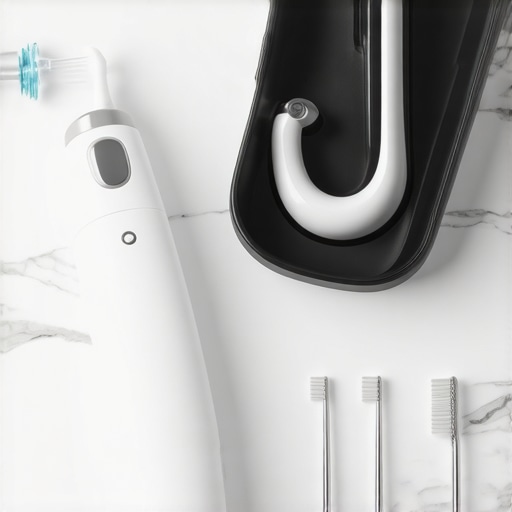
Standard string floss often fails when it comes to the complex architecture of a bridge or an implant. I personally recommend the use of an oral irrigator—like a Waterpik—set to a medium-low pressure. This is the only way to effectively clear debris from the ‘hidden’ areas without causing trauma to the delicate gum seal. If you have a bridge, you know the struggle of how to clean the underside of a dental bridge without shredding your floss. Using specialized tools like TePe interdental brushes or X-Floss allows you to mechanicaly disrupt biofilm in a way that a toothbrush simply cannot reach. According to the American Academy of Cosmetic Dentistry (AACD), mechanical plaque removal in the ‘sulcus’ (the pocket around the tooth) is the single most important factor in preventing the gingival recession that exposes the dark edges of a crown or veneer.
How do I maintain my new smile over the next decade?
Consistency is your best friend. Beyond the daily tools, you need to be mindful of your habits. I always tell people why you shouldn’t use your teeth as tools to open plastic bags or bite your nails—porcelain is strong, but it is brittle under sheer force. Looking ahead, I predict we will soon see ‘smart’ restorations equipped with bio-sensors that can alert your smartphone to early signs of inflammation before you even feel a throb. This is the logical path for the future of dental implants and cutting-edge techniques. For now, focus on 3 secrets to making your porcelain veneers last twenty years, which include using a non-abrasive gel toothpaste rather than gritty whitening pastes that can dull the luster of your porcelain over time.
My advanced tip for today: Switch to a pH-neutral mouthwash. Many over-the-counter rinses are surprisingly acidic, which can slowly etch the surface of your bonding agents. Try a rinse formulated with xylitol to keep your oral microbiome balanced and your restorations sparkling. If you’re ever in doubt about a specific product you’re using, please contact us so we can vet it for you. We want this smile to be the last one you ever have to buy.
What My Neighbors Taught Me About Life After Surgery
Looking back at my aunt’s transformation, the biggest lesson wasn’t about the surgery itself, but about the mental shift that followed. Here are the real-world insights I’ve gathered from watching dozens of people reclaim their smiles: First, age is a number, but bone health is a lifestyle; your body is far more capable of healing than the myths suggest. Second, the psychological weight of ‘loose teeth’ is a burden you don’t have to carry into your eighties. Finally, seeing someone move from a soft-food diet to ordering a steak is the ultimate proof that cosmetic dentistry secrets to boost your confidence are actually about restoring your freedom. These procedures aren’t about vanity—they are about the dignity of being able to speak and eat without a second thought.
The Tools That Actually Protect Your Investment
If you want your new smile to last as long as you do, your bathroom cabinet needs a specific upgrade. I always recommend a high-quality water flosser to navigate the unique architecture of restorations. Beyond cleaning, you must realize the risk of skipping your night guard for just one week, as even a few nights of stress-grinding can jeopardize the structural integrity of your porcelain. For daily care, I point my friends toward family dentistry tips for a lifetime of healthy smiles to find pH-balanced rinses that protect the bond between your teeth and the new work. [IMAGE_PLACEHOLDER_E]
Stop Waiting for the ‘Right Time’ to Reclaim Your Smile
You’ve spent decades putting others first; now is the time to invest in the way you interact with the world. Modern dental implants in 2025 have made the dream of a permanent, worry-free smile a reality for people in their seventies, eighties, and beyond. You deserve to laugh at every birthday toast without hesitation. If you’re ready to explore how these advancements can fit into your life, don’t hesitate to contact us for a personalized consultation. Let’s make sure your next big meal is one you can actually enjoy. Have you ever avoided a social event because you were worried about your dentures? Let me know in the comments below!