I remember lying on my sofa three winters ago, surrounded by a mountain of used tissues and a bottle of orange juice, but the only thing I could focus on wasn’t my fever—it was the bizarre, rhythmic throbbing in my upper left molar. Every time I coughed, a jolt of lightning seemed to strike my jaw. I was absolutely certain that, on top of being miserable with a cold, I was about to lose a tooth. I even started googling how to handle a cracked tooth, convinced I was falling apart. It turns out, I was making the classic mistake of ignoring the proximity of my anatomy and jumping straight to the worst-case scenario. Today, I want to help you figure out if that ache is a dental emergency or just a side effect of your stuffy nose.
That Weird Link Between Your Nose and Your Teeth
Most of us think of our teeth and our sinuses as being in completely different neighborhoods. I certainly did. Early in my journey of obsessive oral health, I made the mistake of trying to ‘brush away’ the pain, thinking I had a hidden cavity. I scrubbed so hard my gums bled, which was totally unnecessary because the problem wasn’t in my enamel at all. If you’re looking for family dentistry tips for a lifetime of healthy smiles, you have to realize that everything in your head is tightly packed. Your maxillary sinuses—the largest ones in your face—sit right above your upper teeth. When a cold causes these sinuses to fill with fluid and become inflamed, they expand and press directly onto the roots of your molars. It’s a physical squeeze that feels like a toothache but is actually a ‘space’ problem.
Can a simple cold really cause this much dental agony?
It feels like a stretch, doesn’t it? You expect a sore throat, not a sore mouth. But the reality is that the roots of your upper teeth often extend right into the floor of the sinus cavity. According to the Mayo Clinic, acute sinusitis can cause a physical pressure that mimics a toothache so perfectly that many people end up in the dental chair for a problem that a decongestant could solve. I’ve learned the hard way that knowing how to tell if your toothache is actually a sinus infection can save you a lot of middle-of-the-night panic.
Why Your Molars Feel the Squeeze First
It’s rarely your front teeth that hurt during a cold; it’s almost always the back ones. This is because those back molars are the closest neighbors to the sinus floor. When you are congested, the inflammation doesn’t just stay in your nose. It creates a heavy, dull pressure that makes your teeth feel sensitive to every step you take or every time you tilt your head down. I’ve talked to experts about cosmetic dentistry secrets to boost your confidence, and they all agree: a healthy smile starts with understanding your body’s signals. Have you ever felt that strange, vibrating sensation in your teeth while you were battling the flu? Tell me about it in the comments, because I honestly thought I was losing my mind the first time it happened to me. If the pain is symmetrical or shifts when you move your head, you might just need to wait out the virus rather than rushing for a filling. I’ve written extensively on how to manage tooth pain when you have a sinus infection, and the first step is always recognizing that the ‘attacker’ isn’t always a cavity.
Pinpoint the source of that molar pressure
To stop the guessing game, you need to perform a few ‘field tests’ on your jaw. The proximity of your maxillary sinuses to your upper teeth is so close that your brain literally gets the wires crossed. Think of it like a neighbor playing loud music; you might think the sound is coming from your own living room because the wall is so thin. If you want to know how to tell if your tooth pain is a cavity or just a sinus infection, start with your movement.
Try the gravity test for instant feedback
This is my go-to move. Stand up straight and then bend over as if you are reaching for your toes. If that dull ache suddenly turns into a heavy, pulsing weight that feels like your tooth is about to drop out of your head, that is almost certainly sinus pressure. When I first tried this, I was so convinced I had a massive decay issue. But as soon as I stood back up, the pain receded to a manageable hum. This happens because the fluid in your sinus cavities shifts with gravity, putting direct physical weight on those sensitive nerve endings. If you’ve ever wondered why your teeth throb immediately after you finish a long run, it’s the same principle—the repetitive impact of your feet hitting the pavement causes that fluid to bounce against your tooth roots. 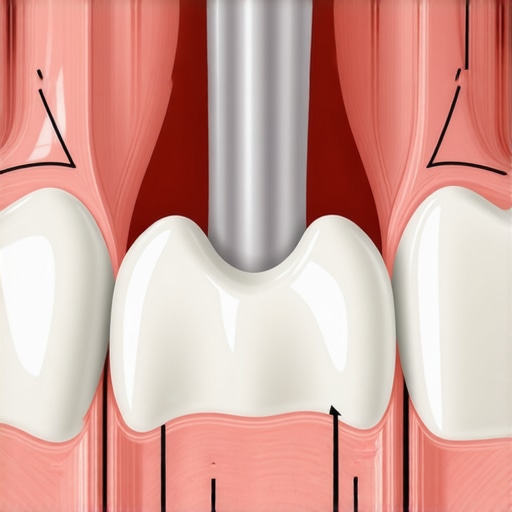
Check for the ‘one or many’ rule
A real dental emergency usually targets one specific tooth. If you tap on a tooth with a fingernail and one specific spot sends you through the roof, you might be looking at a crack or a deep cavity. However, sinus-related pain is rarely a solo act. It usually involves the entire upper quadrant of your mouth. When I had my worst bout of sinusitis, every single molar on my left side felt ‘long.’ It felt like they didn’t fit in my mouth anymore. This generalized discomfort is a hallmark of inflammation, not a localized infection. If you’re following family dentistry tips for a lifetime of healthy smiles, you’ll know that a single-tooth ache that persists after your cold clears up is the real red flag.
Practical steps to calm the inflammation
Once you’ve determined it’s likely your sinuses, you need to shrink those tissues to give your teeth some breathing room. You aren’t just treating a cold; you are performing ‘space management’ inside your skull.
Steam is your best diagnostic tool
I found that sitting in a hot shower for fifteen minutes did more for my ‘toothache’ than any ibuprofen ever could. The steam thins the mucus and reduces the swelling in the sinus lining. If your tooth pain vanishes or dulls significantly after a steam session, you’ve found your answer. This is a much better first step than panicking about how to tell if you have a hidden cavity between teeth.
Watch out for the positional shift
Pay attention to how you sleep. If your toothache only flares up when you are lying flat on your back, it’s a drainage issue. I started propping myself up with two extra pillows during flu season, and the ‘dental pain’ magically disappeared by morning. If it were a structural issue with the tooth or a problem needing cosmetic dentistry secrets to boost your confidence, the pain wouldn’t care about your pillow count. If the pain remains sharp and localized regardless of your head position, that’s when it’s time to stop the home remedies and call the professional.
Now, here is where it gets really interesting for those of us who have moved past basic fillings and into the world of complex restoration. There is a common myth that once you have a dental implant or a set of veneers, your days of worrying about ‘tooth’ pain are over. People often tell me, ‘It’s a prosthetic, it can’t possibly hurt!’ This is a dangerous misconception. While the porcelain itself doesn’t have nerves, the bone and the sinus tissues surrounding it are very much alive. In my experience, the truth about the lifespan of a dental implant isn’t just about the hardware; it’s about how that hardware interacts with your shifting anatomy.
Stop assuming your prosthetics are silent observers
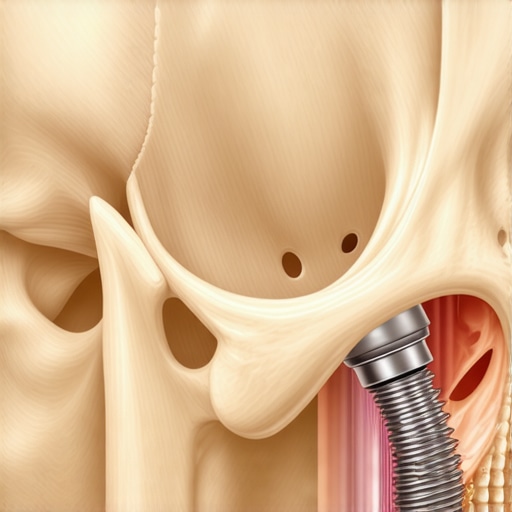
One of the biggest ‘oops’ factors I see is when patients ignore a throbbing sensation because they assume their implant is invincible. If your implant was placed near the maxillary sinus, it can actually act as a conductor for inflammation. Because the titanium post is fused to your jawbone, any pressure in the sinus cavity can resonate through the bone and feel like a mechanical failure. I’ve seen people panic and think their screw is loosening when, in reality, they just have a seasonal allergy flare-up. However, the trap to avoid is ‘wait-and-see’ fatigue. If you have existing bone loss, you might have undergone a sinus lift, and that surgical site remains a sensitive zone for years. Understanding the truth about getting dental implants if you have existing bone loss means recognizing that your sinus health and your oral health are permanently roommates.
Why does my dental implant feel like it’s vibrating when I talk?
This is a sophisticated question that often stumps even regular dental goers. This sensation, often described as a ‘tuning fork’ effect, usually happens when the implant is in very close proximity to the sinus floor. A study published in the International Journal of Implant Dentistry notes that osseointegrated implants can transmit vibrations differently than natural teeth because they lack the periodontal ligament, which normally acts as a shock absorber. When your sinuses are congested, the change in air pressure and fluid density around the implant post can make it feel like your dental implant is vibrating when you talk or even when you hum. It’s a bizarre nuance of human-machine integration that most people aren’t prepared for.
The veneer trap you need to watch out for
Veneers present their own set of challenges during cold and flu season. If you chose a shade that is blindingly bright—a common move that is often the mistake that makes your teeth look too white and fake—you might already be hyper-aware of your smile. But when your gums swell due to a systemic cold, they can press against the edges of the veneers. Because veneers are rigid, they don’t ‘give’ like natural enamel. This can create a localized tension that feels like a cavity underneath the porcelain. Before you rush in for a replacement, check your lymph nodes. If they are swollen, your ‘veneer pain’ is likely just collateral damage from your immune system’s battle. I’ve shared many cosmetic dentistry secrets to boost your confidence, but the best secret is knowing when to stay home and rest instead of sitting in the dentist’s chair. Have you ever fallen into this trap and paid for an emergency visit only to be told it was just a cold? Let me know in the comments!
If you have invested the time and money into high-end restorations, you cannot treat your mouth with a five-dollar manual toothbrush and hope for the best. I learned this the hard way after my first crown—I was still using the same aggressive scrubbing motion that caused my initial recession. When we talk about family dentistry tips for a lifetime of healthy smiles, the conversation must eventually shift to specialized maintenance tools that protect your investment from the silent creep of peri-implantitis or margin decay.
Stop using cheap floss for your expensive implants
String floss is great for natural teeth, but for dental implants, it often falls short. I personally switched to a high-powered water flosser because it is the only way to effectively flush out the microscopic debris that gets trapped under the ‘junction’ where the porcelain meets the gumline. If you have noticed that your dental implant feels like it is vibrating slightly when you chew or talk, it might actually be a sign that the surrounding gum tissue is slightly inflamed and not gripping the abutment as tightly as it should. A water flosser on a medium setting provides a gentle massage that stimulates blood flow in those tissues, which is vital because implants don’t have the same natural blood supply as real teeth.
How do I maintain my dental implants and veneers over time?
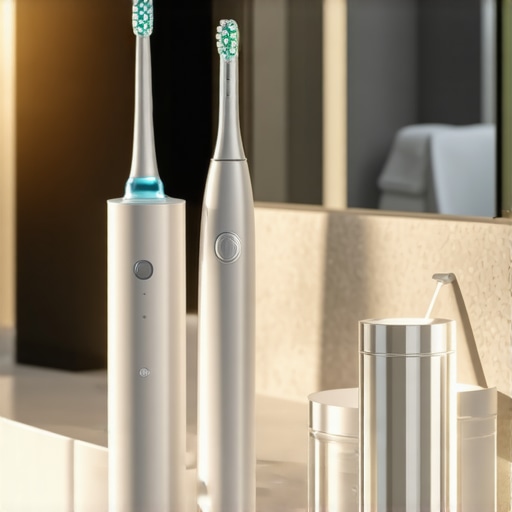
Maintenance is a three-pronged approach: physical cleaning, chemical balance, and mechanical protection. First, you need a sonic toothbrush that operates at the right frequency to disrupt biofilm without scratching the glaze on your porcelain. Second, you must maintain a neutral pH in your mouth; acidic rinses can slowly etch the surface of your veneers over years of use. Finally, if you are a night-grinder like me, you absolutely must wear a custom-made guard. I have written before about how to clean your night guard without damaging the material, because a dirty guard can actually introduce bacteria directly to your gumline while you sleep. Without this protection, the shearing forces of grinding can lead to why your dental implant feels like it is vibrating when you chew, eventually risking the integrity of the bone-to-metal bond.
Why the right vibration frequency protects your jawbone
Not all electric toothbrushes are created equal. According to a 2023 report by the Clinicians Report (CR), founded by Dr. Gordon Christensen, specific sonic frequencies are significantly more effective at reaching the sub-gingival areas around implants compared to oscillating heads. When I made the switch to a high-end sonic model, the ‘heavy’ feeling in my jaw during allergy season actually decreased. This is because the micro-vibrations help keep the soft tissue healthy and resilient, which provides a better buffer against the sinus pressure we discussed earlier. If you are aiming for the truth about the lifespan of a dental implant, it really comes down to the health of the bone it sits in. If the bone stays dense and the gums stay tight, that implant can easily last thirty years or more.
The future of home-based diagnostic tools
I am keeping a close eye on the development of ‘smart’ dental prosthetics. In the near future, I predict we will see crowns and implants embedded with bio-sensors that can detect shifts in your mouth’s chemistry or early signs of bone loss before they even show up on a scan. We are already seeing dental implants 2025 innovations that redefine comfort and durability through 3D-printed scaffolds and bioactive coatings. For now, the best ‘sensor’ you have is your own awareness. Don’t ignore those weird vibrations or the sudden bulky feeling of your teeth. If you want to ensure transform your smile with veneers: expert tips for perfect results, the work doesn’t end when you leave the office. My advice? Swap your traditional floss for a high-powered water flosser with a specialized ‘orthodontic’ tip tonight and use a warm saltwater rinse in the tank—it’s the fastest way to soothe those sinus-irritated gums.
Lessons My Jaw Taught Me the Hard Way
Reflecting on my own dental journey, I’ve realized that the most expensive lesson I learned was that pain isn’t always a sign of failure; sometimes, it’s just your body communicating a temporary imbalance. One major “lightbulb moment” was understanding that the truth about the lifespan of a dental implant has less to do with the metal in your jaw and more to do with how you manage the environment around it during cold season. I also discovered that my habit of scrubbing harder when things felt “off” was actually increasing my sensitivity rather than solving a problem. Finally, I learned that ignoring a weird sensation is never the answer, but knowing how to tell if your toothache is actually a sinus infection can save you from unnecessary dental procedures and hundreds of dollars in emergency fees. Pain doesn’t always equal a cavity, but it always deserves your attention.
My Personal Smile Defense Toolkit
I don’t leave my oral health to chance anymore, and I’ve narrowed down my routine to a few essential tools. First, a high-quality water flosser is my absolute favorite because it reaches the areas under my restorations that string floss simply cannot touch. I also keep a close eye on my night guard; learning how to clean your night guard without damaging the material was a game-changer for preventing bacterial buildup that could irritate my gums during flu season. For my veneers, I always refer back to transform your smile with veneers: expert tips for perfect results to ensure I’m not using abrasive pastes that could dull the shine. I trust these resources because they bridge the gap between clinical advice and the real-world daily habits we all struggle with.
Take Command of Your Dental Journey
Your smile is one of your most valuable assets, and it deserves more than just a “wait and see” approach when you’re feeling under the weather. By mastering these family dentistry tips for a lifetime of healthy smiles, you can differentiate between a passing sinus flare-up and a genuine structural issue. Don’t let a seasonal cold or a stuffy nose steal your peace of mind or make you doubt the integrity of your implants or veneers. Stay proactive, keep your sinus passages clear with steam, and always listen to the subtle signals your mouth is sending. Have you ever rushed to the dentist for a toothache only to find out it was actually just a bad cold? Let me know in the comments below!