I still remember the sharp, cold panic of biting into a bagel and feeling something… wrong. I looked down, and there it was—my temporary crown, sitting on the napkin like a tiny, expensive tooth-ghost. It was 7:00 PM on a Friday, and my dentist wouldn’t be back until Monday. That sinking feeling in your stomach? I’ve been there, and it’s exactly why I’m writing this today. Whether you are currently navigating the world of family dentistry or you’re in the middle of a high-end smile makeover, that temporary cap is your best friend—even if it feels like a flimsy piece of plastic. We are going to ensure that your temporary stays exactly where it belongs until your permanent one arrives. I’ll show you the ‘slide-out’ flossing trick that saved my sanity and the specific foods that act like magnets for dental glue.
Your Temporary Crown is a Placeholder Not a Permanent Fix
When I first started my journey with cosmetic dentistry, I treated my temporary crown like it was invincible. I went straight for the crusty sourdough bread, which, as I found out, is a recipe for disaster—much like why your gums bleed only when you eat crunchy bread. The truth is, temporary cement is designed to be weak. It has to be, because your dentist needs to pop that cap off easily in two weeks without damaging the underlying structure. According to the American Dental Association, these temporaries are crucial for protecting the tooth from sensitivity and maintaining the space for the final restoration. If you lose it and don’t replace it quickly, your other teeth might actually start to shift. This tiny movement can make the final fit of your permanent veneers or crowns a real nightmare. Have you ever felt that sudden, terrifying gap in your smile right before a big event?
Are these cheap-feeling caps actually worth the stress?
You might look at that little piece of acrylic and wonder if it’s even doing anything besides feeling ‘fuzzy’ against your tongue. Trust me, it is. I once made the mistake of leaving a temporary off for three days because I was ‘too busy’ to go back in. By the time I saw my dentist, the surrounding teeth had moved just enough that my permanent crown didn’t fit right, and we had to start the whole process over. It was an expensive, time-consuming lesson in humility. The temporary keeps the gum tissue in place and prevents your prepared tooth from becoming incredibly sensitive to every breath of air or sip of water. It acts as a bridge to your final result, ensuring the health of the nerve remains intact.
Change the Way You Eat and Clean Right Now
The most common reason these caps fail isn’t a bad dentist; it’s our own muscle memory. We forget it’s there. We floss upward like we always do, or we give in to that craving for a caramel latte. To keep things stable, you need to change how you interact with that side of your mouth. For example, if you find that learning how to tell if your dental crown is loose is becoming a daily obsession, you probably need to adjust your chewing technique immediately. Always chew on the opposite side of your mouth. It sounds simple, but it’s the number one way to prevent mechanical failure of the cement. Furthermore, when you floss, never pull the string back up through the contact point—always let go of one end and pull it through the side. Pulling up is the most frequent way patients accidentally ‘hook’ the edge of the crown and pop it right off. I also learned that ‘testing’ the crown with your tongue is a terrible habit; the constant pressure weakens the already thin bond. If it does come off, you should know how to properly store dental hardware until you can get to the clinic.I’ve sat in that chair more times than I’d like to admit, and the biggest lesson in family dentistry I ever received wasn’t from a brochure—it was from the ‘click’ of my crown hitting the floor at my best friend’s wedding rehearsal. I had ordered the sea bass, but a tiny piece of crusty garnish snagged the edge of my temporary cap. For the next three hours, I was that person at the table who barely spoke, terrified that if I opened my mouth, everyone would see the prepared ‘peg’ of a tooth underneath. That experience taught me that care isn’t just about what you do, but how you do it.
Master the Side-Pull Floss Technique
The absolute most important mechanical change you can make involves your dental floss. When you pull the floss back up between your teeth, you are essentially creating a hook that can catch the thin margin of your temporary crown. Instead, use the side-pull method. Thread the floss as usual, clean the area gently, and then let go of one end. Pull the entire strand out horizontally. This eliminates any upward pressure on the temporary cement. 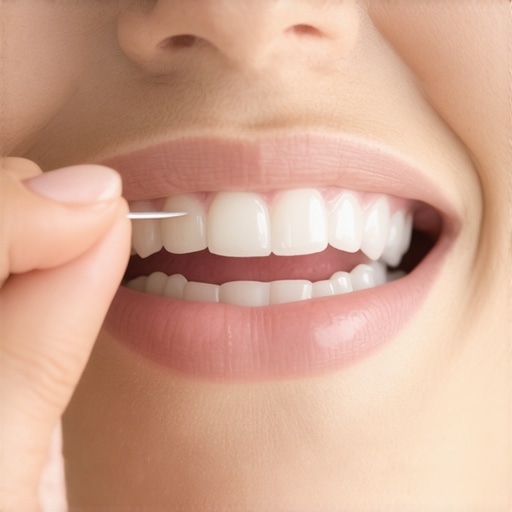 If you are worried about the feel of the crown against your neighboring teeth, remember that why your new veneers feel bulky against your lips or tongue is often just a matter of your brain adjusting to a new shape in the mouth.
Keep Sticky Cravings at Bay for Two Weeks
You must treat your temporary crown like it is held on with a glue stick rather than industrial adhesive. Avoid anything that creates ‘suction’ or ‘grab.’ This includes caramels, gummy bears, and even thick, doughy breads. The physics of chewing these items can create a vacuum effect that pulls the crown vertically off the tooth. You might notice the hidden reason your dental bridge feels loose during meals is often the same force of suction. If you find yourself struggling with the temptation to chew on that side, try switching to softer proteins like eggs or yogurt until the permanent restoration is ready. Additionally, be mindful of why your jaw pops when you eat chewy foods like steak; the extra strain of heavy chewing can inadvertently jar the temporary out of place.
What to Do if the Crown Pops Off at Home
If the worst happens and the cap comes loose, don’t reach for the super glue. I once heard of a patient trying to ‘fix’ their smile with household adhesive, and it resulted in a dental emergency that required a much more invasive procedure. If the crown is still in one piece, you can use a tiny dab of over-the-counter denture adhesive or even a bit of toothpaste to temporarily ‘stick’ it back on for aesthetic purposes. However, you must call your dentist immediately. If it happens late at night and you can’t put it back in, you need to know how to properly store a dental bridge if it falls out at home, as the same principles apply to crowns. Keeping it clean and in a small container ensures your dentist can easily recement it the next morning.
Manage Sensitivity Without Panic
It is normal for the area to feel a bit ‘off’ or sensitive to temperature. If you’re trying to figure out how to tell if your dental crown is loose or just sensitive, pay attention to the type of sensation. A sharp, fleeting zap from cold water usually indicates that the temporary doesn’t quite cover every microscopic pore of the dentin, which is common. A dull ache or a ‘squish’ when biting down suggests the cement has failed. To soothe minor gum irritation around the temporary, rinse with warm salt water twice a day. This reduces inflammation and keeps the tissue healthy for when the permanent veneers or crowns are ready to be placed.
Now that we’ve covered the survival guide for your temporary, we need to talk about the ‘forever’ mindset that often leads to expensive failures. Everyone tells you that once you get your permanent restoration, you’re home free. In my experience, that’s exactly when the real work begins. The biggest myth in the future of dental implants is that they are tougher than your original teeth. While the titanium post is incredibly strong, the way it interacts with your body is far more delicate than a natural root. Natural teeth are suspended by a periodontal ligament that acts as a shock absorber. Implants, however, are fused directly to the bone. This means if you have a habit of grinding your teeth, you can actually fracture the porcelain or even the internal screw because there is zero ‘give’ in the system.
Why is my dental implant site feeling warm during healing?
If you notice a slight temperature increase or a localized ‘pulse’ in the area after your procedure, it’s often your body’s natural inflammatory response working overtime to integrate that new titanium post. However, there is a fine line between healthy healing and early failure. According to a study published in the Journal of Oral Implantology, monitoring the ’emergence profile’—how the tooth appears to grow out of the gum—is vital for long-term success. If you aren’t seeing a healthy, pink seal around the base, you might be looking at the start of peri-implantitis. This is why how dental implants reshape your oral health in 2025 involves much more than just the surgery; it’s about the meticulous soft-tissue management that happens months afterward. Have you ever fallen into the trap of thinking your new smile didn’t need the same flossing routine? Let me know in the comments.
Avoid the Piano Key Veneer Disaster
One of the most common ‘oops’ factors I see in cosmetic dentistry is the request for the ‘whitest shade possible.’ When you go too bright without considering translucency, you fall into the mistake that makes porcelain veneers look like piano keys. Real teeth have depth; they catch light and reflect it from the inside out. If your veneers look like flat, opaque Chicklets, it’s usually because the laboratory didn’t layer the porcelain correctly. Expert practitioners will actually look at the whites of your eyes to match the brightness of your smile, ensuring it looks natural rather than fluorescent.
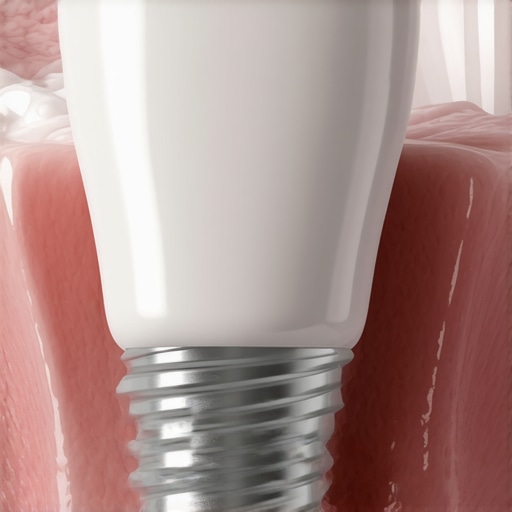
The hidden nuance most people miss is that your gum health dictates the lifespan of your high-end work. You can spend thousands on veneers or crowns, but if your hygiene is subpar, the margins where the porcelain meets the tooth will eventually leak. This leads to ‘recurrent decay,’ which is a fancy way of saying a cavity is forming underneath your expensive new smile. Always use a non-abrasive gel toothpaste; traditional whitening pastes often contain silica that can micro-scratch your porcelain over time, dulling the finish you worked so hard to achieve.
Once you move past the ‘honeymoon phase’ of your new smile, you have to shift your focus to maintenance mechanics. I personally swapped my traditional manual brush for a high-end sonic model with a dedicated pressure sensor. Why? Because I realized I was a ‘scrubber’—I was literally wearing down my gum line. If you want to know how to safely clean a dental implant without scratching the post, the secret isn’t just the tool, but the angle. I use a 45-degree tilt toward the gumline to ensure I’m clearing the sulcus without traumatizing the soft tissue attachment around the abutment.
How do I maintain my cosmetic dental work over time?
The answer lies in consistency and the right chemicals. I exclusively use a pH-balanced, non-abrasive gel recommended by the *Clinicians Report*, an independent dental research organization founded by Dr. Gordon Christensen. Many people don’t realize that common ‘whitening’ toothpastes are basically liquid sandpaper. Over five or ten years, that abrasion can lead to the real cause of those tiny vertical lines in your teeth—micro-scratches that actually trap stains rather than removing them. 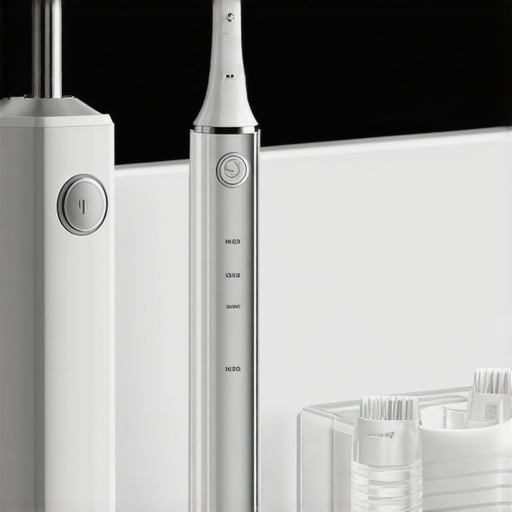 Another tool I swear by is the water flosser, but with a specific tweak. I fill the reservoir with one part alcohol-free antiseptic rinse and three parts warm water. This cocktail reaches deep into the pockets around implants where a physical string often struggles. As we look at dental implants 2025 innovations that redefine comfort and durability, we’re seeing a shift toward smart-brushes that sync with apps to map your mouth. It sounds like overkill until you realize that missing the same spot for six months is exactly how you end up with a failing crown.
Guard Your Teeth Against Stress While You Sleep
I cannot stress this enough: get a custom-fit night guard. Even if you think you don’t grind your teeth, the stress of modern life usually manifests in your jaw at 3:00 AM. I learned this the hard way when I noticed my family dentistry tips for a lifetime of healthy smiles were being undermined by morning jaw aches. A hard-acrylic guard distributes the force across your entire arch, protecting your porcelain from the ‘eggshell’ effect. Looking ahead, the future of dental implants cutting edge techniques in cosmetic dentistry will likely involve bio-sensors built into these guards to track clenching patterns in real-time.
Stop Guessing and Start Measuring
The next time you’re at the store, skip the bargain-bin floss and look for ‘high-tension’ tape. It slides easier under bridges and won’t shred against the margins of your work. My specific tip for today? Spend three minutes tonight using a mirror and a flashlight to inspect the ‘seal’ where your tooth meets the gum. If you see any graying or a tiny gap, call your office immediately. Don’t wait for pain; in the world of how dental implants reshape your oral health in 2025, prevention is significantly cheaper than a revision surgery.
The Hardest Lesson I Learned While Waiting for Perfection
If there is one thing my journey through cosmetic dentistry taught me, it’s that your habits speak louder than your wallet. You can pay for the best porcelain in the world, but if you don’t respect the biology of your mouth, it won’t last. I learned that the ‘waiting game’ during an implant healing phase is actually a training period for your permanent routine. I also realized that why your dental implant feels loose but looks fine often comes down to internal integration issues that you can’t see, making those follow-up appointments non-negotiable. Finally, I discovered that a veneer transformation isn’t just about the teeth; it’s about how you carry yourself once you stop hiding your smile from the world.
The Gear That Protects Your Investment
I’ve spent a lot of time trial-and-erroring products so you don’t have to. First, ditch any toothpaste that feels like sand between your fingers. I personally recommend switching to a non-abrasive gel to avoid the real cause of those tiny vertical lines in your teeth. Second, invest in a high-quality water flosser. It’s the only way to effectively flush out debris if you are worried about the red flags that your dental implant is being rejected. Lastly, always keep a small ’emergency kit’ in your bag containing orthodontic wax and a tiny container of denture adhesive for those rare moments when a temporary might fail while you’re out for dinner. #IMAGE_PLACEHOLDER_E#
Your Future Smile is Worth the Wait
It’s easy to feel frustrated when you’re stuck with a plastic temporary or a healing cap, but remember that these are just stepping stones toward transforming your smile with veneers or permanent implants. This process is an investment in your confidence and your health that will pay dividends for decades. If you ever feel unsure about your progress, don’t hesitate to contact us for a quick check-in. Have you ever had a temporary crown pop off at the worst possible moment? Let me know your survival stories in the comments below!