I will never forget the evening I looked into my son’s mouth as he laughed at a cartoon, only to feel my stomach drop. There they were—his first permanent molars—and they looked like old parchment compared to the bright, snowy white of his baby teeth. My mind immediately went to the worst-case scenario. I was convinced I’d failed as a parent, that he had some rare enamel deficiency, or that he hadn’t been brushing nearly as well as he claimed. I actually spent the better part of a week obsessively scrubbing his teeth, a move that likely did more harm than good to those tender gums. It’s a panic I see in almost every parent’s eyes when they come into the office for family dentistry tips, and I’m here to tell you: breathe. You haven’t failed. In fact, that slightly yellow hue is usually a sign that nature is doing exactly what it’s supposed to do. Today, we’re going to dismantle the “yellow tooth” panic, explain the biological why behind it, and help you distinguish between a healthy adult tooth and a real dental emergency.
Stop Panicking Over the Color Contrast
The contrast between primary and permanent teeth is honestly startling. Baby teeth are often referred to as “milk teeth” for a reason—they are incredibly white because they have very thin dentin. When those big-kid teeth arrive, they come packed with a much thicker layer of dentin, which is naturally yellowish. Because the enamel on permanent teeth is also more translucent, that yellow core shines through much more prominently. I made the mistake most parents make with their child’s first tooth by assuming white equals healthy and yellow equals decay. It is simply not true.
Are These New Teeth Actually Defective or Just Different?
I get it—it’s hard to ignore the difference when they are sitting right next to each other. You might be wondering if your child has a “soft enamel” issue or if they need professional whitening already. According to the American Academy of Pediatric Dentistry, permanent teeth contain more minerals and a more complex structure, which naturally alters their light reflection. If you’re worried, it helps to learn how to tell if your child has a cavity or just deep grooves, because color alone is rarely the smoking gun for a problem. Have you ever caught yourself staring at your kid’s smile in the sunlight and wondering if you should be calling the dentist right this second? You aren’t alone.
Why Adult Teeth Do Not Mimic the Milk Tooth Glow
We often forget that adult teeth are built for the long haul—literally decades of chewing, grinding, and existing. To survive seventy or eighty years, they need a sturdier architecture than the “disposable” set they replace. This means more dentin and a different mineral density. When you see that yellowish tint on permanent teeth, you’re actually looking at the strength of the tooth. If they were as thin and white as baby teeth, they’d likely wear down before your child even hit high school. We also have to consider that teeth often look darker in certain lighting conditions, which can play tricks on your eyes during your nightly bathroom check. My goal is to show you exactly what to look for so you can stop worrying about the shade and start focusing on the health of the structure itself.
Check the Translucency to Spot Real Enamel Strength
To understand why that yellow tint is actually a badge of health, think of the tooth as a lightbulb inside a lampshade. In baby teeth, the ‘lampshade’ (enamel) is very thin and the ‘bulb’ (dentin) is pale. In permanent teeth, the dentin is much thicker and saturated with a deeper yellow hue. Because the enamel on these new teeth is highly mineralized and translucent, it acts like a clear window, allowing that sturdy yellow core to show through. I remember a patient named Liam whose mother was so distressed by this color difference that she had started using her own whitening strips on his seven-year-old teeth. When I saw him, his gums were bright red and peeling. I had to explain that the truth about charcoal toothpaste and your tooth enamel or any harsh whitening agent is that they can be devastatingly abrasive to young, developing teeth. The yellow we were seeing wasn’t a stain; it was the biological ‘shock absorber’ that will allow Liam to chew for the next eighty years. 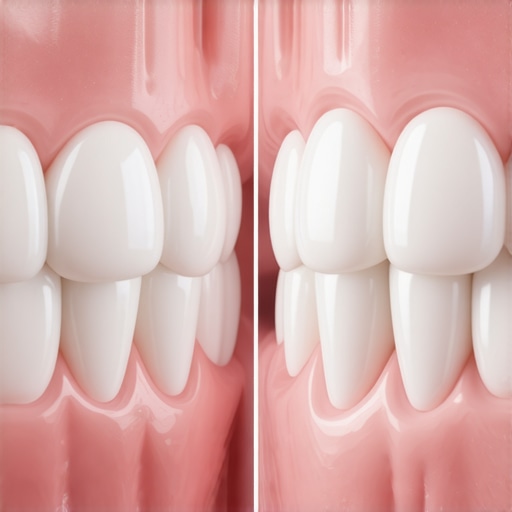
Perform a Simple Flashlight Test at Home
If you are still losing sleep over the shade, try the transparency check. Take a small LED flashlight and shine it behind your child’s front permanent teeth while they look in the mirror. You will notice the edges look almost like frosted glass or jelly. This transparency is the hallmark of healthy, young enamel that hasn’t been worn down yet. If the tooth were truly decayed or failing, it would look opaque, like a piece of chalk, rather than translucent. This is also a great time to check other developmental milestones, such as how to tell if your childs tooth gap is normal, as the erupting adult teeth often look oversized and oddly spaced compared to the tiny primary teeth they replaced.
Focus on Texture Rather Than Just the Shade
While the color might be jarring, the texture of the tooth is a far more reliable indicator of health. Healthy permanent teeth should feel smooth and glassy to the tongue. If you see pits, craters, or areas that look like the surface of a golf ball, that is when we need to investigate. I often tell parents that learning how to tell if your child has a cavity or just deep grooves is the best way to lower their dental anxiety. Deep grooves are natural, but they are also magnets for bacteria. This is specifically why your child needs a dental sealant for their molars. We aren’t trying to change the color with sealants; we are simply filling in those microscopic valleys to prevent food from getting trapped.
Ditch the Whitening Strips and Save the Enamel
It is incredibly tempting to reach for a brightening kit when you see that yellowish tint on permanent teeth, but please resist the urge. Adult teeth continue to calcify for several years after they erupt. Using chemicals too early can lead to extreme sensitivity that lasts a lifetime. If you are worried about future aesthetics, remember that as more permanent teeth come in, the ‘yellow’ look becomes much less noticeable because you lose the white-as-milk comparison point of the baby teeth. For those with naturally sensitive systems, exploring the safest way to whiten teeth with sensitive enamel is a conversation best saved for the teenage years when the tooth structure is fully matured and the pulp chamber has receded safely away from the surface.
While we wait for those permanent teeth to settle into their natural, sturdy hue, many patients eventually ask me about cosmetic options for their own smiles. It is a common misconception in the world of high-end dentistry that ‘perfect’ equals ‘blindingly white.’ In my years of practice, I’ve seen countless patients demand the whitest shade on the guide, only to return weeks later feeling like their smile looks ‘off’ or artificial. This is what I call the transparency trap. Most people assume that opacity equals strength and beauty, but the opposite is true. If a restoration—be it a veneer or a crown—is too opaque, it loses that life-like quality because it fails to allow light to penetrate and bounce off the underlying layers. This is often the mistake that makes porcelain veneers look like piano keys. Real teeth have subtle gradations in color and transparency, especially at the biting edges, and ignoring this leads to a flat, plastic appearance.
Why ultra-white smiles often look remarkably cheap
When you are trying to match a new restoration to your existing teeth, the goal is ‘optical integration.’ If you choose a shade that is significantly whiter than the sclera (the white part of your eyes), the teeth will look like they belong to someone else. Experts in the field, including the American Academy of Cosmetic Dentistry (AACD), emphasize that the most successful cosmetic outcomes are multi-tonal. They mimic the way light interacts with natural hydroxyapatite crystals. I always advise my patients to spend time learning how to pick the right shade for your new porcelain veneers by viewing samples in natural daylight, not just under the harsh fluorescent bulbs of a dental chair.
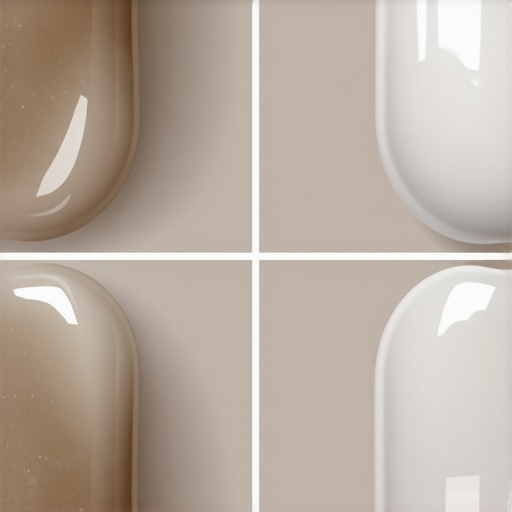
Why do my new veneers look different under office lights versus the sun?
This frustrating phenomenon is known as metamerism. It is the scientific reason behind the reason your veneers look different in sunlight versus indoors. Because porcelain and natural enamel reflect light wavelengths differently, a shade that looks perfect in a windowless office can look drastically different at a backyard BBQ. If your dentist doesn’t account for this optical shift, you risk the reason your porcelain veneers look opaque and fake in the very moments you want to show them off most. We combat this by layering different ceramics with varying degrees of translucency to catch the light exactly like a natural tooth would.
Don’t fall for the ‘one-size-fits-all’ implant promise
When it comes to replacing missing teeth, people often rush into decisions without considering the biological ‘foundation.’ A major ‘oops’ factor I see is ignoring the soft tissue architecture around an implant site. In 2025, the future of dental implants isn’t just about the titanium post; it’s about ‘digital smile design’ that predicts how your gums will drape over the new tooth. If you skip this nuanced planning phase, you might end up needing a complex choice between veneers vs crowns later to correct a lopsided gum line. True expertise lies in the preparation, not just the final product. Have you ever fallen into the ‘whiter is better’ trap or felt like a dental procedure looked a bit too artificial? Let me know in the comments below!
Stop treating your dental implants like indestructible metal posts
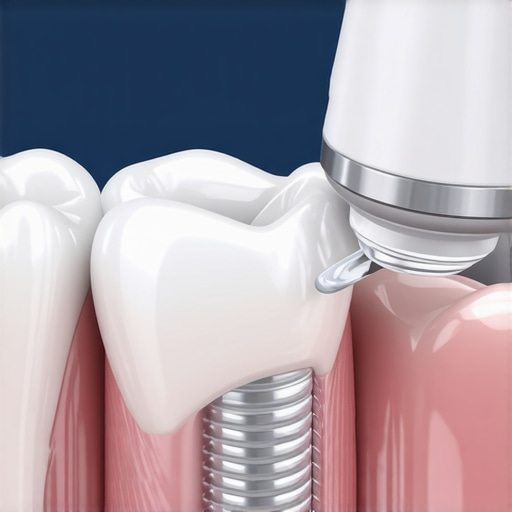
I often see a dangerous overconfidence in patients who have just completed a veneers transformation or received their final implant crown. They think, ‘It’s porcelain and titanium; I can’t get a cavity here.’ While technically true, you can still lose an entire restoration to gum disease if the foundation fails. My personal weapon of choice for maintenance is a high-pressure water flosser equipped with a specialized orthodontic or implant tip. I don’t just recommend it because it’s a popular trend; I use it because the targeted water stream is the only way to effectively navigate the tight junctions where a restoration meets the gumline. If you don’t learn how to safely clean a dental implant without scratching the post, you risk creating microscopic grooves in the titanium that act as a permanent breeding ground for biofilm. According to clinical studies in the Journal of Oral Implantology, mechanical debridement using non-metallic, specialized tips is the gold standard for avoiding surface alterations that compromise the long-term success of the implant.
The soft-bristle rule that saves your veneers from premature dulling
Another major mistake I see is the ‘scrubbing’ mentality. If you’ve invested in cosmetic dentistry, your standard ‘medium’ or ‘hard’ toothbrush is now your greatest enemy. I personally advocate for ultra-soft, high-density bristles that rely on vibratory motion rather than pressure. These filaments clean the margins of your veneers without causing the micro-abrasions that eventually lead to staining and loss of luster. This is the best way to brush when you have sensitive gums and delicate ceramic work. If you stick with aggressive habits, you’ll likely end up searching for the truth about charcoal toothpaste and your tooth enamel just to get the shine back, only to realize you’ve polished away the factory-applied glaze that makes the veneers look life-like.
How do I maintain my dental work over time?
Longevity in dentistry is a game of consistency and smart choices. You need to master how to keep your teeth white while drinking black coffee daily without relying on abrasive whitening strips that can irritate your gums. I tell my patients to rinse with plain water immediately after every acidic or dark-colored beverage to neutralize the pH levels in the mouth. Looking ahead, I suspect that dental implants 2025 innovations will eventually integrate bio-sensors into the crowns to alert your smartphone the moment inflammatory markers are detected. Until that tech arrives, you are the primary defense. Watch for subtle cues, like how to manage tooth sensitivity after your first professional cleaning, and never skip your maintenance visits. My challenge to you: swap your manual brush for a high-quality sonic model for just two weeks and see if your gums feel firmer and healthier. If you need help choosing a specific device for your situation, feel free to contact us for a personalized recommendation.
I will never forget the evening I looked into my son’s mouth as he laughed at a cartoon, only to feel my stomach drop. There they were—his first permanent molars—and they looked like old parchment compared to the bright, snowy white of his baby teeth. My mind immediately went to the worst-case scenario. I was convinced I’d failed as a parent, that he had some rare enamel deficiency, or that he hadn’t been brushing nearly as well as he claimed. I actually spent the better part of a week obsessively scrubbing his teeth, a move that likely did more harm than good to those tender gums. It’s a panic I see in almost every parent’s eyes when they come into the office for family dentistry tips, and I’m here to tell you: breathe. You haven’t failed. In fact, that slightly yellow hue is usually a sign that nature is doing exactly what it’s supposed to do. Today, we’re going to dismantle the “yellow tooth” panic, explain the biological why behind it, and help you distinguish between a healthy adult tooth and a real dental emergency.
Stop Panicking Over the Color Contrast
The contrast between primary and permanent teeth is honestly startling. Baby teeth are often referred to as “milk teeth” for a reason—they are incredibly white because they have very thin dentin. When those big-kid teeth arrive, they come packed with a much thicker layer of dentin, which is naturally yellowish. Because the enamel on permanent teeth is also more translucent, that yellow core shines through much more prominently. I made the mistake most parents make with their child’s first tooth by assuming white equals healthy and yellow equals decay. It is simply not true.
Are These New Teeth Actually Defective or Just Different?
I get it—it’s hard to ignore the difference when they are sitting right next to each other. You might be wondering if your child has a “soft enamel” issue or if they need professional whitening already. According to the American Academy of Pediatric Dentistry, permanent teeth contain more minerals and a more complex structure, which naturally alters their light reflection. If you’re worried, it helps to learn how to tell if your child has a cavity or just deep grooves, because color alone is rarely the smoking gun for a problem. Have you ever caught yourself staring at your kid’s smile in the sunlight and wondering if you should be calling the dentist right this second? You aren’t alone.
Why Adult Teeth Do Not Mimic the Milk Tooth Glow
We often forget that adult teeth are built for the long haul—literally decades of chewing, grinding, and existing. To survive seventy or eighty years, they need a sturdier architecture than the “disposable” set they replace. This means more dentin and a different mineral density. When you see that yellowish tint on permanent teeth, you’re actually looking at the strength of the tooth. If they were as thin and white as baby teeth, they’d likely wear down before your child even hit high school. We also have to consider that teeth often look darker in certain lighting conditions, which can play tricks on your eyes during your nightly bathroom check. My goal is to show you exactly what to look for so you can stop worrying about the shade and start focusing on the health of the structure itself.
Check the Translucency to Spot Real Enamel Strength
To understand why that yellow tint is actually a badge of health, think of the tooth as a lightbulb inside a lampshade. In baby teeth, the ‘lampshade’ (enamel) is very thin and the ‘bulb’ (dentin) is pale. In permanent teeth, the dentin is much thicker and saturated with a deeper yellow hue. Because the enamel on these new teeth is highly mineralized and translucent, it acts like a clear window, allowing that sturdy yellow core to show through. I remember a patient named Liam whose mother was so distressed by this color difference that she had started using her own whitening strips on his seven-year-old teeth. When I saw him, his gums were bright red and peeling. I had to explain that the truth about charcoal toothpaste and your tooth enamel or any harsh whitening agent is that they can be devastatingly abrasive to young, developing teeth. The yellow we were seeing wasn’t a stain; it was the biological ‘shock absorber’ that will allow Liam to chew for the next eighty years. #IMAGE_PLACE_HOLDER_B#
Perform a Simple Flashlight Test at Home
If you are still losing sleep over the shade, try the transparency check. Take a small LED flashlight and shine it behind your child’s front permanent teeth while they look in the mirror. You will notice the edges look almost like frosted glass or jelly. This transparency is the hallmark of healthy, young enamel that hasn’t been worn down yet. If the tooth were truly decayed or failing, it would look opaque, like a piece of chalk, rather than translucent. This is also a great time to check other developmental milestones, such as how to tell if your childs tooth gap is normal, as the erupting adult teeth often look oversized and oddly spaced compared to the tiny primary teeth they replaced.
Focus on Texture Rather Than Just the Shade
While the color might be jarring, the texture of the tooth is a far more reliable indicator of health. Healthy permanent teeth should feel smooth and glassy to the tongue. If you see pits, craters, or areas that look like the surface of a golf ball, that is when we need to investigate. I often tell parents that learning how to tell if your child has a cavity or just deep grooves is the best way to lower their dental anxiety. Deep grooves are natural, but they are also magnets for bacteria. This is specifically why your child needs a dental sealant for their molars. We aren’t trying to change the color with sealants; we are simply filling in those microscopic valleys to prevent food from getting trapped.
Ditch the Whitening Strips and Save the Enamel
It is incredibly tempting to reach for a brightening kit when you see that yellowish tint on permanent teeth, but please resist the urge. Adult teeth continue to calcify for several years after they erupt. Using chemicals too early can lead to extreme sensitivity that lasts a lifetime. If you are worried about future aesthetics, remember that as more permanent teeth come in, the ‘yellow’ look becomes much less noticeable because you lose the white-as-milk comparison point of the baby teeth. For those with naturally sensitive systems, exploring the safest way to whiten teeth with sensitive enamel is a conversation best saved for the teenage years when the tooth structure is fully matured and the pulp chamber has receded safely away from the surface.
While we wait for those permanent teeth to settle into their natural, sturdy hue, many patients eventually ask me about cosmetic options for their own smiles. It is a common misconception in the world of high-end dentistry that ‘perfect’ equals ‘blindingly white.’ In my years of practice, I’ve seen countless patients demand the whitest shade on the guide, only to return weeks later feeling like their smile looks ‘off’ or artificial. This is what I call the transparency trap. Most people assume that opacity equals strength and beauty, but the opposite is true. If a restoration—be it a veneer or a crown—is too opaque, it loses that life-like quality because it fails to allow light to penetrate and bounce off the underlying layers. This is often the mistake that makes porcelain veneers look like piano keys. Real teeth have subtle gradations in color and transparency, especially at the biting edges, and ignoring this leads to a flat, plastic appearance.
Why ultra-white smiles often look remarkably cheap
When you are trying to match a new restoration to your existing teeth, the goal is ‘optical integration.’ If you choose a shade that is significantly whiter than the sclera (the white part of your eyes), the teeth will look like they belong to someone else. Experts in the field, including the American Academy of Cosmetic Dentistry (AACD), emphasize that the most successful cosmetic outcomes are multi-tonal. They mimic the way light interacts with natural hydroxyapatite crystals. I always advise my patients to spend time learning how to pick the right shade for your new porcelain veneers by viewing samples in natural daylight, not just under the harsh fluorescent bulbs of a dental chair.
#IMAGE_PLACE_HOLDER_C#
Why do my new veneers look different under office lights versus the sun?
This frustrating phenomenon is known as metamerism. It is the scientific reason behind the reason your veneers look different in sunlight versus indoors. Because porcelain and natural enamel reflect light wavelengths differently, a shade that looks perfect in a windowless office can look drastically different at a backyard BBQ. If your dentist doesn’t account for this optical shift, you risk the reason your porcelain veneers look opaque and fake in the very moments you want to show them off most. We combat this by layering different ceramics with varying degrees of translucency to catch the light exactly like a natural tooth would.
Don’t fall for the ‘one-size-fits-all’ implant promise
When it comes to replacing missing teeth, people often rush into decisions without considering the biological ‘foundation.’ A major ‘oops’ factor I see is ignoring the soft tissue architecture around an implant site. In 2025, the future of dental implants isn’t just about the titanium post; it’s about ‘digital smile design’ that predicts how your gums will drape over the new tooth. If you skip this nuanced planning phase, you might end up needing a complex choice between veneers vs crowns later to correct a lopsided gum line. True expertise lies in the preparation, not just the final product. Have you ever fallen into the ‘whiter is better’ trap or felt like a dental procedure looked a bit too artificial? Let me know in the comments below!
Stop treating your dental implants like indestructible metal posts
I often see a dangerous overconfidence in patients who have just completed a veneers transformation or received their final implant crown. They think, ‘It’s porcelain and titanium; I can’t get a cavity here.’ While technically true, you can still lose an entire restoration to gum disease if the foundation fails. My personal weapon of choice for maintenance is a high-pressure water flosser equipped with a specialized orthodontic or implant tip. I don’t just recommend it because it’s a popular trend; I use it because the targeted water stream is the only way to effectively navigate the tight junctions where a restoration meets the gumline. If you don’t learn how to safely clean a dental implant without scratching the post, you risk creating microscopic grooves in the titanium that act as a permanent breeding ground for biofilm. According to clinical studies in the Journal of Oral Implantology, mechanical debridement using non-metallic, specialized tips is the gold standard for avoiding surface alterations that compromise the long-term success of the implant.
#IMAGE_PLACE_HOLDER_D#
The soft-bristle rule that saves your veneers from premature dulling
Another major mistake I see is the ‘scrubbing’ mentality. If you’ve invested in cosmetic dentistry, your standard ‘medium’ or ‘hard’ toothbrush is now your greatest enemy. I personally advocate for ultra-soft, high-density bristles that rely on vibratory motion rather than pressure. These filaments clean the margins of your veneers without causing the micro-abrasions that eventually lead to staining and loss of luster. This is the best way to brush when you have sensitive gums and delicate ceramic work. If you stick with aggressive habits, you’ll likely end up searching for the truth about charcoal toothpaste and your tooth enamel just to get the shine back, only to realize you’ve polished away the factory-applied glaze that makes the veneers look life-like.
How do I maintain my dental work over time?
Longevity in dentistry is a game of consistency and smart choices. You need to master how to keep your teeth white while drinking black coffee daily without relying on abrasive whitening strips that can irritate your gums. I tell my patients to rinse with plain water immediately after every acidic or dark-colored beverage to neutralize the pH levels in the mouth. Looking ahead, I suspect that dental implants 2025 innovations will eventually integrate bio-sensors into the crowns to alert your smartphone the moment inflammatory markers are detected. Until that tech arrives, you are the primary defense. Watch for subtle cues, like how to manage tooth sensitivity after your first professional cleaning, and never skip your maintenance visits. My challenge to you: swap your manual brush for a high-quality sonic model for just two weeks and see if your gums feel firmer and healthier. If you need help choosing a specific device for your situation, feel free to contact us for a personalized recommendation.
Three Hard Truths About Finding a Smile That Actually Looks Real
After decades of watching families navigate the shift from baby teeth to permanent smiles, I have realized that true perfection is often a game of subtlety. First, your teeth are not meant to be one solid block of color; depth and transparency are what make them look alive. Second, the biology of the mouth is far more resilient than we give it credit for, provided we stop fighting it with harsh chemicals and abrasive trends. Finally, whether you are managing your child’s first adult molars or considering a veneers vs crowns choice for yourself, the best investment is always the one that preserves the most natural structure. Trusting the steady path of family dentistry tips that prioritize long-term durability over instant whiteness will save you thousands of dollars and hours of discomfort in the future.
The Essential Maintenance Kit for Your Lifetime Investment
If you want your dental work—or your natural enamel—to last a lifetime, you need a toolkit that respects the material. I personally swear by these four essentials. High-pressure water flossers are non-negotiable for reaching the spaces a brush cannot touch. Specialized, non-abrasive polishing pastes are vital to prevent the dulling effects often seen with standard supermarket brands. I also recommend a pH-balanced mouth rinse to keep your oral microbiome in check, especially if you enjoy acidic foods. Lastly, stay informed about dental implants 2025 innovations to understand how modern technology can support your existing smile. These tools aren’t just gadgets; they are the insurance policy for your confidence.
Take the First Step Toward Your Most Confident Self
Whether you are currently soothing a child’s anxiety about their “yellow” new teeth or you are ready to explore cosmetic dentistry secrets to boost your confidence, the most important thing is to start with professional guidance. Don’t let confusion about shade matching or the fear of a fake-looking result stop you from achieving the health you deserve. From understanding how dental implants reshape your oral health to mastering the perfect hygiene routine, every small step contributes to a legacy of healthy smiles. If you have questions about your specific dental needs or those of your family, please reach out and contact us today. Have you ever been surprised by the color difference in your child’s new adult teeth? Let me know your experience in the comments below!