I remember standing in front of my bathroom mirror about three years ago, staring at a swirl of pink in the sink and feeling a strange mix of frustration and genuine fear. I’m the kind of person who takes pride in my routine; I never miss a morning or night session with my toothbrush, and I keep my appointments like clockwork. I thought I was doing everything right to maintain a healthy smile. Why on earth were my gums acting like I’d just gone ten rounds in a boxing ring? It felt like a betrayal. I was following all the family dentistry tips I had ever read, yet the bleeding persisted. Between you and me, it made me want to give up on the whole process. If the ‘gold standard’ of brushing twice a day wasn’t working, what would? Today, I want to walk you through exactly why that blood is appearing and how we can stop it for good, using the lessons I learned the hard way.
Stop Punishing Your Gums for a Crime They Did Not Commit
When I first saw that blood, my instinct was to scrub even harder. I figured I must be leaving plaque behind, so I bought the stiffest brush I could find and went to town. That was my first major mistake, and it’s one I see neighbors and friends making all the time. I was treating my mouth like a dirty garage floor instead of the delicate tissue it actually is. I eventually learned that I was essentially sandpapering my own mouth. I had to sit down and relearn the best way to brush when you have sensitive gums, which is much more of a gentle massage than a frantic scrub. It turns out that according to the Centers for Disease Control and Prevention (CDC), nearly 47.2% of adults aged 30 and older have some form of periodontal disease. That is nearly half of us! It’s a staggering number that proves just ‘brushing more’ isn’t the magic bullet we think it is. Have you ever felt that sinking feeling in your stomach when you spit into the sink and see red, even though you just spent three minutes cleaning? You aren’t alone, and it’s usually a sign that your technique—or your tools—need a serious reality check.
Is it actually worth the worry or am I just overreacting?
It is so easy to dismiss a little bit of blood as ‘normal,’ especially if it doesn’t really hurt. I used to tell myself my gums were just sensitive because of the weather or something equally silly. I even considered looking into cosmetic dentistry secrets just to cover up the receding lines I was starting to see. But here is the reality: healthy tissue does not bleed when you touch it. If your shins started bleeding every time you put on socks, you would be at the doctor’s office before lunch. Our mouths deserve that same level of respect. We need to look closely at the signs your receding gums are caused by your toothbrush rather than just assuming it’s ‘just the way things are.’ If you are tired of the metallic taste and the constant worry, contact us or your local professional to get a baseline on your gum health. We are going to dive into the specific adjustments you can make right now to turn things around.
Ditch the scrub and embrace the wiggle
Stop thinking of your toothbrush as a scouring pad. Think of it as a soft-tipped tool designed to gently disrupt a sticky film without damaging the living tissue underneath. I used to go at my teeth like I was trying to remove rust from a heavy-duty truck bumper. My dentist finally had to pull out a plastic model of a jaw to show me that I was literally sawing away at my own smile. The trick is to tilt the brush at a 45-degree angle toward the gum line. You want those bristles to just barely slip into the tiny gap between the tooth and the gum. Instead of long, aggressive horizontal strokes, use tiny, circular vibrations or a gentle ‘wiggle.’ It feels like you’re doing almost nothing, but this is exactly the best way to brush when you have sensitive gums. By focusing on a gentle massage rather than a frantic scrub, you allow the tissue to heal rather than keeping it in a constant state of inflammation. 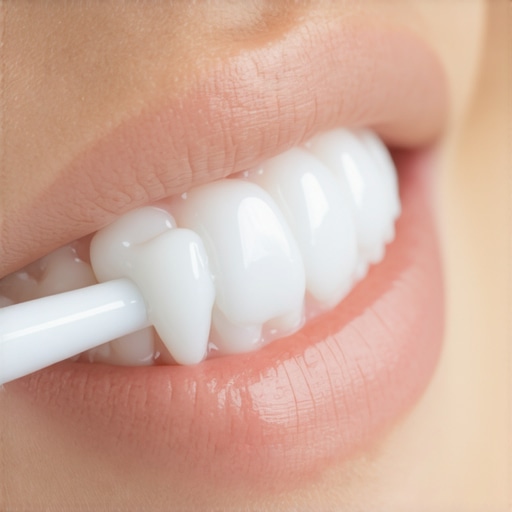
Why your floss needs to hug your teeth
If you are just popping the floss in and out of the gaps, you are essentially leaving the most dangerous bacteria behind. You have to create a ‘C’ shape around the side of the tooth and slide it gently up and down. I remember when I first tried to get serious about this; I was incredibly frustrated because my teeth are packed together like a crowded subway car. Every time I tried to floss, the string would shred or snap painfully against my gums. I nearly quit until I discovered the secret to flossing when your teeth are tightly crowded, which involves using a slight sawing motion to ‘ease’ the floss through the contact point rather than forcing it. If traditional string feels like an impossible chore, do not be afraid to go mechanical. I eventually invested in a water flosser. The first time I turned it on, I accidentally sprayed the bathroom mirror, the hallway, and my own forehead. It was a watery disaster, but once I figured out the aim, the results were undeniable. Even for those without orthodontics, understanding the benefit of using a water flosser with your braces or natural teeth can be the difference between chronic bleeding and a clean bill of health.
High-tech tools that spot trouble before it starts
Sometimes the blood in the sink is not just a technique issue; it is a sign of something shifting beneath the surface that you cannot see in the mirror. If your hygiene is perfect and the bleeding persists in one specific spot, you need a deeper look. This is where modern technology in family dentistry truly shines. You might wonder about the reason your Culpeper dentist uses CBCT scans instead of regular x-rays—it is because a 3D view reveals the exact thickness of your bone and the health of the periodontal ligament. When we can see the ‘hidden’ architecture of your mouth, we can find out how to stop your gums from receding without painful surgery by catching the bone loss in its earliest stages. This proactive approach turns a scary ‘bleeding’ problem into a manageable ‘maintenance’ task.
It is a dangerous myth I hear all the time: ‘Once I get my implants or veneers, I can finally stop worrying about my teeth.’ I hate to be the bearer of bad news, but that mindset is exactly how people end up back in the chair with even bigger problems. We often view restorative work as a finish line, but in reality, it is just a new beginning with a different set of rules. I have seen patients invest thousands in their smiles only to ignore the subtle signs of trouble because they assumed titanium and porcelain were invincible. Let’s get one thing straight: while the material cannot get a cavity, the bone and tissue holding them in place are still very much alive and vulnerable.
Your new teeth are not indestructible
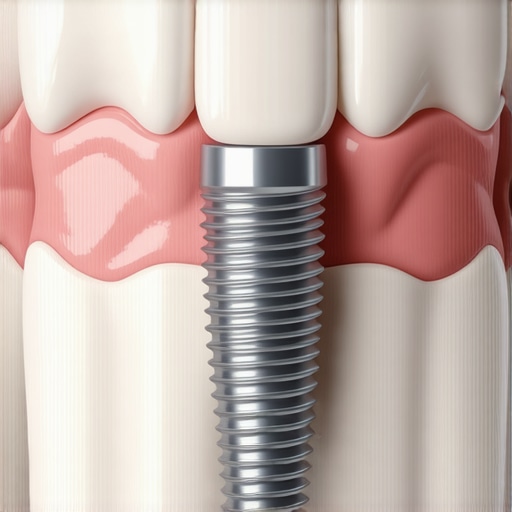
Most people believe that dental implants are a ‘set it and forget it’ solution. However, a study published in the Journal of Periodontology indicates that peri-implantitis—a site-specific inflammatory reaction—can affect up to 43% of patients over time. In my experience, the biggest trap is failing to recognize the red flags that your dental implant is being rejected or failing due to poor hygiene. If you treat an implant like a piece of plastic instead of a biological integration, you are asking for trouble. Unlike a natural tooth, an implant lacks a periodontal ligament to act as a shock absorber or a sensory warning system. This is why how dental implants reshape your oral health in 2025 involves much more than just a surgical procedure; it requires a lifelong commitment to advanced maintenance.
Why does your dental implant feel tight when you wake up?
If you have ever experienced this sensation, you are not alone, and it is rarely about the implant itself. Usually, this ‘tightness’ is a sign of nocturnal bruxism—grinding your teeth at night. Because implants are fused directly to the bone (osseointegration), they don’t have the slight ‘give’ that natural teeth do. When you grind, the pressure is transferred directly to the jawbone. If you ignore why your dental implant feels tight when you wake up, you risk micro-fractures in the bone or even a broken abutment. This is the ‘oops’ factor most people miss: the restoration is strong, but the foundation is still human. Have you ever fallen into this trap of thinking your dental work was bulletproof? Let me know in the comments.
The veneer trap that ruins natural health
Veneers are a miracle of cosmetic dentistry secrets, but there is a nuance that many patients overlook: the ‘bulky’ margin. If a veneer is poorly placed, it creates a tiny ledge that acts as a magnet for plaque. I often hear patients complain that the reason your veneers feel thicker than your natural teeth is just a matter of getting used to them. Sometimes, though, it is a sign that the ‘biological width’ has been violated. When a restoration is too thick at the gum line, the body reacts with chronic inflammation. You might also notice the reason your veneers look different in sunlight versus indoors, which often comes down to the quality and translucency of the material used. Choosing between the truth about the durability of composite vs porcelain veneers is vital, but the skill of the placement is what keeps your gums from receding in protest. If you are noticing persistent redness around a new restoration, contact us before a cosmetic fix becomes a medical nightmare.
Stop guessing if your back teeth are actually clean
I used to think that as long as I moved the floss between my teeth, I was safe. But for those of us with bridges or implants, that is just not enough. I have switched almost entirely to interdental brushes for my molars. These look like tiny pipe cleaners and are far superior at scrubbing the concave surfaces where food particles love to hide. I’ve found that even the most thorough brushing session leaves about 40% of the tooth surface untouched, and that is where the trouble starts. When you are looking at expert tips for perfect results, the focus is always on the daily mechanics of cleaning those hard-to-reach margins. If you aren’t sure which size brush fits your gaps, ask your hygienist to measure your interproximal spaces during your next visit. It’s a five-minute conversation that can save you a five-thousand-dollar revision surgery down the road.
How can I make my dental investment last a lifetime?
Maintenance is not just about cleaning; it’s about protection. I never go to sleep without a custom-fitted night guard. As I mentioned earlier, the pressure of grinding can be catastrophic for porcelain and titanium. Beyond the physical protection, we have to look at the chemistry of our mouths. I recommend testing your saliva pH if you are prone to staining or early gum recession. An acidic environment is a playground for the bacteria that cause peri-implantitis. Integrating family dentistry tips for a lifetime of healthy smiles often means adjusting your diet to include more alkaline-heavy greens, which naturally buffers the acidity in your mouth. Also, stay updated on innovations that redefine comfort and durability because new professional-grade cleaning tools are being released every year that are safer for your restorations than the tools we used a decade ago.
Smart implants are just around the corner
The future of this field is incredibly exciting. I’m keeping a close eye on the development of ‘bio-responsive’ implants. According to technical insights from the American Academy of Implant Dentistry, researchers are currently testing implants that can actually release localized antimicrobial agents when they detect a change in the surrounding tissue’s temperature or pH level. This means the future of dental implants might include restorations that ‘talk’ to us before we even feel a hint of pain. I predict that within the next decade, your dentist will be able to monitor the health of your jawbone remotely through a small chip embedded in the implant itself. It sounds like science fiction, but this is the direction how dental implants reshape your oral health in 2025 is taking us. For now, your best move is to be proactive. My one advanced tip for you today: buy a dedicated alkaline mouthwash and use it immediately after your morning coffee to neutralize the acid. It’s a small habit that makes a massive difference for your veneer longevity.
I Had to Stop Punishing My Smile to Actually Save It
Reflecting on my own journey, the ‘lightbulb moment’ wasn’t finding a new miracle toothpaste; it was realizing that my mouth is a living ecosystem, not a porcelain statue. First, I learned that bleeding is a distress signal, not a sign of a ‘thorough’ clean. Second, I realized that how dental implants reshape your oral health in 2025 is entirely dependent on the synergy between professional technology and my daily habits. Finally, I accepted that maintenance isn’t a chore—it’s the insurance policy for the confidence I’ve gained. If you’re still seeing pink in the sink, it’s time to stop scrubbing and start listening to what your body is saying.
The Non-Negotiable Kit for Your Bathroom Counter
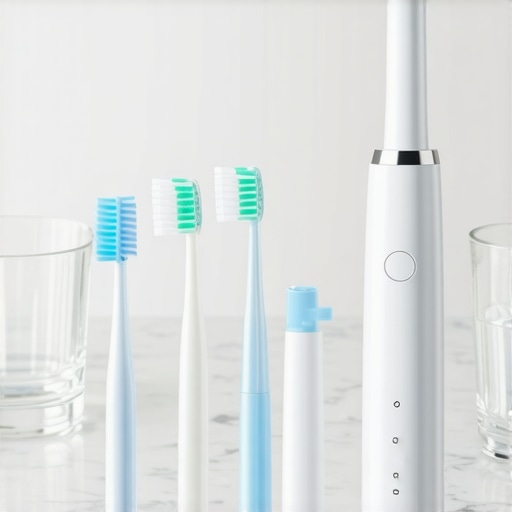
I trust these specific tools because they transitioned me from ‘panic mode’ to ‘maintenance mode.’ I never skip my water flosser now, as it is far more effective than string alone for reaching the undersides of complex dental work. I also keep a stash of interdental brushes for those tight molar gaps where traditional brushing fails to penetrate the plaque film. To keep my environment stable, I follow family dentistry tips for a lifetime of healthy smiles like switching to a soft-bristled electric brush with a pressure sensor. These tools take the guesswork out of hygiene, ensuring you don’t over-scrub while you’re still half-asleep in the morning.
Your Journey Toward a Pain-Free Smile Starts Now
You don’t have to wait for a major procedure to start feeling proud of your oral health again. Whether you are curious about the future of dental implants or you just want to know how to transform your smile with veneers without risking your gum health, the best time to act is today. Don’t let a little blood or a tight-feeling implant scare you into inaction. Use these cosmetic dentistry secrets to boost your confidence and get back to a life where you don’t have to hide your grin. If you have any lingering doubts or notice redness that won’t go away, please contact us so we can help you find a pain-free path forward. Have you ever felt like you were doing everything ‘right’ but still saw blood when you brushed? Let me know in the comments below!