I’ll never forget the morning I realized my morning routine had become a form of low-grade torture. I was standing in front of my mirror, dreading the moment the toothbrush would hit my gum line. I used to think that if I didn’t scrub until my gums were tingly, I wasn’t really ‘cleaning’ them. It was a classic case of more effort leading to more damage. If you’ve ever winced while rinsing with cold water or seen a flash of red in the sink, you know exactly what I’m talking about. Today, I’m going to share the techniques that saved my smile and kept me out of the periodontist’s chair for painful surgery. [image_placeholder]
Stop Treating Your Gums Like a Dirty Kitchen Floor
For years, I made the massive mistake of choosing ‘medium’ bristles because I thought ‘soft’ ones were for kids. I was essentially taking a scouring pad to my delicate gum tissue every single day. This is a common trap, and it’s often how to tell if your gum recession is caused by brushing too hard rather than just bad luck. My ‘aha!’ moment came when my dentist pointed out that I was literally scrubbing my gums away. We often think that force equals cleanliness, but when it comes to oral health, gentleness is actually your superpower. This is especially true if you are already dealing with issues like pregnancy-related gum sensitivity or if you have recently invested in veneers transformation to boost your confidence.
Is an expensive toothbrush actually worth the hype?
You might be skeptical about whether a fancy gadget can really change your gum health. I certainly was. I worried it would be too vibrating and make the pain worse. In fact, many people find that their gums bleed every time they try a new electric toothbrush because they haven’t learned the right pressure yet. However, the American Dental Association notes that while both manual and electric toothbrushes are effective, electric models with pressure sensors are literal life-savers for ‘aggressive’ brushers like me. Have you ever felt like you’re doing everything right, yet your gums still throb? You aren’t alone. Understanding the ‘why’ behind the pain is the first step toward a comfortable morning routine. Whether you’re managing family dentistry tips for your kids or looking for cosmetic dentistry secrets to protect your investment, the ‘brush-stroke’ matters more than the brush itself. Let’s dive into the actual mechanics of how to pivot from scrubbing to soothing.
Switch Your Grip to Save Your Smile
To start, change how you hold the brush. If you grip it like a hammer, you will likely hit your gums like a nail. Instead, hold it with just your fingertips, like a pencil. This naturally limits the force you can apply. Think of it as dusting a delicate piece of porcelain rather than scrubbing a cast-iron skillet. This simple shift is vital when you are trying to learn how to stop your gums from receding without painful surgery. Next, the angle is everything. Tilt the bristles at a 45-degree angle toward the gum line. I used to go straight on, which just smashed the bristles against the surface. By angling them, the soft tips can actually slide slightly under the gum margin to tickle out the bacteria without slicing the tissue. 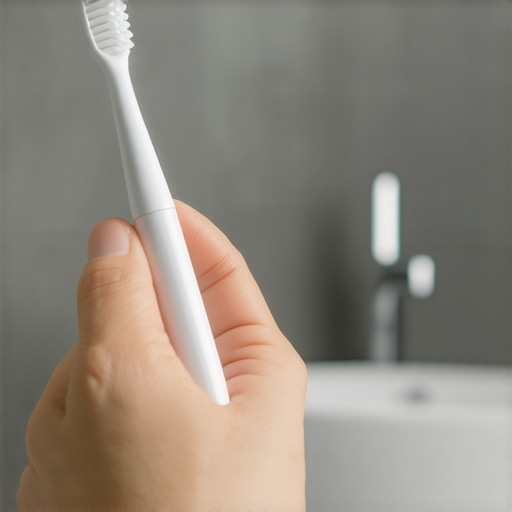
Hold Your Brush Like a Pencil
I remember the first time I tried to level up my routine with a water flosser. I leaned over the sink, turned it to the highest setting immediately, and proceeded to spray my bathroom mirror, my hair, and the ceiling in about three seconds. It was a disaster, and I almost gave up. But once I turned the pressure down and focused on the ‘pulse’ between my teeth, the inflammation I had lived with for years started to vanish. If you are wearing hardware, you will find the benefit of using a water flosser with your braces or bridges is even more pronounced. This tool is often the missing link in family dentistry tips because it reaches where bristles simply cannot.
Why the C-Shape Floss Method Wins
If you are still using a sawing motion with your floss, you are likely doing more harm than good. You need to wrap the floss in a ‘C’ shape around the base of each tooth, sliding it gently under the gum line. This is the secret to flossing when your teeth are tightly crowded. When I first slowed down to do this correctly, I realized I was finally removing the plaque that was causing my persistent gingivitis.
Protect Your Cosmetic Investment
What if you have dental work? If you have gone through a veneers transformation, your focus shifts to the ‘margin’ where the porcelain meets the natural tooth. You need to be even more meticulous but equally gentle to avoid chipping or irritation. For those looking into dental implants 2025 innovations, remember that the tissue around an implant does not have the same blood supply as a natural tooth. It is more prone to infection if you are ‘scrubbing’ and creating micro-tears. If you notice that your gums bleed every time you try a new electric toothbrush, do not throw the gadget away. It is usually a sign that you are still applying manual pressure while the motor is doing the work. Let the vibration do the heavy lifting. Your only job is to guide the brush head across the surface like a slow-moving parade float.I often hear people say that once they get a full set of porcelain covers, they are “done” with dental drama. This is the biggest myth in cosmetic dentistry secrets. In my experience, your maintenance routine actually needs to get more precise, not less. While porcelain doesn’t decay, the tooth structure underneath and the gums surrounding it are still very much alive and vulnerable. If you treat your new smile like it’s bulletproof, you’re setting yourself up for a very expensive “oops” moment. One trap I see constantly is the obsession with the brightest possible shade. It is the mistake that makes your teeth look too white and fake, and it often happens because we forget that natural teeth have a certain level of translucency. When I was looking into my own options, I had to choose between veneers vs crowns, and the nuance of color matching at the gum line was what made the difference between a “worked on” look and a natural glow. 
Does existing bone loss mean you should skip implants?
Many patients are told they aren’t candidates for implants because their jawbone has thinned over time. However, the American Academy of Implant Dentistry highlights that modern grafting techniques make it possible for almost anyone to rebuild that foundation. Understanding the truth about getting dental implants if you have existing bone loss is vital because the nuance here is that a bone graft isn’t a failure—it’s a high-level preparation for a lifetime of stability. In fact, the biological nuance that most people miss is that implants lack the “periodontal ligament”—a group of fibers that act as a shock absorber and a barrier for natural teeth. A study published in the Journal of Periodontology notes that without this ligament, infection can travel to the bone much faster than with natural teeth. This is why you cannot afford to be lazy with your hygiene just because your tooth is “titanium.” The hidden mistake in family dentistry tips is focusing only on the teeth we can see while ignoring the bone structure underneath. This is why tools like CBCT scans are so important; they show the 3D reality of your mouth. Have you ever fallen into the trap of thinking a procedure was “one and done”? Let me know in the comments. I’d love to hear your experiences with keeping up your dental investments.When I finally committed to my smile makeover, I realized the hard way that the work doesn’t end when you leave the dentist’s chair. In fact, that is just the beginning of the maintenance phase. If you want to avoid a situation where you are wondering why your dental bridge feels like it is trapping food or why your expensive porcelain looks dull, you need a specific toolkit. I personally swear by a high-quality night guard. Even if you don’t think you grind your teeth, the micro-movements during sleep can cause ‘crazing’ or tiny cracks in your porcelain. Learning how to clean your night guard without damaging the material is just as important as wearing it; using the wrong chemicals can actually transfer toxins into your system every night.
Stop the Grinding Before It Shatters Your Investment
I’ve seen people spend thousands on a veneers transformation only to chip a front tooth six months later because they skipped the protective guard. According to Dr. Gordon Christensen of Clinicians Report, the longevity of dental restorations is directly tied to the patient’s management of occlusal forces. Basically, if you hit your teeth together too hard, something is going to break. This is why I tell everyone to look at their smile as a high-performance machine that requires regular tuning. It is the same logic used in family dentistry tips for children; we protect their molars with sealants, and we must protect our cosmetic work with physical barriers. 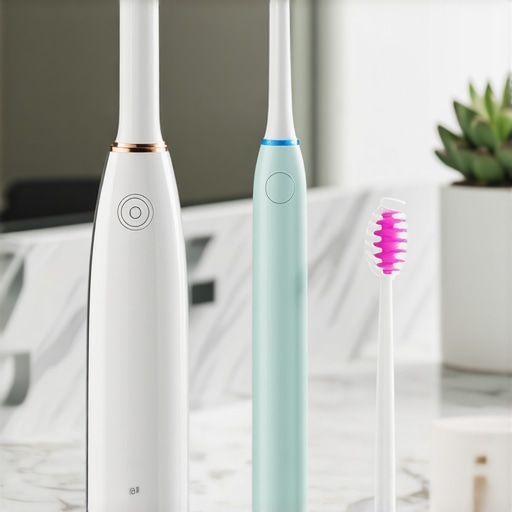
How do I keep my new smile looking perfect for years?
The secret isn’t just brushing; it’s the specific equipment you use. I shifted to a Waterpik Aquarius because it has ten pressure settings. For my natural teeth, I use a seven, but for the area around my implants, I drop it to a three. This is crucial for avoiding the irritation that leads to why your dental implant area feels tingly or numb. You want to flush the bacteria without blasting the delicate tissue attachment. If you are comparing the truth about the durability of composite vs porcelain veneers, remember that while porcelain is stain-resistant, the composite ‘luting’ agent at the edges is not. That is where your morning coffee will show up first if you aren’t using a water flosser daily.
Smarter Smiles Are Coming Sooner Than You Think
Looking ahead, I predict we are moving toward ‘smart’ restorations. We are already seeing how how dental implants reshape your oral health in 2025 with bioactive materials that actually encourage bone growth. Within the next decade, I expect to see veneers with embedded sensors that can alert your phone if your gum acidity levels are rising or if you’re grinding too hard at night. We are moving away from reactive dentistry and into an era of real-time monitoring. For now, the best thing you can do is stick to the fundamentals. My challenge for you this week: switch to a ‘pencil grip’ on your toothbrush and see if your gums stop looking so angry. Your future self (and your bank account) will thank you.
The Expensive Truth About ‘Scrubbing’ Your Teeth
After years of trial and error, I realized that oral health isn’t about how hard you work, but how smart you work. First, remember that gum tissue is incredibly delicate; once it recedes, it rarely grows back on its own. It’s also crucial to realize that even if you’ve had a veneers transformation, your natural tooth structure is still at risk if you don’t maintain the gum line. I also learned that why porcelain veneers sometimes cause sensitivity to cold drinks often relates to how well you protect that margin during your daily routine. Don’t mistake a loud vibration or a firm brush for a deep clean; the quietest, softest approach is usually the most effective for long-term health.
My Daily Essentials for Total Smile Protection
To keep everything in top shape, I’ve narrowed down my kit to a few non-negotiables. First, follow family dentistry tips for a lifetime of healthy smiles by scheduling regular cleanings—don’t wait for something to hurt. Second, if you are planning major work, ask the reason your Culpeper dentist uses CBCT scans instead of regular x-rays because it provides a 3D map of your jaw that standard films miss. Finally, if you’re upgrading your look, take the time to learn how to pick the right shade for your new porcelain veneers so they look authentically you. These tools and tips are the foundation of a routine that prevents emergencies rather than just reacting to them.
Take the First Step Toward Your Best Smile
Changing a lifelong habit like how you brush isn’t easy, but it’s the most impactful thing you can do for your confidence. We are entering an amazing era where how dental implants reshape your oral health in 2025 is making it easier than ever to recover from past mistakes and enjoy a full, functional bite. You deserve a smile that doesn’t just look great in photos but feels healthy and strong every single morning. Trust the process and be patient with yourself as you relearn these mechanics. Have you ever tried the ‘pencil grip’ on your toothbrush, or did it feel too strange at first? Let me know in the comments below!