I remember the exact moment my dental bridge decided it was done. It was a random Tuesday morning, mid-sourdough toast, and I felt a tiny, sickening ‘click’ against my molar. It wasn’t a crumb; it was the seal of my dental work finally giving up the ghost. I spent years following family dentistry tips for a lifetime of healthy smiles, but I still fell into the trap of thinking that once a bridge is in, it is there forever. It is a sinking feeling, wondering if your smile is about to literally fall apart. Today, I am going to help you skip that expensive panic by showing you exactly how to spot the red flags before your bridge ends up in your hand during dinner. My biggest mistake early on was ignoring the debris; I kept trying to figure out how to tell if your dental bridge is trapped with food, but I convinced myself it was just my poor flossing technique. In reality, the bridge was lifting. Have you ever felt a weird ‘wiggle’ while eating, or are you just here because your gut says something is off?
Your Dental Bridge Isn’t a Permanent Fixture
It is easy to get complacent. When your bridge is new, it feels like part of your skeleton. But we have to be realistic: most dental bridges aren’t designed to survive decades of chewing and grinding. According to the Cleveland Clinic, the typical lifespan of a bridge is only about 5 to 15 years. If yours is creeping toward that double-digit birthday, it is time to start paying attention. I learned the hard way that the danger of wait and see for a loose dental bridge is that you often end up damaging the healthy ‘anchor’ teeth that hold the bridge in place. When those go, you are looking at much more invasive work, like dental implants, which are fantastic but definitely a bigger project than a simple repair.
Is modern cosmetic dentistry really any better than the old stuff?
Many people worry that replacing an old bridge is just throwing good money after bad. I felt that skepticism too. I wondered if the materials had even improved since I got my original work done. The truth is, the ceramics and bonding agents used in cosmetic dentistry today are lightyears ahead of what we had even ten years ago. They are more durable and look significantly more like natural enamel. If your bridge looks ‘opaque’ or has that tell-tale dark line at the gum, it is not just old—it is likely failing. Let’s walk through the specific physical sensations you should be looking for right now.
How to Tell if That Wiggle is Trouble
Your dental bridge should feel like a solid part of your jaw, not a loose fence post. One of the first things I noticed when mine started to fail was a subtle ‘give’ when I chewed. If you can feel any movement with your tongue, or if there is a tiny clicking sound when you release your bite, the cement has likely washed away. This is dangerous because once the seal is broken, bacteria sneak underneath and start eating away at the teeth holding the bridge in place. I remember trying to ignore a slight shifting while eating a grape; I thought it was just the fruit’s skin, but it was actually the bridge lifting. If you are at this stage, you need to know the danger of wait and see for a loose dental bridge because a quick recementing now could save you from a full extraction later. 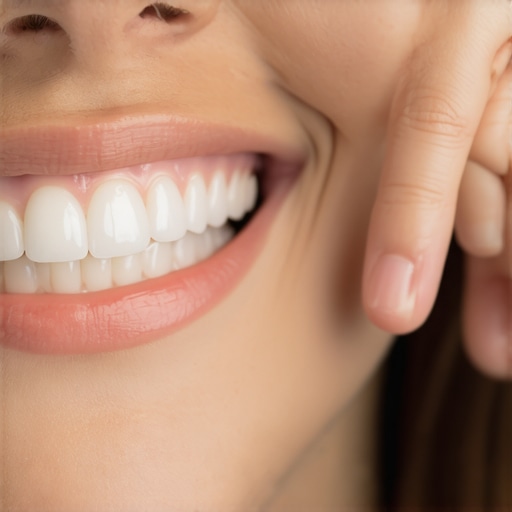
The Pressure Test You Can Do at Home
Take a clean finger and apply gentle upward or downward pressure on each side of the bridge. It should feel as rigid as your natural teeth. If you feel even a millimeter of vertical movement, the bond is compromised. This often happens because the structural teeth underneath have developed a new cavity. If you suspect something is stuck, you might be looking for the best way to remove a stubborn spinach leaf from under your bridge, but if the sensation persists after cleaning, it is structural, not debris.
Why Your Gums are Sending SOS Signals
Look closely at the area where the bridge meets your gum line. Is there a new dark shadow or a literal gap? In my case, I noticed a greyish tint that I thought was just a bruise from brushing too hard. It turns out that why your gums look dark around a porcelain fused to metal crown or bridge is often a sign of gum recession or the metal structure showing through as the fit degrades. If the gums are puffy, red, or bleed when you floss under the ‘pontic’ (the fake tooth), your body is reacting to trapped bacteria. I spent weeks trying to figure out how to tell if your dental bridge is trapped with food, but no amount of specialized floss could fix the inflammation because the bridge itself was no longer sitting flush.
Don’t Ignore the Metallic Taste or Odor
A failing bridge often creates a ‘pocket’ that acts like a petri dish. If you notice a persistent metallic taste or a bad smell even after a thorough cleaning, the underlying teeth are likely in trouble. This was my biggest red flag. I thought my hygiene was failing, but the bridge was actually harboring decay. When a bridge fails completely, many people transition to dental implants. It is important to understand that the reason your dental implant feels different than a natural tooth is actually a benefit; they can’t decay like the anchor teeth under your bridge. Before you make a decision, weigh your needs by looking at veneers vs crowns choosing the best option for your smile to see if a simpler restoration is still possible. Remember, the truth about the lifespan of a dental implant is that they often outlast bridges by decades, making them a smarter long-term investment if your current bridge has reached its expiration date.
We often treat dental work like a finished task, something we can check off a list and forget about for twenty years. But let’s dig deeper into the nuance that most people miss: dental health isn’t a destination; it is a cycle of strategic maintenance. One of the biggest contrarian views I have developed after years of navigating cosmetic dentistry is that keeping a natural tooth ‘at all costs’ isn’t always the smartest move. I know, that sounds backwards. We have all heard family dentistry tips for a lifetime of healthy smiles that emphasize preservation. However, if you are fighting to save a tooth that is structurally compromised or chronically infected under an old bridge, you might be destroying the very bone you need for a future restoration. According to the American Academy of Implant Dentistry, you can lose up to 25% of the bone volume in a tooth-extraction area within just the first year. By ‘waiting and seeing’ with a failing bridge, you are essentially gambling with the foundation of your jaw.
Stop Treating Your Smile Like a One-Time Project
The trap many of us fall into is thinking that a new bridge or crown is just a cosmetic upgrade. In reality, the materials used in dental implants and modern bridges today are designed to work with your biology, not just sit on top of it. I remember being so focused on the aesthetics that I almost made the classic ‘Oops’ factor mistake: I wanted veneers because they looked thinner and more ‘natural.’ But my dentist rightly pointed out that because I am a nighttime tooth-grinder, I was in the middle of the veneers vs crowns choosing the best option for your smile dilemma where physics had to beat vanity. Choosing a veneer on a tooth that needs the structural ‘hug’ of a crown is a recipe for a 2:00 AM emergency call. Another common error is the mistake that makes your teeth look too white and fake, which often happens when we ignore how the light interacts with the gum line. Modern restorations should have a gradient, just like real enamel.
Is an immediate load implant actually safe for you?
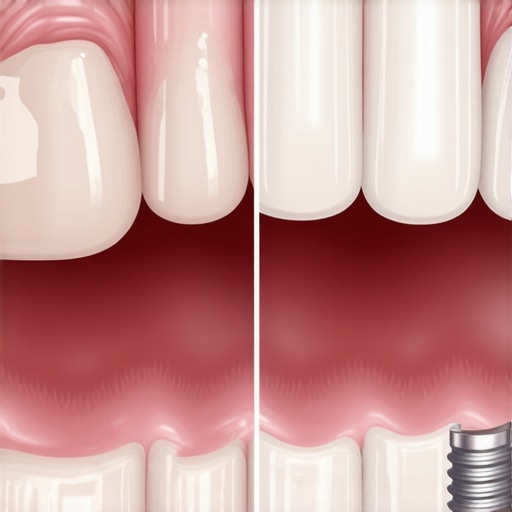
If you have been researching replacements for a failing bridge, you have likely seen advertisements for ‘teeth in a day.’ This brings us to a sophisticated question: when can you skip the traditional months-long waiting period? To understand how to know if you are a candidate for immediate load implants, you have to look at your primary stability—essentially how tightly the implant screws into the existing bone. If your bridge failed because of bone loss, you likely aren’t a candidate for the ‘instant’ version. This is why I am such an advocate for acting the moment you feel that ‘wiggle’ we discussed earlier. The faster you replace a failing bridge, the more bone you preserve, and the more likely you are to qualify for the most advanced, comfortable tech available today. Have you ever fallen into the ‘wait and see’ trap, only to regret it later? Let me know in the comments; I’d love to hear how you handled that decision.
The real work starts after the anesthesia wears off. Maintenance isn’t just a chore; it is how you protect a five-figure investment in your face. I am personally obsessed with the Waterpik Aquarius because it has a dedicated Plaque Seeker tip. If you have wondered why your gums bleed every time you try a new electric toothbrush, it is often because you are irritating the surface rather than flushing the debris from the tunnel under your bridge. Manual floss is great for natural teeth, but for a bridge, you need pressurized water to clear out the microscopic buildup that turns into bone-eating bacteria.
The Water Flosser is Your Only Real Insurance Policy
I do not care how expensive your toothbrush is; it cannot get behind the ceramic anchor teeth of a bridge. The Journal of Oral Implantology suggests that consistent mechanical debridement with an oral irrigator reduces the risk of peri-implantitis by up to 45% compared to manual flossing alone. This isn’t just about fresh breath; it is about making sure how dental implants reshape your oral health in 2025 remains a success story rather than a cautionary tale. 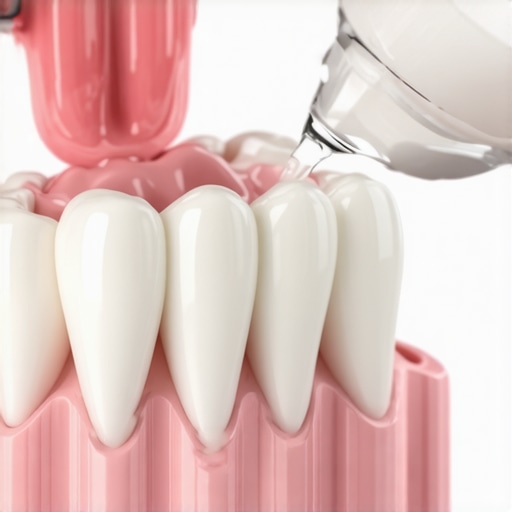
Why You Should Demand a 3D Scan Before Any Major Work
One tool that changed everything for me was the CBCT scan. In the past, dentists relied on flat 2D X-rays that missed the thickness of the bone. You need to understand the reason your Culpeper dentist uses CBCT scans instead of regular x-rays because it is the difference between a guess and a blueprint. If you are looking at the future of dental implants cutting edge techniques in cosmetic dentistry, you will see that 3D mapping is no longer optional—it is the gold standard for avoiding nerve damage and ensuring the bridge or implant is perfectly centered.
How do I keep my dental work alive for twenty years?
The secret is proactive monitoring. Do not wait for the wiggle. I recommend taking a high-res photo of your gumline every six months. If the pink tissue starts to pull away from the ceramic, you have caught a problem before it requires surgery. We are heading toward a future where smart toothbrushes will actually analyze the bacterial composition of your saliva in real-time to alert you to decay under a crown before it even hurts. For now, following basic family dentistry tips for a lifetime of healthy smiles is your foundation, but the tools like water flossers and 3D scans are your reinforcements. If you are feeling unsure about your current hardware, contact us for a digital wellness checkup. Try this tonight: swap your string floss for a water irrigator for one week and watch how much the inflammation around your bridge drops. You will be shocked.
The Real Lessons I Learned After My Bridge Failed
Looking back, I realized that my biggest mistake wasn’t the way I brushed, but the way I listened to my body. Here is what I wish someone had told me before that Tuesday morning click: First, your nerves can be deceptive. You might think that because there is no throbbing pain, everything is fine. In reality, the teeth under a bridge can decay significantly without you feeling a thing until the structure literally snaps. Second, the dark shadow at your gumline is never just ‘staining.’ It is almost always a sign that the seal has been breached. I learned that cosmetic dentistry secrets to boost your confidence often start with ensuring the hardware is still flush against the tissue. Finally, never underestimate the power of a second opinion. If your gut says your bridge is moving, but a standard X-ray looks okay, ask for a 3D view. Don’t fall for the danger of ignoring a small chip on your molar or a slight change in your bridge’s fit; these are the early warnings of a total system failure.
What I Keep in My Medicine Cabinet Now
To prevent a repeat of my dental drama, I’ve curated a toolkit that goes beyond a standard toothbrush. I highly recommend a high-quality water flosser; it is the only way to reach the ‘blind spots’ under the fake tooth that manual floss misses. I also prioritize family dentistry tips for a lifetime of healthy smiles, which include using a pH-balanced mouthwash to keep the oral microbiome stable. I also keep a digital copy of my most recent 3D scan on my phone. Knowing the reason your Culpeper dentist uses CBCT scans instead of regular x-rays helped me understand that I need that baseline to track bone health over time. If you aren’t seeing 3D imagery of your jaw, you are only seeing half the story.
#IMAGE_PLACEHOLDER_E#
Start Your Journey to a Permanent Solution
If you are currently sitting there with a bridge that feels like it’s on its last legs, take a deep breath. Technology has evolved so much that you aren’t stuck with the same clunky options from twenty years ago. Exploring the future of dental implants cutting edge techniques in cosmetic dentistry can give you a restoration that looks and feels exactly like your natural teeth. Transitioning to a more permanent fix like an implant is often the best way to stop the cycle of repairs. You deserve a smile that doesn’t make you nervous every time you take a bite of sourdough toast. Understanding how dental implants reshape your oral health in 2025 is the first step toward a worry-free future. If you’re ready to stop guessing and start fixing, contact us today for a consultation. Have you ever felt that tiny, sickening ‘click’ or wiggle in your own dental work? Let me know in the comments below—I’d love to hear how you handled it.