I’ll never forget the first time I tried to help my uncle clean his brand-new set of dentures. I grabbed the stiffest toothbrush in the cabinet and a glob of whitening toothpaste, thinking the more scrub I gave them, the better. Big mistake. Within weeks, those beautiful, polished surfaces looked dull and felt like fine-grit sandpaper against his gums. I felt terrible. It turns out, the very things we use to keep our natural teeth healthy—like abrasive pastes and hard bristles—are basically a death sentence for denture acrylic. Today, I want to share the gentle, scratch-free method I’ve perfected over years of trial and error. We’re going to move past the hard scrub mentality and embrace a routine that keeps your smile bright and your mouth healthy without the damage.
Why Your Favorite Toothpaste is Ruining Your Smile
Using standard toothpaste on a denture is like using a scouring pad on a Ferrari. While your natural enamel is the hardest substance in your body, the materials used in cosmetic dentistry and dentures are much softer. When you use abrasive pastes, you create microscopic grooves. These tiny scratches are the perfect hiding spots for bacteria, which eventually leads to that nasty odor we all want to avoid. If you have been struggling with discomfort, you might even need to learn how to treat a sore spot caused by your new dentures that could be aggravated by those rough, scratched surfaces rubbing against your tissues.
Is specialized denture cleaner actually worth the extra trip to the store?
Absolutely. I used to think it was just a marketing gimmick to get us to spend more money, but the science does not lie. According to research published by the National Institutes of Health, using non-abrasive chemical cleaners is significantly more effective at removing biofilm without altering the surface integrity of the resin compared to mechanical brushing with toothpaste. The goal is to dissolve the grime, not scrape it off. If you have ever worried about the mistake that makes your teeth look too white and fake, remember that a scratched surface will pick up stains from coffee and tea much faster, making the color look uneven and cloudy over time. Staying away from the abrasive stuff is the first step in family dentistry tips for a lifetime of healthy smiles. Have you noticed your dentures losing their original luster or feeling a bit rough to the tongue lately? I would love to hear what your current routine looks like in the comments below.
Protect Your Investment Before You Even Turn on the Tap
The very first thing you need to do is fill your sink with a few inches of water or lay down a thick, folded towel. I learned this the hard way when a friend’s dad once fumbled his lower plate over a marble countertop while trying to be “efficient.” The sound of that crack was sickening—it sounded just like a broken porcelain dish hitting the floor. Dentures are remarkably durable inside the mouth, but they are surprisingly brittle when dropped onto hard surfaces. This simple safety net is the backbone of family dentistry tips for a lifetime of healthy smiles. Once you have your “landing pad” ready, rinse the dentures under lukewarm water to knock off any loose food particles. Never use boiling or hot water, as it can warp the acrylic, turning a perfect fit into a nightmare that requires a full reline.
Pick Your Tools Like a Pro
Forget your standard toothbrush. You need a soft-bristle brush specifically designed for dentures, which usually features a different head shape to reach into the grooves where the gums sit. If you use a regular “firm” brush, you risk the same issues as those with natural teeth who wonder how to tell if your gum recession is caused by brushing too hard; the friction is simply too aggressive for the resin. Think of it like maintaining a veneers transformation—you want to remove the biofilm without scratching the finish. 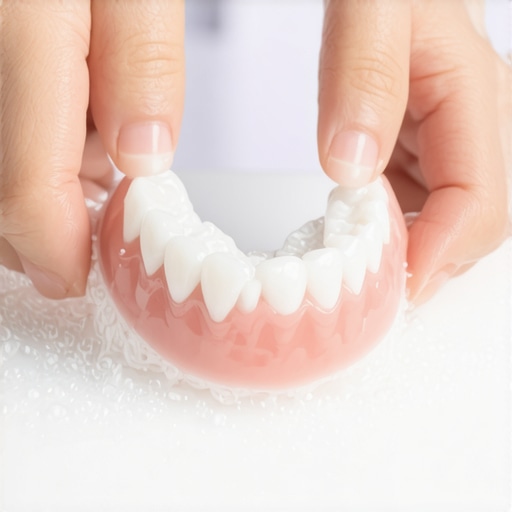
The Secret Sauce of the Nightly Soak
While it is tempting to just scrub and go, the real magic happens while you sleep. Placing your dentures in a non-abrasive soaking solution overnight does what a brush never can: it penetrates the porous material to kill bacteria in the deep “valleys” of the acrylic. This is very similar to the process of how to remove stains from clear aligners without scratching them. If you skip this, plaque hardens into tartar (calculus), and that is when you start noticing the reason your porcelain veneer feels rough to your tongue—or in this case, why your dentures feel gritty and uncomfortable. Always make sure the dentures are fully submerged; if they dry out, they can lose their shape, much like how a contact lens shrivels up.
Maintain Your Gums While Your Teeth Are Out
Don’t ignore your mouth just because the teeth are in a glass. Use a soft cloth or a very gentle brush to clean your gums, tongue, and the roof of your mouth. This stimulates blood flow and removes the film that causes bad breath. If you have any remaining natural teeth or dental implants, give them extra attention. Just as cosmetic dentistry secrets to boost your confidence involve whole-mouth health, your denture routine is only half the battle if your gums aren’t healthy enough to support the appliance. Rinse thoroughly after the soak. When you wake up, don’t just pop them back in. The chemicals in soaking solutions are great at killing germs but can be irritating to your soft tissues if not rinsed away completely. Give them a final pass under the tap to ensure a fresh, clean start to your day. Avoid using bleach-based cleaners unless specifically directed, as they can whiten the pink “gum” part of the denture, making them look unnatural.
We have covered the basics of the daily scrub and soak, but if you really want to protect your long-term investment, we need to talk about the indestructible myth. Most patients believe that because dental implants or porcelain veneers are synthetic, they no longer require the same level of vigilance as natural teeth. This is a dangerous trap. While it is true that ceramic cannot develop a traditional cavity, the foundation—your bone and gum tissue—remains living and vulnerable. In fact, according to a study published in the Journal of Oral Implantology, nearly 20% of patients develop peri-implantitis, a condition similar to gum disease that can lead to total implant failure if the hygiene routine is even slightly lax. Putting your smile on autopilot is the fastest way to find yourself back in the chair for an expensive repair.
Stop Treating Your Implants Like Indestructible Robots
Everyone says that implants are the gold standard because they are permanent, but in my experience, the lifestyle you adopt after the surgery is what actually determines the truth about the lifespan of a dental implant. A common mistake is assuming that a firm bite or a minor shift in how the teeth meet is just a natural adjustment. If you feel a strange sensation, like why your dental implant feels like its vibrating when you talk, it is rarely a fluke; it is often a sign that the crown or the abutment has slightly loosened. Ignoring these subtle mechanical cues is a major “oops” factor that leads to fractured porcelain or, worse, damage to the underlying bone.
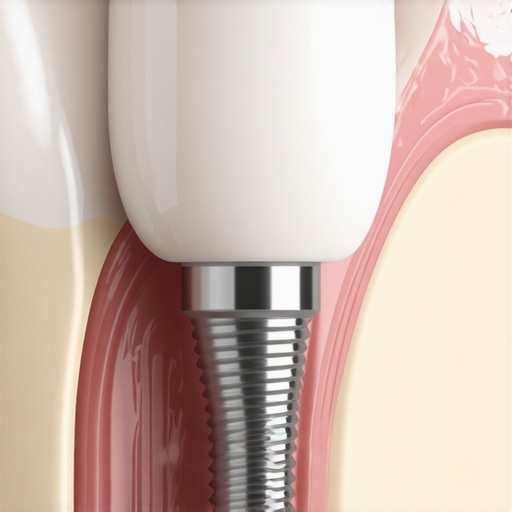
Why does my dental implant feel like it is vibrating when I use a hairdryer?
This sounds like a fringe question, but it is actually a sophisticated concern regarding bone density and osseointegration. If you have ever wondered why your dental crown feels like it is vibrating when you use a hair dryer, it is often due to the way sound waves and micro-vibrations travel through a titanium post compared to a natural tooth root. Because the implant lacks a periodontal ligament—the soft “shock absorber” found in natural teeth—vibrations are transmitted directly to the jawbone. This is a key nuance in the future of dental implants and cutting-edge techniques in cosmetic dentistry; we are now focusing on how the body perceives these restorations just as much as how they look.
The Trap of the “Wait and See” Approach
In the world of family dentistry tips for a lifetime of healthy smiles, the most expensive words a patient can say are “it doesn’t hurt that bad yet.” This is especially true for prosthetic work. Whether it is a loose bridge or a veneer that feels slightly thick, procrastination is your enemy. Understanding the danger of wait-and-see for a loose dental bridge is vital because a tiny gap allows bacteria to seep underneath, rotting the anchor teeth while you think everything is fine because the bridge itself looks perfect. Similarly, if your cosmetic work feels bulky, you should investigate why your veneers feel thick and bulky when you try to say the letter s rather than just hoping your tongue will adapt. Have you ever fallen into this trap of thinking your new teeth didn’t need the same care as your old ones? Let me know in the comments. We can work together to ensure your veneers transformation stays as beautiful as the day it was finished.
To make that happen, you need to upgrade your toolkit. I’ve seen too many people spend thousands on a full mouth reconstruction only to treat it with a $2 manual toothbrush. For anyone with a bridge or implants, a water flosser isn’t just a luxury; it’s the only way to reach the ‘biofilm graveyard’ that sits right where the titanium meets the gum. Unlike natural teeth, which have a tight seal of fibers, implants have a more delicate attachment. A study published in the Journal of Clinical Periodontology highlighted that water flossing is significantly more effective at reducing gingival bleeding around implants compared to traditional string floss, which often just pushes bacteria deeper into the sulcus.
Ditch the string for a high-pressure water flosser
I personally use the Waterpik Aquarius because of the ‘floss mode’ pulse technology. If you have a bridge, you know the struggle of threading that little plastic needle underneath—it’s tedious and most people just stop doing it after a week. With a water flosser, you can blast away debris from the underside of the pontic (the fake tooth) in seconds. This is one of those expert tips for perfect results that separates the people who keep their smiles for 20 years from those who need a redo in five. It also helps you maintain that pearly glow, much like the secret to keeping your smile white without giving up your morning tea, by removing surface stains before they can settle into the margins of your veneers.
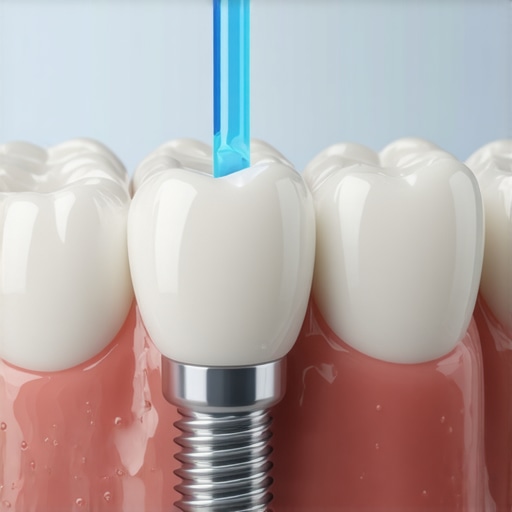
While water flossers are great, I also swear by TePe interdental brushes for those tight spots where a veneer might feel a bit snug. If you’ve ever wondered why your veneers feel tight against your natural teeth, it’s often because the contact point is extremely precise. Using a size-specific interdental brush—usually the 0.4mm (pink) or 0.45mm (orange) for cosmetic work—ensures you aren’t forcing space where it shouldn’t be. This level of detail is exactly what we discuss in family dentistry tips for a lifetime of healthy smiles. The key is to slide the brush in gently; if you have to force it, you are using the wrong size.
How do I keep my dental implants healthy for decades?
Consistency is your only defense against peri-implantitis. You should be checking the ‘feel’ of your bite every single morning. If you ever notice that your dental implant crown feels slightly wiggly when you bite, that is your immediate signal to call the office. In the future, I expect we will see ‘smart’ implants with built-in pH sensors that alert your phone when bacteria levels spike, but until then, you are the sensor. We are already seeing how dental implants reshape your oral health in 2025 through better material biocompatibility, making them even more resilient to the stresses of daily chewing. My advanced tip for you: try the ‘three-second hold.’ When using your water flosser, don’t just sweep it along the gumline. Pause at the base of every implant for three full seconds to allow the pulsating action to disrupt the sub-gingival plaque. It takes an extra minute, but it could save your entire jawbone foundation.
Monitor your smile with digital precision
Looking ahead, the trend is moving toward personalized preventive protocols based on your mouth’s specific microbiome. We aren’t just guessing anymore. High-resolution digital scans are allowing us to track wear on porcelain down to the micron. This is the heart of the future of dental implants and cutting-edge techniques in cosmetic dentistry. By comparing scans from one year to the next, we can catch a failing margin before it becomes a catastrophe. If your dentist isn’t offering digital mapping, it might be time to ask for it. It turns oral health from a guessing game into a data-driven science.
What No One Tells You About Living with Dental Prosthetics
Over the years, I have seen every mistake in the book when it comes to prosthetic maintenance. One of the most common surprises for my patients is the realization that their speech might change temporarily. If you find yourself wondering why your veneers feel thick and bulky when you try to say the letter s, remember that your tongue is simply relearning how to navigate new terrain. It takes about two weeks for your neural pathways to adjust, so do not panic. Another “lightbulb moment” happens when patients realize that how dental implants reshape your oral health in 2025 is not just about the surgery, but about the long-term hygiene routine. A synthetic root is only as strong as the bone around it, and that bone requires a bacteria-free environment to thrive.
My Essential Daily Toolkit for a Flawless Smile
When you are investing in expert tips for perfect results, the hardware you use at home matters just as much as the skill of your surgeon. I recommend the Waterpik Aquarius because its pulse technology is specifically designed to flush out the debris around implants that traditional floss cannot reach. For mechanical cleaning, the TePe Interdental Brush range is my gold standard. If you have ever felt why your veneers feel tight against your natural teeth, using the pink 0.4mm brush allows you to keep those tight contact points clean without causing trauma to the gum tissue. For denture wearers, I always suggest a dedicated soft-bristle brush and high-quality soaking tablets to avoid micro-scratches.
#IMAGE_PLACEHOLDER_E#
Your Future with a Confident New Smile
At the end of the day, your dental journey is about more than just aesthetics; it is about reclaiming the ability to eat, speak, and laugh without a second thought. Whether you are navigating life with a full set of dentures or exploring cosmetic dentistry secrets to boost your confidence, the effort you put into your daily routine is what secures the investment. Your smile is a living part of you, and with the right care, the truth about the lifespan of a dental implant is that it can truly last for the rest of your life. Keep showing up for yourself and your health every morning and night. What was the biggest surprise you encountered during your first week with new dental work? Share your story in the comments below.