I’ll never forget standing in the bathroom before my sister’s wedding, clutching a box of those ‘mega-bright’ whitening strips like a lucky charm. I had used them for three nights straight, expecting a Hollywood glow. Instead, when I smiled at my reflection under the harsh vanity lights, my teeth didn’t look white. They didn’t even look yellow. They looked… tired. They had this weird, translucent grey cast that made me look like I’d been chewing on charcoal pencils. It was a total gut-punch. I realized then that my teeth weren’t just dirty; they were fundamentally different. If you’ve ever felt like your smile is losing its “life” and turning into a cloudy afternoon, I’ve been exactly where you are. We’re going to figure out why your enamel is playing these tricks on you and how to actually bring back the light.
The Stormy Smile and Why Bleach Might Fail You
Most of us are told that yellow means coffee and white means clean. But grey? Grey is the middle ground no one prepares you for. When I first saw that dull tint, I made the classic rookie mistake: I doubled down on the peroxide. I thought if I just scrubbed harder or used stronger chemicals, I’d blast through the grey. I was wrong. In fact, the mistake that makes your teeth look too white and fake often starts with over-bleaching, which can actually make teeth look more translucent and grey. [image_placeholder_1] The reality is that grey teeth often come from the inside out. It’s not just a surface stain from your morning latte. Sometimes it’s a “dead” tooth from an old injury—I learned that the hard way when I found out why your front tooth looks grey after a minor hit months after a simple trip and fall. Other times, it’s the result of medications like tetracycline taken during childhood. According to the American Dental Association, intrinsic stains are located within the enamel or the underlying dentin, making them much more stubborn than the typical surface yellowing. If you’re struggling with this, you might need to look into how to whiten teeth that have been stained by tetracycline specifically, because your standard over-the-counter kit won’t touch it.
Can You Actually Get Rid of the Grey at Home?
This is where most people get skeptical, and honestly, they should be. When your teeth have that “stormy” hue, your enamel might be thinning, allowing the darker dentin underneath to show through. This isn’t something a charcoal toothpaste can fix—and let’s be real, you’ve probably tried that already. If you’ve reached the point where you’re hiding your smile in photos, it might be time to look into cosmetic dentistry secrets to boost your confidence. Have you ever spent a fortune on whitening kits only to feel like your teeth looked worse afterward? Drop a comment or reach out—I’d love to hear if you’re trapped in that same “grey loop” I was. We’re going to break down the science of why this happens and what options actually work, from veneers to targeted internal whitening.
Find the Root Cause Before You Buy More Bleach
Think of your tooth like a house with a glass front door. The enamel is that glass, and the dentin behind it is the wallpaper. If the wallpaper is stained grey from old medications or a past injury, no amount of scrubbing the glass door is going to change the color of the room. When I sat in my dentist’s chair, clutching a shade guide that looked like a paint swatch for a stormy sky, he explained that my ‘grey’ wasn’t a hygiene problem—it was an internal structural one. If you have a single tooth that changed color after an old gym accident, you might be discovering why your front tooth looks grey after a minor hit months or even years later. This is often due to the pulp dying or the tooth’s internal blood supply being cut off, essentially bruising the tooth from the inside.
Distinguish Between Surface Stains and Deep Discoloration
Before you spend another dime on over-the-counter strips, you have to determine if your stain is extrinsic or intrinsic. Extrinsic stains are the usual suspects: coffee, tea, and red wine. These sit on the surface. Intrinsic stains, like those caused by tetracycline or fluorosis, are baked into the tooth structure. I remember trying a high-potency gel that made my teeth feel like they were vibrating with sensitivity, yet the grey didn’t budge. That was the moment I realized I couldn’t DIY my way out of this. If you are dealing with deep-set issues, you need to understand how to whiten teeth that have been stained by tetracycline through professional-grade methods that actually penetrate the dentin.
Veneers Offer a Fresh Start for Stubborn Stains
When chemical whitening hits a wall, cosmetic dentistry steps in to provide a physical barrier. For me, the ‘grey loop’ only ended when I looked into a veneers transformation. Instead of trying to bleach a dark core, you are placing a thin, custom-shaded porcelain shell over the front of the tooth. It’s the difference between trying to paint over a black wall with thin white paint and simply hanging a beautiful new piece of art over it. However, you have to be careful with the material choice. If the porcelain is too thin or the technician isn’t skilled, you’ll find yourself asking why your veneers look too opaque and how to make them look natural. The goal is translucency—a smile that reflects light just like a healthy, natural tooth does. 
Manage the Transition Period for New Restorations
If you decide to go the restoration route, the first few days can feel a bit ‘foreign’ in your mouth. I remember my tongue couldn’t stop exploring the new edges of my teeth. It’s completely normal to feel like your bite is slightly different or to wonder why your porcelain veneers might feel bulky at first. Your brain needs about a week to recalibrate to the new dimensions. This is also the time to double down on family dentistry tips for a lifetime of healthy smiles, because the health of the natural tooth structure underneath your new smile depends entirely on how well you care for your gums and the margins where the porcelain meets the tooth. It’s not just about looking good; it’s about making sure that grey shadow never has a reason to return.People often assume that cosmetic dentistry is a one-size-fits-all solution for ‘brightness,’ but the real nuance lies in understanding light reflection. I’ve seen so many people fall into the trap of thinking a brighter shade on the guide equals a better result. In reality, the most beautiful smiles have a degree of translucency that allows light to pass through, much like natural enamel. If you choose a shade that is too opaque, you end up with what I call ‘refrigerator-door teeth’—flat, white, and completely lifeless. This is why why your porcelain veneers look opaque and not natural is a common complaint for those who rush the process. 
Peroxide Isn’t the Answer for Everything
Many believe that if their teeth aren’t white yet, they just haven’t bleached enough. I’m here to tell you that more peroxide is often the enemy. Over-bleaching can lead to a ‘porous’ enamel state that actually absorbs more stains over time. It can also cause a blueish-grey translucency at the edges that makes teeth look aged rather than healthy. In my experience, the mistake that makes your teeth look too white and fake usually stems from ignoring the underlying dentin color and trying to force a chemical solution on a structural problem.
Why Do Your New Veneers Make You Lisp?
This is a sophisticated concern I hear from readers who have just completed their smile transformation. If the lingual (back) surface of the veneer is even a fraction of a millimeter too thick, your tongue doesn’t have the space it’s used to for articulating certain sounds. This is why your veneers feel thick and bulky when you try to say the letter s. A skilled dentist can often polish these areas down, but the ‘Oops Factor’ here is accepting a design that doesn’t respect your natural occlusion. According to a study in the Journal of Esthetic and Restorative Dentistry, phonetics should be a primary guide for the final contouring of any anterior restoration to ensure long-term comfort.
The Set-it-and-Forget-it Myth of Dental Implants
Here is the contrarian view: just because an implant can’t get a cavity doesn’t mean it’s invincible. Many patients assume they can slack on their hygiene once they have a ‘bionic’ tooth. However, peri-implantitis—a form of gum disease—can cause the bone around the implant to recede, leading to eventual failure. You must understand the truth about the lifespan of a dental implant; it is only as permanent as the gum tissue and bone supporting it. If you’ve ever felt like your restoration is ‘crowding’ your mouth, check out why your veneers feel tight against your natural teeth to see if you’re dealing with a simple adjustment issue or a structural spacing problem. Have you ever fallen into this trap of thinking a dental procedure was a ‘quick fix’ only to realize it required more maintenance than your original teeth? Let me know in the comments—I’d love to help you navigate the transition.If there is one thing I wish I’d known before my first cosmetic procedure, it is that the ‘aftercare’ is just as important as the surgery itself. You can’t just buy a Ferrari and never change the oil. The biggest threat to your new veneers or implants isn’t actually what you eat; it’s what you do while you’re unconscious. Bruxism—or grinding your teeth at night—can apply up to 250 pounds of pressure per square inch. This is exactly why you cannot afford the risk of skipping your night guard for just one week. I personally use a custom-fabricated occlusal guard because those ‘boil-and-bite’ versions from the drugstore are too bulky and can actually shift your bite over time.
How do I keep my porcelain looking brand new?
Longevity comes down to the margins. The area where the veneer or crown meets your natural gum line is the ‘danger zone’ for bacteria. Even though the porcelain won’t decay, the tooth underneath it certainly can. I’ve found that traditional string floss sometimes struggles to get into those tight gaps, which is why learning the trick to flossing around permanent orthodontic retainers or tight veneer margins is a total game changer. I swear by the Waterpik Aquarius on a medium setting; it flushes out the debris that a toothbrush simply cannot reach without being abrasive. Dr. Brian LeSage from the Beverly Hills Institute of Dental Esthetics often notes that the longevity of these restorations is directly tied to the health of the periodontium—your gums need to be as fit as a marathon runner to support the porcelain long-term. If you notice why your dental implant crown feels loose after years of use, it’s usually not the implant failing, but the tiny screw inside the crown that needs a simple tightening. 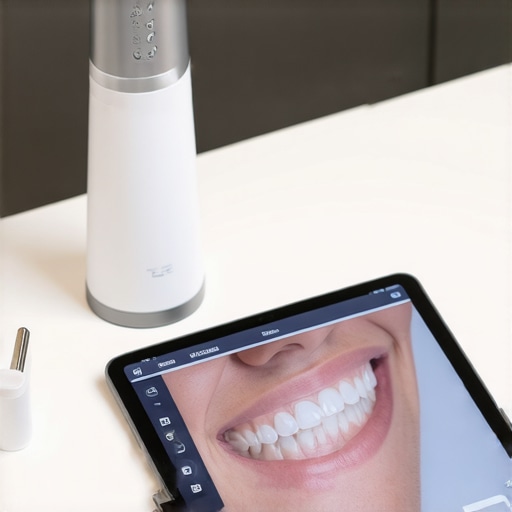
Smart Tools for a Lifelong Smile
Beyond the daily scrub, we are entering an era of ‘smart’ dentistry. If you have previously struggled with how to whiten teeth that have been stained by tetracycline, you know that the internal color is persistent. Maintaining the opacity of your veneers is key to keeping those old stains hidden. I recommend using a sonic toothbrush with a pressure sensor. This prevents you from ‘scrubbing’ away the gum tissue that keeps your smile looking natural. Integrating basic family dentistry tips for a lifetime of healthy smiles into your routine—like using a fluoride rinse at night—can strengthen the natural tooth structure that supports your cosmetic work.
Where Dental Innovation Goes Next
I’m already seeing 2025 trends where AI-integrated sensors in toothbrushes can alert your dentist if you’re applying too much pressure. We are moving toward the future of dental implants cutting-edge techniques in cosmetic dentistry where 3D-printed bio-ceramics will match your natural enamel’s wear patterns perfectly. For now, my best advice is to treat your smile like the high-end investment it is. Use a non-abrasive gel toothpaste—anything with high silica content will scratch your porcelain over time. My challenge to you: swap your current toothpaste for a professional-grade, low-RDA (Relative Dentin Abrasivity) formula this week. Your gloss will thank you.
What I Learned After Spending a Fortune on the Wrong Whitening Kits
I used to think the goal was to get the whitest teeth possible, but the biggest lesson I learned is that the most beautiful smiles focus on light reflection, not just bleach levels. If you have deep stains, stop fighting your biology and look into a transform your smile with veneers approach instead. Also, remember that ‘fixed’ doesn’t mean ‘finished.’ Even the most expensive porcelain needs a foundation of health. When I finally stopped obsessing over the shade guide and started focusing on the health of my gums, everything changed. I realized that a healthy, slightly warm-toned smile looks a thousand times better than a flat, blue-grey one that screams ‘fake’. It is about the life behind the teeth, not just the brightness of the surface.
The Daily Essentials for a Vibrant Long-Term Smile
I trust the Waterpik Aquarius for the margins around my dental work; it is essential for mastering the trick to flossing around permanent orthodontic retainers or tight veneer edges. I also recommend a professional-grade night guard to avoid the risk of skipping your night guard for just one week, which can lead to micro-fractures in your investment. For anyone struggling with specific antibiotic stains, reading up on how to whiten teeth that have been stained by tetracycline antibiotics can save you months of frustration and wasted money on over-the-counter kits that simply won’t work on intrinsic discoloration. These tools aren’t just accessories; they are the insurance policy for your confidence.
Take the First Step Toward Your New Reflection
Investing in your oral health is one of the most powerful ways to reclaim your confidence. Whether you choose a subtle change or a full veneers transformation, the goal is to feel like yourself again. Modern cosmetic dentistry secrets to boost your confidence are more accessible than ever, allowing you to bypass the ‘grey loop’ entirely and look toward the future of dental implants cutting-edge techniques in cosmetic dentistry for lasting results. Don’t let a ‘stormy’ smile hold you back from life’s brightest moments. Your path to a healthier, more vibrant you starts with understanding the unique needs of your enamel. [image_placeholder_final]
Have you ever noticed your teeth getting that translucent grey look after whitening? Let me know in the comments below!