It was a Saturday night, and I was three bites into a sourdough dinner roll when I heard a sound no one ever wants to hear inside their own mouth: a distinct, ceramic clack. My tongue immediately found the gap where my molar used to be. I looked down at my napkin, and there it was—my permanent crown, gleaming under the restaurant lights. The panic is real. You start thinking about the cost, the sensitivity, and how on earth you’re going to survive the next 48 hours until the dental office opens. Trust me, I’ve been there, and I’ve made the classic rookie mistakes that turned a minor annoyance into a full-blown dental emergency. Have you ever had that heart-stopping moment where you felt a piece of dental work go loose during a meal? We spend a lot of time discussing family dentistry tips for a lifetime of healthy smiles, but we rarely talk about the moment the structural integrity of those smiles literally falls apart. Whether you’re dealing with habits that cause your porcelain veneers to pop off or a crown that simply gave up the ghost, the clock is ticking. The “why” matters because that little stump of a tooth is now exposed to bacteria and temperature, and the teeth around it can actually start to shift in a matter of days.
Don’t Panic When Your Dental Work Goes AWOL
Can you really keep it from falling out without a dentist’s help?
I’ll be honest: early in my journey of navigating cosmetic dentistry secrets, I once tried to use a tiny dab of superglue I found in my junk drawer to fix a loose cap. Don’t do that. Not only is it toxic, but it can ruin the crown and the underlying tooth, making it impossible for your dentist to re-cement it properly. According to the American Dental Association (ADA), while you can use over-the-counter dental cement as a temporary measure, the priority is maintaining the health of the exposed tooth. You’re trying to prevent a scenario where you need dental implants because you let the natural tooth decay or fracture while the crown was sitting on your nightstand. If your crown feels loose but hasn’t fallen out yet, it’s even more precarious. You might be tempted to just “chew on the other side,” but that’s a gamble that often ends with swallowing the crown or choking.
Why Keeping That Crown in Place Matters Right Now
If you’re currently holding your crown in a tissue, don’t worry. We’re going to walk through the exact, safe steps to secure it temporarily using supplies you can find at a 24-hour drugstore. If things feel beyond repair, you might need to contact us immediately to schedule an emergency visit. Sometimes, a crown falling out is a sign that the tooth underneath has changed, and you might need to revisit the veneers vs. crowns debate with your professional to see if a different restoration is better for your long-term health. Before we dive into the “how-to,” let’s make sure you have a clean workspace and the right mindset to handle this minor setback like a pro.
Take These Immediate Actions to Save Your Tooth
Check the Crown for Damage Before You Try Anything
First, pick up that crown and look at it closely. Is it hollow like a little hat? If there is a piece of hard material or a chunk of tooth stuck inside it, that is a clear signal that the underlying structure broke, not just the adhesive. In that case, do not try to force it back on. You could end up with a small chip on your molar turning into a major fracture that requires a root canal. If the crown is clean and hollow, you are likely dealing with a simple seal failure. Treat it like a piece of fine jewelry; if you lose it, the cost of replacement is significantly higher than the cost of a simple re-cementing appointment.
Give the Exposed Stump a Gentle Cleaning
Your natural tooth—the ‘stump’—is now exposed and likely very sensitive to air and touch. I remember my first time dealing with this; I tried to brush the area with my electric toothbrush on the highest setting. I nearly hit the ceiling from the sharp ‘zing’ of nerve pain. Instead, use a damp cotton swab or a very soft manual brush to gently clear away old cement or food debris. If you leave even a tiny speck of food trapped under there, the crown will not sit flush, and your bite will be misaligned, leading to a jaw ache within hours.
A Pro’s Guide to Using Temporary Dental Cement
You can find temporary dental cement at almost any 24-hour pharmacy. It is a literal lifesaver, but you must remember it is a temporary band-aid, not a long-term solution. Using it correctly is the difference between a stable tooth and a crown that pops off again mid-conversation. This step is critical for maintaining your overall oral health and preventing the surrounding teeth from shifting into the new gap. 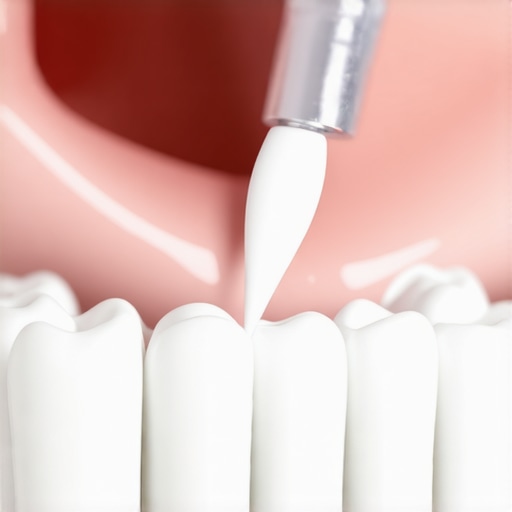
Testing the Fit Without Adhesive First
Before you add any ‘goop,’ do a dry run. Place the crown on the tooth and gently close your mouth. Does it feel right? Does your bite feel even? If you feel a weird pressure or the tooth feels ‘too tall,’ the crown might be rotated. I once spent ten minutes frustrated that my molar felt like a mountain in my mouth, only to realize I had the orientation backward. Once it fits like a glove, take it back out and dry both the crown and the tooth with a cotton swab. Cement won’t stick to a wet surface.
How to Apply the Cement Like a Pro
Spread a thin, even layer of the temp cement inside the crown walls. Do not overfill it like you’re icing a cupcake; the excess will just squeeze out and irritate your gums. Place it over the tooth and bite down firmly on a piece of gauze or a folded paper towel for about a minute. This steady pressure ensures the crown is seated fully against the gum line. If the crown still feels wobbly, you may need to contact us to see if the internal fit has been compromised. While you wait for your professional repair, avoid sticky candies or hard nuts. You are essentially babysitting a delicate piece of cosmetic dentistry. If you notice your gums are swollen around the crown, it is a sign that bacteria might be trapped, and you need to see a professional sooner rather than later.But here is where the expert advice diverges from what you will find on a standard FAQ page. Most patients assume that if a crown pops off, the dentist just used cheap glue. In reality, the cement is rarely the culprit. In my years looking at cosmetic dentistry secrets, I have learned that a crown failure is usually a structural message. If your crown keeps coming loose, it is often due to a lack of ferrule—that is the amount of healthy tooth structure the crown can actually grab onto. According to the American Academy of Cosmetic Dentistry (AACD), the long-term success of a restoration is dictated far more by the precision of the tooth preparation and the remaining tooth volume than the brand of adhesive used.
Does a Loose Crown Mean You Are Heading for a Dental Implant?
Not necessarily, but we have to look at the why behind the failure. If the tooth underneath has decayed, the foundation is gone. This is where people get stuck in the veneers vs. crowns debate; sometimes a veneer is not strong enough, but a crown lacks the grip. If the root is compromised, we might discuss the truth about the lifespan of a dental implant as a more predictable twenty-year solution. 
Watch Out for the Dark Margin Trap
One common mistake is ignoring that thin, dark line at the gum line of an old crown. Most people think it is just aging, but it is often a sign of marginal leakage. This happens when the seal is slightly broken, allowing bacteria to seep under the restoration while it still feels stuck to your tooth. This is exactly why your gums look dark around a porcelain-fused-to-metal crown—it is either the metal substructure showing through or, more dangerously, early-stage decay. If you catch this before the crown actually falls off, you save the tooth. If you wait, you are looking at a much more complex and expensive procedure.
The Secret to Knowing Your Veneers Were Done Right
If you chose veneers over crowns, you face a different set of nuances. Many people believe veneers are just shells that can be slapped on, but you need to know how to tell if your veneers were bonded correctly to the enamel. If they were bonded mostly to dentin (the layer under enamel), the bond strength drops by nearly fifty percent. This is the hidden trap of aggressive over-prepping; if your dentist removes too much natural enamel, those expensive porcelain covers are far more likely to pop off during a routine meal. Always ask about minimal preparation techniques to keep your bond strong. Have you ever fallen into the trap of thinking a temporary fix was good enough or ignored a weird dark line around your teeth? Let me know in the comments.Maintaining the bond is just the start of the journey. If you’ve already looked into expert tips for perfect results, you know that you have to transition from a set-it-and-forget-it mindset to becoming a maintenance pro. I personally threw away my manual toothbrush the day I got my permanent restorations. The sheer pressure we apply with a manual brush is inconsistent and often too abrasive on the gingival margins. I switched to the Philips Sonicare ProtectiveClean because of its built-in pressure sensor that pulses the moment I’m pushing too hard. This is vital for preventing the gum recession that eventually exposes the dark edges of a crown or veneer. If you are struggling with how to clean under a dental bridge without shredding your floss, the answer isn’t more muscle—it’s better tech. I use a high-powered water flosser on the pulse setting to flush out the micro-debris that physical floss misses in those tight interproximal spaces. 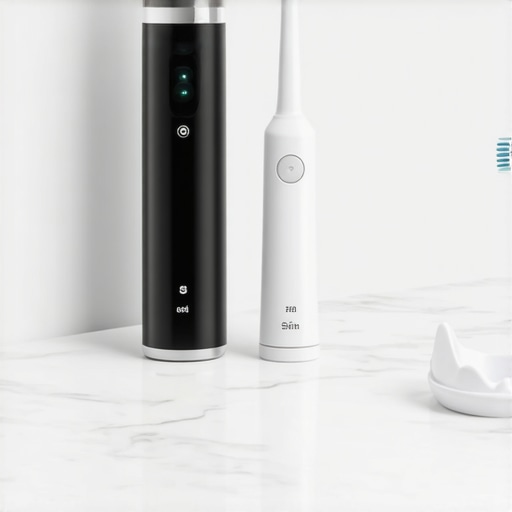
Your Night Guard is Not Optional
If you’re a clencher like me, you’re essentially playing Russian Roulette with your porcelain. I’ve seen patients crack a high-end veneer in their sleep because they skipped their protection for just a few days. This is why the risk of skipping your night guard for just one week is higher than most people realize. A 2023 report from the International Journal of Oral & Maxillofacial Implants (JOMI) noted that mechanical complications, such as ceramic chipping and screw loosening, are now the leading causes of long-term failure in implant-supported restorations, far outweighing biological rejection. When you sleep, your jaw can exert forces exceeding 900 Newtons, which is more than enough to fatigue even the strongest dental adhesives over time.
How do I keep my new smile looking brand new for decades?
Consistency with professional oversight is the secret sauce. You should treat your dental implants or veneers like a luxury car; you wouldn’t skip the oil change, so don’t skip the professional polish. Standard prophy paste used in regular cleanings can actually be too abrasive for some cosmetic materials. I always ask my hygienist to use a non-abrasive polishing paste specifically designed for porcelain to maintain that high-gloss luster. If you ever feel even a slight change in your bite, contact us immediately. An uneven bite is the silent killer of the truth about the lifespan of a dental implant because it creates leverage points that the implant was never designed to handle.
The Future of Teeth: Biomimetics and Smart Monitoring
Looking ahead, I suspect we are moving away from traditional ceramics toward biomimetic materials that more closely mimic the natural flex of human dentin. We are also seeing the rise of smart toothbrushes that can sync with your dentist’s office to flag signs of inflammation before you even feel pain. This type of proactive data is how how dental implants reshape your oral health in 2025 and beyond. For an immediate upgrade to your routine, try using a plaque-disclosing tablet once a week after you brush; it turns hidden bacteria bright pink so you can see exactly where your cleaning routine is failing your new dental work before it leads to a permanent problem.It was a Saturday night, and I was three bites into a sourdough dinner roll when I heard a sound no one ever wants to hear inside their own mouth: a distinct, ceramic clack. My tongue immediately found the gap where my molar used to be. I looked down at my napkin, and there it was—my permanent crown, gleaming under the restaurant lights. The panic is real. You start thinking about the cost, the sensitivity, and how on earth you’re going to survive the next 48 hours until the dental office opens. Trust me, I’ve been there, and I’ve made the classic rookie mistakes that turned a minor annoyance into a full-blown dental emergency. Have you ever had that heart-stopping moment where you felt a piece of dental work go loose during a meal? We spend a lot of time discussing family dentistry tips for a lifetime of healthy smiles, but we rarely talk about the moment the structural integrity of those smiles literally falls apart. Whether you’re dealing with habits that cause your porcelain veneers to pop off or a crown that simply gave up the ghost, the clock is ticking. The “why” matters because that little stump of a tooth is now exposed to bacteria and temperature, and the teeth around it can actually start to shift in a matter of days.
Don’t Panic When Your Dental Work Goes AWOL
Can you really keep it from falling out without a dentist’s help?
I’ll be honest: early in my journey of navigating cosmetic dentistry secrets, I once tried to use a tiny dab of superglue I found in my junk drawer to fix a loose cap. Don’t do that. Not only is it toxic, but it can ruin the crown and the underlying tooth, making it impossible for your dentist to re-cement it properly. According to the American Dental Association (ADA), while you can use over-the-counter dental cement as a temporary measure, the priority is maintaining the health of the exposed tooth. You’re trying to prevent a scenario where you need dental implants because you let the natural tooth decay or fracture while the crown was sitting on your nightstand. If your crown feels loose but hasn’t fallen out yet, it’s even more precarious. You might be tempted to just “chew on the other side,” but that’s a gamble that often ends with swallowing the crown or choking.
Why Keeping That Crown in Place Matters Right Now
If you’re currently holding your crown in a tissue, don’t worry. We’re going to walk through the exact, safe steps to secure it temporarily using supplies you can find at a 24-hour drugstore. If things feel beyond repair, you might need to contact us immediately to schedule an emergency visit. Sometimes, a crown falling out is a sign that the tooth underneath has changed, and you might need to revisit the veneers vs. crowns debate with your professional to see if a different restoration is better for your long-term health. Before we dive into the “how-to,” let’s make sure you have a clean workspace and the right mindset to handle this minor setback like a pro.
Take These Immediate Actions to Save Your Tooth
Check the Crown for Damage Before You Try Anything
First, pick up that crown and look at it closely. Is it hollow like a little hat? If there is a piece of hard material or a chunk of tooth stuck inside it, that is a clear signal that the underlying structure broke, not just the adhesive. In that case, do not try to force it back on. You could end up with a small chip on your molar turning into a major fracture that requires a root canal. If the crown is clean and hollow, you are likely dealing with a simple seal failure. Treat it like a piece of fine jewelry; if you lose it, the cost of replacement is significantly higher than the cost of a simple re-cementing appointment.
Give the Exposed Stump a Gentle Cleaning
Your natural tooth—the ‘stump’—is now exposed and likely very sensitive to air and touch. I remember my first time dealing with this; I tried to brush the area with my electric toothbrush on the highest setting. I nearly hit the ceiling from the sharp ‘zing’ of nerve pain. Instead, use a damp cotton swab or a very soft manual brush to gently clear away old cement or food debris. If you leave even a tiny speck of food trapped under there, the crown will not sit flush, and your bite will be misaligned, leading to a jaw ache within hours.
A Pro’s Guide to Using Temporary Dental Cement
You can find temporary dental cement at almost any 24-hour pharmacy. It is a literal lifesaver, but you must remember it is a temporary band-aid, not a long-term solution. Using it correctly is the difference between a stable tooth and a crown that pops off again mid-conversation. This step is critical for maintaining your overall oral health and preventing the surrounding teeth from shifting into the new gap.
Testing the Fit Without Adhesive First
Before you add any ‘goop,’ do a dry run. Place the crown on the tooth and gently close your mouth. Does it feel right? Does your bite feel even? If you feel a weird pressure or the tooth feels ‘too tall,’ the crown might be rotated. I once spent ten minutes frustrated that my molar felt like a mountain in my mouth, only to realize I had the orientation backward. Once it fits like a glove, take it back out and dry both the crown and the tooth with a cotton swab. Cement won’t stick to a wet surface.
How to Apply the Cement Like a Pro
Spread a thin, even layer of the temp cement inside the crown walls. Do not overfill it like you’re icing a cupcake; the excess will just squeeze out and irritate your gums. Place it over the tooth and bite down firmly on a piece of gauze or a folded paper towel for about a minute. This steady pressure ensures the crown is seated fully against the gum line. If the crown still feels wobbly, you may need to contact us to see if the internal fit has been compromised. While you wait for your professional repair, avoid sticky candies or hard nuts. You are essentially babysitting a delicate piece of cosmetic dentistry. If you notice your gums are swollen around the crown, it is a sign that bacteria might be trapped, and you need to see a professional sooner rather than later.But here is where the expert advice diverges from what you will find on a standard FAQ page. Most patients assume that if a crown pops off, the dentist just used cheap glue. In reality, the cement is rarely the culprit. In my years looking at cosmetic dentistry secrets, I have learned that a crown failure is usually a structural message. If your crown keeps coming loose, it is often due to a lack of ferrule—that is the amount of healthy tooth structure the crown can actually grab onto. According to the American Academy of Cosmetic Dentistry (AACD), the long-term success of a restoration is dictated far more by the precision of the tooth preparation and the remaining tooth volume than the brand of adhesive used.
Does a Loose Crown Mean You Are Heading for a Dental Implant?
Not necessarily, but we have to look at the why behind the failure. If the tooth underneath has decayed, the foundation is gone. This is where people get stuck in the veneers vs. crowns debate; sometimes a veneer is not strong enough, but a crown lacks the grip. If the root is compromised, we might discuss the truth about the lifespan of a dental implant as a more predictable twenty-year solution.
Watch Out for the Dark Margin Trap
One common mistake is ignoring that thin, dark line at the gum line of an old crown. Most people think it is just aging, but it is often a sign of marginal leakage. This happens when the seal is slightly broken, allowing bacteria to seep under the restoration while it still feels stuck to your tooth. This is exactly why your gums look dark around a porcelain-fused-to-metal crown—it is either the metal substructure showing through or, more dangerously, early-stage decay. If you catch this before the crown actually falls off, you save the tooth. If you wait, you are looking at a much more complex and expensive procedure.
The Secret to Knowing Your Veneers Were Done Right
If you chose veneers over crowns, you face a different set of nuances. Many people believe veneers are just shells that can be slapped on, but you need to know how to tell if your veneers were bonded correctly to the enamel. If they were bonded mostly to dentin (the layer under enamel), the bond strength drops by nearly fifty percent. This is the hidden trap of aggressive over-prepping; if your dentist removes too much natural enamel, those expensive porcelain covers are far more likely to pop off during a routine meal. Always ask about minimal preparation techniques to keep your bond strong. Have you ever fallen into the trap of thinking a temporary fix was good enough or ignored a weird dark line around your teeth? Let me know in the comments.Maintaining the bond is just the start of the journey. If you’ve already looked into expert tips for perfect results, you know that you have to transition from a set-it-and-forget-it mindset to becoming a maintenance pro. I personally threw away my manual toothbrush the day I got my permanent restorations. The sheer pressure we apply with a manual brush is inconsistent and often too abrasive on the gingival margins. I switched to the Philips Sonicare ProtectiveClean because of its built-in pressure sensor that pulses the moment I’m pushing too hard. This is vital for preventing the gum recession that eventually exposes the dark edges of a crown or veneer. If you are struggling with how to clean under a dental bridge without shredding your floss, the answer isn’t more muscle—it’s better tech. I use a high-powered water flosser on the pulse setting to flush out the micro-debris that physical floss misses in those tight interproximal spaces.
Your Night Guard is Not Optional
If you’re a clencher like me, you’re essentially playing Russian Roulette with your porcelain. I’ve seen patients crack a high-end veneer in their sleep because they skipped their protection for just a few days. This is why the risk of skipping your night guard for just one week is higher than most people realize. A 2023 report from the International Journal of Oral & Maxillofacial Implants (JOMI) noted that mechanical complications, such as ceramic chipping and screw loosening, are now the leading causes of long-term failure in implant-supported restorations, far outweighing biological rejection. When you sleep, your jaw can exert forces exceeding 900 Newtons, which is more than enough to fatigue even the strongest dental adhesives over time.
How do I keep my new smile looking brand new for decades?
Consistency with professional oversight is the secret sauce. You should treat your dental implants or veneers like a luxury car; you wouldn’t skip the oil change, so don’t skip the professional polish. Standard prophy paste used in regular cleanings can actually be too abrasive for some cosmetic materials. I always ask my hygienist to use a non-abrasive polishing paste specifically designed for porcelain to maintain that high-gloss luster. If you ever feel even a slight change in your bite, contact us immediately. An uneven bite is the silent killer of the truth about the lifespan of a dental implant because it creates leverage points that the implant was never designed to handle.
The Future of Teeth: Biomimetics and Smart Monitoring
Looking ahead, I suspect we are moving away from traditional ceramics toward biomimetic materials that more closely mimic the natural flex of human dentin. We are also seeing the rise of smart toothbrushes that can sync with your dentist’s office to flag signs of inflammation before you even feel pain. This type of proactive data is how how dental implants reshape your oral health in 2025 and beyond. For an immediate upgrade to your routine, try using a plaque-disclosing tablet once a week after you brush; it turns hidden bacteria bright pink so you can see exactly where your cleaning routine is failing your new dental work before it leads to a permanent problem.
What My Dentist Finally Admitted After My Third Repair
Over the years, I have realized that a failed restoration is rarely just bad luck; it is a direct communication from your body about your oral environment. Here are the lightbulb moments that changed how I view my dental health:
- The ‘Stress Sink’ Effect: Your jaw is where you store tension. If you do not address the root of your stress, even the most expensive dental implants won’t survive the mechanical force of nocturnal grinding.
- Fit Over Aesthetics: A crown that looks like a masterpiece but feels ‘high’ by even a fraction of a millimeter will eventually fail. Always advocate for a bite adjustment until it feels like your natural tooth.
- Maintenance is Non-Linear: You cannot make up for a week of missed flossing with one aggressive session. Consistency is the only thing that preserves the integrity of the adhesive bond.
My Non-Negotiables for Protecting a Six-Figure Smile
I have narrowed my toolkit down to four essential items that I trust implicitly to prevent my restorations from failing again. First, the Philips Sonicare ProtectiveClean is non-negotiable for its pressure-sensing technology. Second, I rely on plaque-disclosing tablets for a weekly audit to see exactly where my technique is falling short. Third, the Waterpik Aquarius is the only way I’ve found how to clean under a dental bridge without causing gum trauma. Finally, I never travel without my custom-fitted night guard. Avoiding the risk of skipping your night guard is the single best insurance policy for your cosmetic investment.
Taking Control of Your Oral Future Today
A dental emergency like a lost crown is stressful, but it is also an opportunity to elevate your standard of care. By incorporating these family dentistry tips for a lifetime of healthy smiles, you shift from being a reactive patient to a proactive owner of your health. Whether you are maintaining a veneers transformation or just a single filling, remember that your daily habits are more powerful than the cement. If you are worried about a loose restoration right now, do not wait for it to fall out—contact us today to secure your smile. Have you ever tried to glue your own crown back on at home, or did you wait for a professional repair? Let me know your experience below!