I’ll never forget the first time I realized my dental bridge wasn’t as ‘set it and forget it’ as I had hoped. I was three bites into a thick sourdough dinner roll at a friend’s wedding when I felt it—a sharp, nagging pressure right under my pontic. I spent the next two hours performing what I call ‘tongue-gymnastics,’ desperately trying to fish out a crumb while pretending to be enthralled by the toasts. It was distracting, uncomfortable, and honestly, a little embarrassing. I made the mistake of thinking it would just ‘wash away’ with a sip of champagne, but that tiny piece of bread stayed put for two days until my gums started throbbing. If you are currently wondering how to tell if your dental bridge is trapped with food you can’t see, believe me, I have been in those exact, frustrating shoes. Today, I’m going to share the subtle signs your bridge is hiding leftovers and exactly what you need to do to clear it out before it causes real damage to your oral health. Have you ever found yourself mid-conversation, frantically trying to dislodge a stray poppy seed with your tongue? [image_placeholder]
Stop Ignoring That Weird Pressure Under Your Bridge
When I was first starting out with my restoration, I assumed that because the bridge was cemented in, nothing could get under there. I was wrong. The gap between your gum and the artificial tooth (the pontic) is a prime real estate for debris. One of the biggest signs of a problem isn’t necessarily pain; it’s a persistent, dull pressure that feels like something is ‘off’ when you bite down. It’s almost like a phantom itch you can’t quite scratch. If you ignore it, that debris begins to ferment. According to the American Dental Association, plaque and food particles trapped under dental work can lead to gingivitis and localized infection in as little as 48 hours. I learned the hard way that waiting for the problem to resolve itself is a recipe for a costly trip to the office. In my early days, I even tried using a toothpick to dig things out—a massive mistake that scratched my gums and made the inflammation even worse. Instead, you need to follow proper family dentistry tips for a lifetime of healthy smiles to ensure you aren’t trading one problem for another.
Is worrying about a little leftover food really worth the stress?
You might think I’m being a bit dramatic about a crumb. However, the reality is that the teeth supporting your bridge (the abutment teeth) are still susceptible to decay. If food stays trapped, it creates a bacterial playground right at the margin where your bridge meets your natural tooth. If you don’t learn how to clean under a dental bridge without shredding your floss, you risk losing the very teeth that hold your smile together. We aren’t just talking about a bad smell—though that ‘bridge breath’ is definitely a real sign—we are talking about saving your investment and your health. Let’s look at the specific physical signals your body sends when it’s time to reach for the interproximal brushes.
Your Senses Are Trying to Tell You Something
Before you even see the food, you’ll likely smell or taste it. If you’ve ever wondered why your breath still smells bad after brushing and flossing, it is often because bacteria are hosting a silent party under that pontic. This isn’t just a hygiene issue; it’s a chemical reaction. Food trapped in a warm, moist environment begins to break down, releasing sulfur compounds. You might notice a metallic or sour taste that lingers regardless of how much mouthwash you use. Think of it like a kitchen sponge left at the bottom of a sink—it doesn’t take long to turn sour. When I first got my bridge, I ignored that weird taste for a week, thinking it was just my morning coffee. By the time I finally saw my dentist, the gums were so inflamed they looked like a ripe cherry and bled at the slightest touch.
Stop Sawing and Start Threading
The biggest mistake I see—and one I made many times in the beginning—is trying to force regular dental floss through the contact points where the bridge is cemented. You simply cannot do that; those teeth are fused together for stability. Instead, you have to go under the bridge. The gold standard is a floss threader, which acts like a needle pulling a thread through a buttonhole. You slide the stiff end of the threader into the space between your gum and the bridge, then pull the floss through. Once it’s under there, use a gentle C-shape motion to hug the abutment teeth. It should feel like you’re drying your back with a towel. If you find the floss is snagging or breaking, you need to learn how to clean under a dental bridge without shredding your floss by switching to a spongy, thicker variety designed specifically for restorations.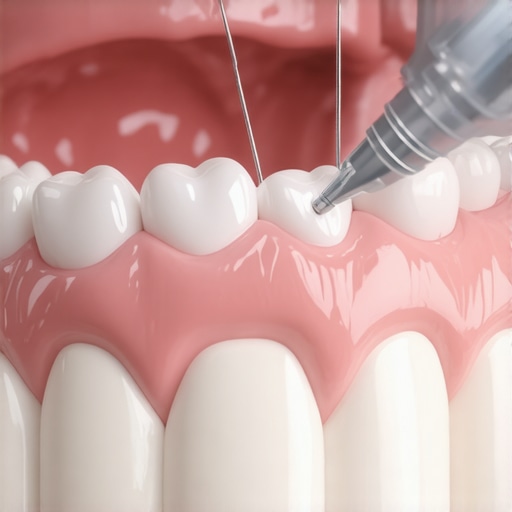
The Day a Tiny Proxy Brush Saved My Career
I remember sitting in my car before a major promotion interview, looking in the rearview mirror, and seeing a tiny black speck—a piece of cracked pepper—wedged right under the front edge of my bridge. Floss threaders are great at home, but they aren’t exactly ‘on-the-go’ friendly when you are in a rush. That’s when I discovered interproximal brushes. They look like tiny, soft pipe cleaners. I carefully slid the brush into the gap from the side, and with one quick flick, the pepper was gone. No blood, no redness, and no embarrassing ‘black tooth’ look during my presentation. These brushes are a staple of family dentistry tips for a lifetime of healthy smiles because they provide mechanical scrubbing that water alone can’t achieve. I never leave the house without one in my pocket now.
Treat Your Bridge Like a Precision Machine
Maintaining a bridge is a different discipline than maintaining the reason your dental implant feels different than a natural tooth. While an implant is a solo player anchored in the bone, your bridge relies on a team effort from the surrounding natural teeth. If one ‘player’ gets a cavity because of trapped food, the whole system fails. Using a water flosser on a medium setting is like a power wash for your mouth; it flushes out the loose debris that your brush can’t reach. I’ve found that using the water flosser first loosens the ‘sticky’ particles, making the manual flossing step ten times more effective. This proactive approach is one of the top cosmetic dentistry secrets to boost your confidence because you’ll never have to worry about that ‘phantom pressure’ or an unexpected odor mid-conversation again.One of the biggest myths in cosmetic dentistry is the idea that high-end materials like porcelain are invincible. I’ve heard so many people say, “Well, it’s not real tooth, so it can’t decay.” While the bridge or veneer itself won’t get a cavity, the biological foundation beneath it is more vulnerable than ever. A common ‘oops’ factor is neglecting the ‘micro-gap.’ Even when making the right choice between veneers vs crowns, you cannot assume the porcelain protects the root from poor hygiene. In fact, research published in the Journal of Prosthodontic Research highlights that the failure rate of restorations often stems from the increased mechanical load and bacterial accumulation on the abutment teeth, rather than the failure of the ceramic material itself.
Why do your brand-new veneers sometimes feel like they are crowding your mouth?
This is a nuance many patients overlook. If you feel like your porcelain veneers feel bulky at first, it might not just be your imagination or a bad fit. It’s often a result of how the brain processes proprioception—your body’s sense of position and pressure. Your mouth is incredibly sensitive to changes as small as a hair’s width. If your restoration isn’t perfectly balanced with your bite, you might even experience a strange ‘buzzing’ sensation. I’ve seen people panic thinking their dental implant feels like it is vibrating, when in reality, it’s often a minor occlusion issue that needs a tiny adjustment by a professional. [image_placeholder]
Stop Treating Your Restoration Like It Is Bulletproof
Don’t fall into the trap of thinking ‘no pain means no problem.’ By the time a bridge or implant hurts, the underlying issue is usually advanced. Have you ever fallen into this trap? Let me know in the comments. Whether you are looking at dental implants 2025 innovations or standard family care, the goal is proactive maintenance. You need to understand how to tell if your veneers were bonded correctly before a tiny marginal leak turns into a major infection. Treating your smile like a precision machine means regular ‘calibration’ visits, not just emergency repairs. These cosmetic dentistry secrets to boost your confidence only work if you commit to the high-level maintenance these investments require.I used to think my morning brush was enough, but I was living in a fantasy world. If you want expert tips for perfect results, you have to look at your bathroom counter like a laboratory for longevity. When you have five figures of dental work in your mouth, ‘good enough’ is how you end up back in the chair for a replacement long before you expected.
The One Gadget That Changed Everything for My Gums
For years, I was a ‘scrubber.’ I thought that if I didn’t see my gums turning white from pressure, I wasn’t getting them clean. This is the fastest way to ruin a restoration. I finally learned how to pick a toothbrush that won’t destroy your enamel, and for me, that meant an electric brush with a haptic pressure sensor. A study published in the Journal of Clinical Periodontology found that patients using power toothbrushes with pressure sensors showed significantly less gingival recession compared to manual brush users. This is critical because if your gums recede, they expose the margins of your bridge or crown, making them prime targets for decay. I personally use the sensor to keep myself in check; the moment that little ring turns red, I know I’m pushing too hard against my veneers. 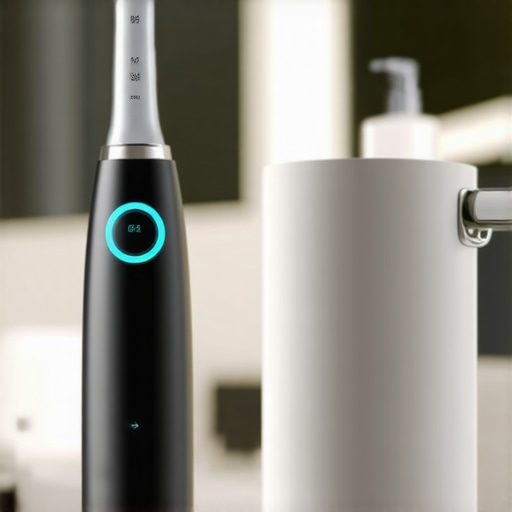
How do I maintain my dental work over time?
Consistency is the boring but honest answer, but the specific tools you use matter just as much as the frequency. I recommend adding a high-quality water flosser to your routine, specifically for the areas where traditional floss tends to snag. While many people use them as a replacement for flossing, I use mine as a ‘pre-wash’ to clear the heavy debris before I go in with my proxy brushes. This two-step process is one of the 3 secrets to making your porcelain veneers last twenty years because it ensures no biofilm is left to calcify at the gum line.
What 2025 Holds for Your Smile
We are entering an era where dental maintenance is becoming increasingly high-tech. I’m already seeing dental implants 2025 innovations that include integrated sensors capable of detecting early-stage inflammation before you even feel a ‘throb.’ Within the next decade, I predict we will have at-home scanning apps that use your phone’s camera and AI to analyze the health of your restoration margins in real-time. This isn’t just about vanity; it’s about the truth about the lifespan of a dental implant and ensuring your bone health remains stable for forty years, not just five. If you want to stay ahead of the curve, start by refining your manual habits today. My challenge to you: this week, swap out your manual toothbrush for an electric model with a built-in pressure sensor. It is the single most important move you can make to protect your gum health and your investment.
The Hardest Lesson I Learned About Living with Dental Restorations
I used to think that once my bridge was in, my job was done. I couldn’t have been more wrong. The hardest lesson I learned is that dental work is only as good as the hygiene routine behind it. I spent years assuming that my prosthetic was invincible, but I quickly realized that neglecting the small details is why your bridge feels loose every time you eat sticky bread. My lightbulb moment happened when I realized that the discomfort wasn’t a failure of the bridge, but a failure of my flossing habits. If you notice localized redness, don’t wait; understanding why your gums are swollen only around one specific tooth is the first step in preventing a total bridge failure. Dental work doesn’t exempt you from biology; it actually makes you a more frequent participant in it.
My Essential Daily Toolkit for a Cleaner Bridge
I trust these specific tools because they turned my oral health around when everything else was failing. First, I never skip my water flosser on a low-pressure setting—it’s the only way to reach those hidden pockets that a standard brush ignores. Second, the interproximal brush is my secret weapon for travel and post-meal emergencies. These tools are the backbone of modern maintenance, much like how dental implants reshape your oral health in 2025 by providing better structural options. I also rely heavily on a high-quality pH-balanced mouthwash to neutralize the bacteria that love to hide in the bridge margins. This kit isn’t just about cleaning; it is about protecting a massive investment in your confidence.
[image_placeholder]
Take Control of Your Future Smile Today
Don’t let a single trapped crumb discourage you from enjoying your favorite foods or smiling for the camera. You have the power to maintain your restoration with just a few minutes of focused care each day. By embracing a proactive approach to family dentistry, you ensure that your smile remains vibrant and functional for decades to come. Your journey toward a veneers transformation unlocking your best smile yet or a perfect bridge is a marathon, not a sprint. Start small, be consistent, and listen to the signals your body is sending you. Have you ever felt that annoying, persistent pressure under your bridge after a meal? Let me know how you handled it in the comments below!