I’ll never forget the first time I sat down at a steakhouse after my dental implant had finally healed. I was so excited to move past the soft food phase of family dentistry tips and get back to real life. I took a bite of a medium-rare sirloin, and for a split second, I panicked. It felt… different. It didn’t have that familiar squish or give like my other teeth. It was as if my tooth had been replaced by a tiny, unyielding piece of granite. I actually called my dentist the next morning, convinced that my dental implant crown feels loose or that the screw was somehow vibrating out of place. It turns out, I wasn’t experiencing a failure; I was just meeting my new anatomy. If you’ve ever wondered why your implant feels like a foreign object rather than a natural part of your smile, you aren’t alone. Today, I’m going to break down exactly why that sensation happens and how you can stop worrying about every little clink and thud.
The Mystery of the Missing Ligament
The biggest mistake I made early on was assuming an implant was a 1:1 replica of a tooth. It’s not. A natural tooth is suspended in its socket by the periodontal ligament—a collection of tiny fibers that act like shock absorbers. When you bite down, those fibers compress and send a signal to your brain about how hard you’re chewing. An implant, however, is fused directly to your bone through osseointegration. This means when you eat, there is zero cushion. According to research published in the Journal of Oral Rehabilitation, dental implants have about 10 to 100 times less tactile sensitivity than natural teeth because they lack these specific sensory receptors. It’s a purely mechanical connection, which is why some people notice their dental implant area feels heavy during that initial transition month.
Is this weird sensation actually worth the hype?
You might be sitting there thinking, I paid all this money to feel like I have a bolt in my head? I get it. The skepticism is real. But here’s the neighborly secret: that lack of feeling is exactly what makes the implant so durable. Because it doesn’t have a ligament that can get infected or a nerve that can feel decay, it’s essentially a tank in your mouth. Unlike the choice between veneers vs crowns where you’re still managing your original tooth structure, an implant is a fresh start. Have you noticed a strange thud when you tap your teeth together, or does it feel more like a subtle vibration? I’d love to hear about your experience in the comments. Once you understand how dental implants reshape your oral health, that strange sensation starts to feel like a badge of strength rather than a mistake. Let’s look at what’s actually happening under the gumline.
Give your brain time to map the new hardware
Since an implant lacks the periodontal ligament, your brain has to perform a literal software update. When you have natural teeth, they communicate with your nervous system to tell you exactly how hard you are biting. With an implant, that feedback loop is gone. You’re essentially driving a car without power steering; you have to be much more intentional with your movements. This is precisely why your dental implant area feels heavy for the first week. To help this process along, I recommend practicing a ‘slow-motion chew’ for the first few days of eating solid foods. I remember trying to chew a piece of crusty sourdough three weeks after my crown was placed. I was so used to my old teeth giving me a ‘warning’ before a crunch that I bit down with full force and felt a strange shock wave go straight to my jawbone. My jaw feels tired after eating chewy foods even now if I forget that my implant doesn’t have a built-in shock absorber.
Master the pressure test
Spend five minutes a day tapping your teeth together gently. This isn’t just about checking the fit; it’s about teaching your brain to recognize the ‘solid’ sound of the titanium. If you notice a strange sensation, don’t panic. There is a specific reason your dental implant feels like its vibrating when you speak or hum—it’s just bone conduction. 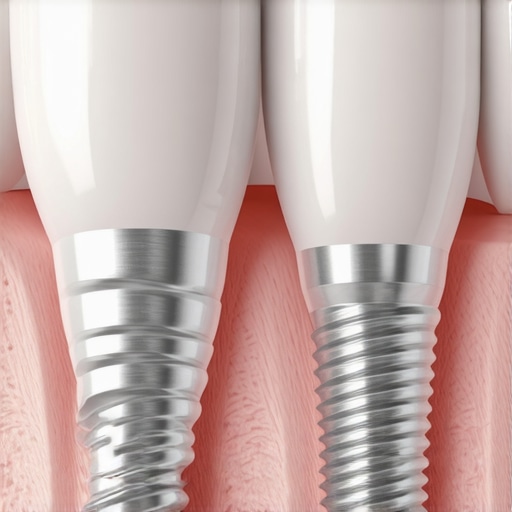
Clean the hardware without scratching the finish
You might think you can just scrub an implant like a regular tooth, but that’s a recipe for trouble. The ‘seal’ where your gum meets the implant is much more delicate than the seal around a natural tooth. While you might be looking at veneers vs crowns for other parts of your mouth, an implant requires a specialized toolkit. I found that standard waxed floss often got snagged on the abutment, which was terrifying at first.
Upgrade your flossing game
Switch to a specialized ‘implant floss’ or a water flosser. These tools are designed to navigate the unique architecture of the post without leaving behind fibers that can cause inflammation. It’s similar to learning how to clean the underside of a dental bridge without shredding your floss. If you use a water flosser, start on the lowest setting. The first time I used mine on a high setting near my new implant, it felt like a pressure washer hitting a sensitive nerve. You want to flush out the debris, not blast the gum tissue away from the metal.
Prepare for temperature shifts
One thing nobody warned me about was the ‘refrigerator effect.’ Metal conducts heat and cold much faster than biological enamel. You might find that your dental implant feels cold when you drink ice water, and that sensation can linger for a minute or two after you’ve finished your drink. This isn’t a sign of failure; it’s just physics. To manage this, try to avoid extreme temperature shifts—like drinking hot coffee followed by an ice-water palate cleanser—until your jawbone has fully thickened around the site. This patience is part of the family dentistry tips I wish I had known before my surgery.Most people assume that the more you pay for cosmetic dentistry secrets to boost your confidence, the whiter and straighter your teeth should be. I used to think the same thing. I wanted that blinding Hollywood glow. But here is the contrarian truth: perfection is the biggest giveaway that you’ve had work done. In the world of high-end aesthetics, we talk about characterization. Natural teeth have translucency at the edges and subtle color gradients. When you choose a shade that is monochromatic, you end up with what I call the bathroom tile effect. This is often why your veneers look too opaque and how to make them look natural becomes a top priority for patients six months after their initial procedure.
Stop chasing the blindingly white Chiclet look
The Oops factor often happens during the prep phase. Many patients push for the whitest possible shade without realizing that porcelain lacks the depth of natural enamel unless it is layered correctly by a master ceramist. If your dentist does not account for how light passes through the material, you get the mistake that makes your new crowns look like chiclets. According to a study published in the Journal of Esthetic and Restorative Dentistry, the emergence profile—the angle at which the tooth comes out of the gum—is actually more important for a natural look than the color itself. If that angle is even a millimeter off, your body will treat the restoration like a foreign invader rather than a part of your anatomy.
Why do my veneers change color when I step outside?
This is a sophisticated issue called metamerism. You might look in your bathroom mirror and see a perfect match, but as soon as you step into a sunny backyard, your new teeth look blue or grey. This happens because different light sources have different spectrums, and porcelain reflects light differently than natural dentin. Understanding why your veneers look different in sunlight versus indoor lighting is the key to choosing a restoration that works in the real world, not just the dental chair. #IMAGE_PLACE_HOLDER_C#
Respect the biological width or pay the price
Here is a nuance most people miss: your gums have a no-fly zone called the biological width. This is the roughly two-millimeter space between the bottom of your gum pocket and the top of your jawbone. If a veneer or crown is placed too deep, it invades this space. Your body reacts with chronic inflammation, leading to gums that are permanently red or puffy, no matter how much you floss. It is vital to know how to tell if your veneers were bonded correctly to the enamel so you are not fighting a losing battle against ghost gingivitis for years.
The set it and forget it trap
Finally, never assume that once the check is cashed, the work is over. Even the best implants and veneers require maintenance cycles. I have seen people skip their nightguards for a week and end up with micro-fractures in twenty thousand dollars worth of work. Mastering the 3 secrets to making your porcelain veneers last twenty years involves more than just brushing; it is about protecting the investment from your own jaw strength and nighttime grinding. Have you ever fallen into the trap of thinking your new smile was indestructible? Let me know in the comments below.Maintaining a high-end smile isn’t just about avoiding crunchy candy; it’s about treating the materials with the same respect you’d give a classic car. When I first got my work done, I thought a standard toothbrush was enough. I was wrong. To keep the interface between your gums and your porcelain healthy, you need to go beyond the basics. I personally swear by the Waterpik Aquarius. But here is the trick: I only use it on setting three. Going higher can actually detach the delicate long junctional epithelium—that’s the tiny seal of gum tissue that protects your implant post. If you blast it too hard, you risk creating a pocket where bacteria can hide, undermining all those family dentistry tips you’ve been following.
The specific toolkit that keeps my smile intact
Stop using any toothpaste with high abrasivity. If your toothpaste feels gritty, it is literally sanding the glaze off your porcelain. I switched to a non-abrasive gel specifically to ensure my cosmetic dentistry secrets to boost your confidence don’t turn into a dull, matte finish within five years. I also use TePe interdental brushes for the tight spots where the implant meets the neighboring teeth. Unlike standard floss, these little brushes can be angled to clean the concave surfaces of the implant neck that floss simply skips over. Dr. Gerald Niznick, a pioneer in dental implant geometry, has frequently discussed how the stability of the internal connection and proper hygiene are the two pillars of implant longevity. If you don’t clean that specific ‘internal hex’ zone effectively, the bone won’t stay happy forever. 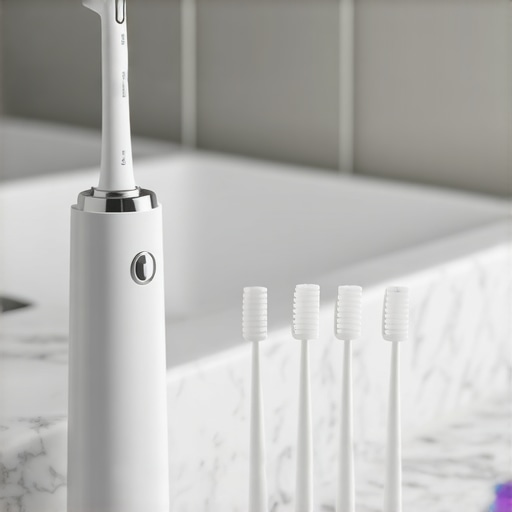
How do I maintain my dental restoration over the next twenty years?
Consistency is the only way forward. You have to view your six-month checkups as a technical calibration rather than a cleaning. Your dentist needs to check the occlusion—how your teeth meet—because your natural teeth will move over time, but your implant will not move a single micron. This discrepancy is why your dental implant crown feels loose after years of use in some cases; the bite force has shifted onto the one tooth that can’t move. If you ignore this, you risk fracturing the porcelain or, worse, the screw inside. Using a night guard is non-negotiable. I don’t care if you think you don’t grind; the risk of skipping your night guard for just one week is enough to cause micro-fractures that are invisible to the naked eye but catastrophic for the porcelain’s integrity.
What the future holds for high-end smiles
Looking ahead, I predict we are moving toward smart restorations. We are already seeing dental implants 2025 innovations that redefine comfort and durability, including bio-active surfaces that actually encourage faster bone growth. Within a decade, I expect we will have sensors embedded in crowns that alert your phone if they detect unusual acidic levels or excessive bite pressure. We are transitioning from ‘fixing’ teeth to ‘monitoring’ them in real-time. This shift will make the future of dental implants much more about prevention than repair. If you want to stay ahead of the curve, my biggest piece of advice is this: switch to an alcohol-free, pH-balanced mouthwash tonight. Protecting the chemical bond of your restorations is the easiest win you can get. Check out our contact us page if you need a recommendation for a specific brand that won’t degrade your bonding agents.
The Hardest Lesson I Learned About Living With Titanium
If I could go back to that first steakhouse dinner, I would tell myself that the silence of an implant is its greatest strength. After months of healing, I realized that the lack of sensation wasn’t a defect—it was a feature of modern engineering. I learned that you have to stop comparing the ‘solid’ feel of an implant to the ‘springy’ feel of a natural tooth; they are simply different tools for the same job. Another epiphany was that my gums became my primary feedback loop. Since the tooth couldn’t feel anything, my gum health became the ultimate barometer for how well I was treating my body. Finally, I discovered that the anxiety of ‘breaking’ the work is much harder to manage than the actual maintenance. Once you trust the bond, you stop eating like you’re protecting a glass sculpture and start living again.
The Exact Toolkit That Keeps My Porcelain Pristine
I don’t leave my smile to chance anymore, and neither should you. My daily routine involves a few non-negotiables that I trust implicitly. First, the Waterpik Aquarius on a low setting is essential for flushing the ‘no-fly zone’ without trauma. I also rely on TePe interdental brushes because they reach the concave areas of an implant post that standard floss simply glides over. I only use pH-balanced, alcohol-free mouthwashes to ensure I am not drying out the delicate tissues around my restoration. This disciplined approach is rooted in the same family dentistry tips that emphasize prevention over-treatment. If you are ever in doubt about a specific tool, I always suggest checking in through a contact us page to get a professional recommendation tailored to your specific hardware.
#IMAGE_PLACEHOLDER_E#
Your Path to a Lifetime of Healthy Smiles
Taking the leap into major restorative work is intimidating, but the clarity it brings to your daily life is worth the initial ‘foreign’ feeling. Whether you are navigating the nuances of veneers vs crowns or adjusting to the weight of a new implant, remember that your brain is a master at adaptation. These cosmetic dentistry secrets to boost your confidence aren’t just about the visual result; they are about reclaiming the joy of a spontaneous laugh or a worry-free meal. By mastering the 3 secrets to making your porcelain veneers last twenty years and respecting the risk of skipping your night guard for just one week, you are ensuring that your investment pays dividends in self-esteem for decades. Have you noticed any strange sensations or ‘phantom’ feelings with your new dental work that nobody warned you about? Let me know in the comments below!