I spent years hiding my smile behind a coffee mug or a strategic hand-over-mouth maneuver. It wasn’t because I hadn’t brushed—I was the kid who brushed three times a day until my gums practically pleaded for mercy. But those stubborn, horizontal gray bands from childhood tetracycline use were like permanent tattoos on my enamel. I felt like I was fighting a losing battle against my own biology. If you’ve ever felt the sting of seeing zero progress on deep-set stains, or wondered why your professional whitening results faded after just one week, you know the frustration. I’ve been there, done that, and bought the overpriced t-shirt. Today, I’m going to show you how to whiten teeth that have been stained by tetracycline antibiotics using methods that actually reach the dentin and give you back your confidence.
Stop wasting money on products meant for coffee drinkers
The biggest mistake I made early on was treating my tetracycline stains like they were just heavy coffee or tea stains. I bought every “extra-strength” kit I could find, thinking I just needed more power. It was a disaster. I ended up with gums that looked white and shriveled from the harsh chemicals, while the gray bands stayed exactly where they were. Tetracycline is a powerhouse antibiotic that binds to calcium as teeth are forming, creating an intrinsic stain that lives deep inside the dentin. According to research in the Journal of Esthetic and Restorative Dentistry, these stains are so resilient that standard whitening protocols usually fail because they don’t allow for enough “dwell time” for the oxygen to reach the deep pigments. You aren’t just fighting surface debris; you’re fighting a structural change in the tooth itself.
Does any over-the-counter product actually stand a chance?
The short answer? Probably not the way you want it to. If you’re looking for a Hollywood transformation with a $20 box of strips, you’re going to be disappointed. However, that doesn’t mean you’re stuck with gray teeth forever. We need to talk about specialized protocols like “Deep Bleaching” or when it is time to look into expert tips for perfect results with veneers if the staining is too severe for peroxide to handle. Have you ever tried a whitening product only to have it make the gray bands look even more prominent against the slightly whitened areas? Tell me about your experience because I suspect we’ve shared the same dental heartbreak. We’re going to solve this by looking at the science of oxygenation and when it’s time to admit that cosmetic dentistry might be the only permanent solution for a truly bright smile.
Why deep bleaching is the only way to break the bond
To get results, you need more than a generic gel; you need what is often called ‘Deep Bleaching.’ Think of your tooth like a dense sponge that has been soaked in gray ink for decades. A quick rinse under the tap, which is essentially what standard whitening strips do, won’t touch the center of that sponge. You need to submerge it and let the cleaning agent soak in until it reaches the very core. This requires custom-fitted trays that create a pressurized seal at the gum line. This seal prevents the whitening agent from leaking into your mouth and keeps the oxygen active for hours. Without this dwell time, the peroxide simply doesn’t have the endurance to penetrate the stubborn mineralized layers of tetracycline.
Stick to a strict night-wear schedule
I remember my first attempt at a professional-grade take-home kit. I was so eager that I wore the trays for four hours straight while watching movies, thinking I would wake up with a Hollywood smile. Instead, I woke up with teeth that hurt when I ate something sweet and gums that felt like they had been through a paper shredder. The secret is not increasing the chemical concentration; it is increasing the duration. For tetracycline stains, you often have to wear these specialized trays every night for six to eight weeks. It is a marathon, not a sprint. If you rush it or use too much gel in an attempt to speed things up, you will inevitably end up with gums that look white and shriveled from chemical burns.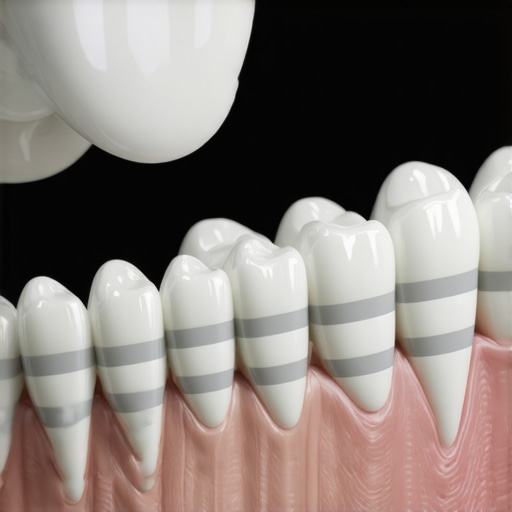
Cover the stain when bleaching hits a wall
Sometimes, even the best oxygenation protocol can only do so much. If your gray bands are particularly dark, they might just transition into a lighter, albeit still noticeable, shade of blue-gray. This is the point where the strategy shifts from trying to change the tooth’s internal color to masking it entirely. You have to decide between veneers vs crowns. For most of us dealing with antibiotic staining, veneers are the gold standard because they require much less tooth reduction while providing a complete aesthetic overhaul.
Avoid the Chiclet look with proper opacity
The biggest fear people have—and it was a major concern of mine—is that veneers will look fake or ‘pasted on.’ If the porcelain is too translucent, the underlying gray stain will peek through, making the teeth look muddy. If it is too opaque, they look like white Lego bricks. You need to know how to make your veneers look natural by working with a lab that understands layered ceramic. I have seen cases where patients spent thousands only to wonder why their veneers look different in sunlight versus indoor lighting. It all comes down to the quality of the material and the skill of the cosmetic dentistry specialist you trust with your case.
Manage the prep work for a permanent fix
When I finally opted for veneers for my tetracycline stains, I realized the ‘prep’ stage is the most critical part. Your dentist must slightly shave down the enamel to create a seamless transition for the porcelain. If this step is rushed or skipped, you might find that your veneers feel thick and bulky whenever you try to speak. It is a game of millimeters. You want the mask to be thin enough to feel like your own tooth, yet dense enough to hide the childhood ghost of that antibiotic staining.If you think the hardest part of fixing a smile is picking a shade from a plastic wheel, you’re in for a surprise. One of the biggest myths I encounter in the world of cosmetic dentistry is the idea that ‘no-prep’ veneers are a universal solution for every patient. While marketing makes it sound like a dream—getting a perfect smile without the drill—it is often a recipe for disaster when dealing with intrinsic tetracycline staining. If you don’t remove a fraction of the enamel, the new porcelain sits on top like an artificial cap, and suddenly your veneers feel thick and bulky when you try to say the letter s. In my experience, ‘minimal prep’ is almost always superior to ‘no-prep’ because it allows the technician enough physical space to mask that deep gray without making your teeth look like they belong to someone else. 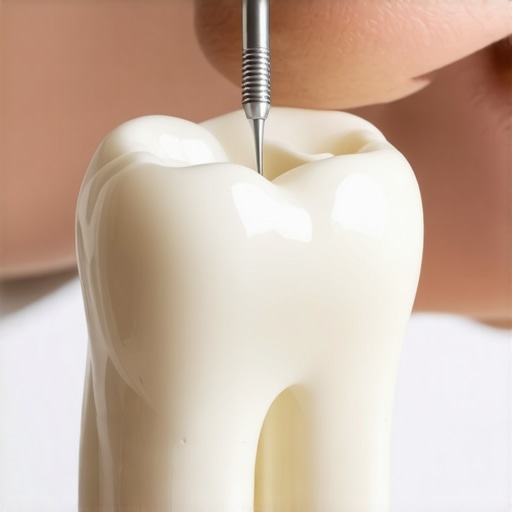
Why the stump shade determines your final look
The real secret to a high-end result isn’t just the color of the porcelain itself, but the ‘stump shade’—the actual color of your natural tooth after it has been prepped. If your dentist doesn’t communicate this clearly to the laboratory, the technician assumes they are working on a bright white canvas. This is often why your porcelain veneers don’t match your natural teeth once they are actually bonded in place. A study published in the International Journal of Prosthodontics highlights that the final optical result of a veneer is a complex composite of the ceramic opacity, the resin cement, and the underlying tooth structure. Ignoring one of these variables is the most common reason for a failed aesthetic result.
Can you actually skip the drilling with no-prep veneers?
For tetracycline victims, the answer is almost always a hard ‘no.’ While family dentistry emphasizes conservative care, ‘no-prep’ on a dark tooth usually results in an opaque, lifeless look because there isn’t enough depth for the laboratory to layer the porcelain effectively. If you try to force it, you will end up wondering how to make your veneers look natural after the fact. It is much better to commit to a precision-guided prep. Have you ever fallen into this trap where you chose the ‘less invasive’ option only to be unhappy with the final look? Let me know in the comments.
Preventing the grey shine-through effect
When you are navigating the choice between veneers vs crowns, you have to consider the ‘shine-through’ effect. Modern ceramics are incredibly advanced, but they are not magic. If the porcelain is too thin, the gray of the tetracycline will eventually win the battle. This is why how to tell if your veneers were bonded correctly to the enamel is about more than just the glue; it’s about the thickness and the chemistry of the bond. If you’re seeing a grayish tint under your new teeth, the opacity was likely miscalculated. Always ask your dentist about the ‘ingot’ color—the base ceramic used—before they finalize your case. If you’re still deciding on your next move, check out our guide on unlocking your best smile yet to see what’s possible when the science and art align.
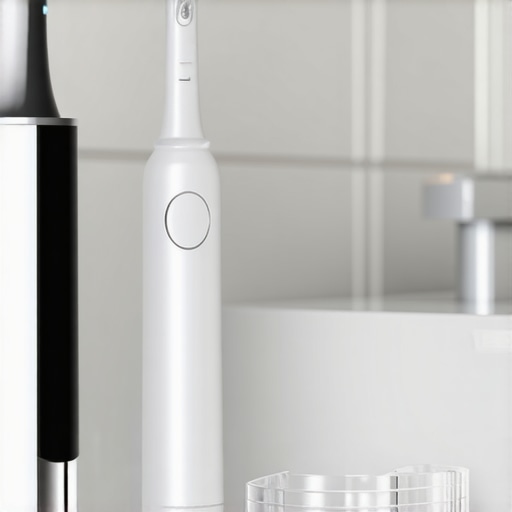
Once you’ve successfully masked or lightened those stubborn gray bands, the real work shifts from transformation to preservation. I learned the hard way that a high-end smile requires high-end maintenance. You can’t just go back to the ‘brush and hope’ method. For me, the game-changer was switching to a Sonicare ProtectiveClean 6100. I don’t just use it because it feels fancy; I use it because the built-in pressure sensor is the only thing standing between me and why your gums are receding even though you brush twice a day. When you have veneers or deep-bleached teeth, your gum line is your finish line. If the gums recede even a millimeter, that childhood tetracycline stain might start to peek through at the root, ruining the entire illusion.
The one tool you cannot afford to skip
If you opted for porcelain to cover your stains, you are now wearing a high-performance ceramic. It is incredibly strong but also brittle under the wrong kind of pressure. This is why I am borderline obsessed with my custom-molded night guard. I tell everyone who will listen about the risk of skipping your night guard for just one week. Even if you don’t think you grind your teeth, the micro-stress of nocturnal clenching can cause ‘craze lines’ in your porcelain or, worse, cause a unit to pop off. According to a clinical review in the Journal of Oral Rehabilitation, patients with ceramic restorations who use occlusal guards have a significantly lower rate of mechanical failure over a ten-year period compared to those who don’t. It’s the cheapest insurance policy you’ll ever buy for your mouth.
How do I keep my new smile bright for the long haul?
Maintenance isn’t just about what you do at home; it’s about your partnership with your dental team. You have to realize the real cost of skipping your six-month checkup when you have complex cosmetic work. A hygienist who knows cosmetic dentistry secrets will use specialized non-abrasive polishing pastes (like Proxyt) that won’t scratch the surface of your veneers. Standard prophy paste is like liquid sandpaper and can dull the luster of your new teeth over time. If you do happen to notice a rough spot, you need to know how to polish a scratched veneer safely, though I always recommend letting the pros handle the buffing wheel.
The future of smile restoration is digital
Looking ahead, the way we handle tetracycline staining is about to get even more precise. I predict that within the next five years, AI-driven color matching and 3D-printed ultra-thin ‘microlaminates’ will make the process even less invasive. We are already seeing the future of dental implants and cutting-edge techniques that allow for immediate, perfectly shaded replacements if a tooth is too compromised to save. The goal is moving away from the ‘one-size-fits-all’ white and toward a biological mimicry that is indistinguishable from natural enamel. If you want to ensure your results last, check out these 3 secrets to making your porcelain veneers last twenty years and start auditing your current hygiene routine. My best advice? Go swap your medium-bristle brush for a soft-head electric one today; your gum line will thank you in a decade.
My Hardest Lessons in Tooth Color Correction
- Forget the quick fix: I spent way too much time looking for a magic bullet. With tetracycline, if it claims to work in a week, it is probably just dehydrating your teeth to make them look temporarily lighter.
- The natural look is better than refrigerator white: When I first started researching cosmetic dentistry secrets, I wanted the brightest shade possible. I learned that matching my skin tone and facial structure is what actually makes the smile look like mine.
- Your gum health is your foundation: No amount of bleaching or expensive porcelain matters if your gums are unhappy. Keeping them pink and healthy is half the battle.
The Gear That Saved My Gum Line
If you are serious about maintaining your investment, these are the three things I refuse to live without. First, a high-quality electric toothbrush with a pressure sensor. It is the only way to ensure you are not brushing away your enamel. Second, a custom-fitted occlusal guard; because the risk of skipping your night guard for just one week can lead to micro-fractures in your expensive dental work. Finally, stay on top of professional cleanings to avoid the real cost of skipping your six-month checkup, which often includes catchable issues becoming major repairs.
#IMAGE_PLACEHOLDER_E#
It’s Finally Your Turn to Smile
Living with deep-set discoloration can feel like a life sentence for your self-esteem, but it does not have to be. Whether you decide on a multi-month deep bleaching protocol or choose between veneers vs crowns, there is a path forward. You deserve to speak, laugh, and eat without thinking about your reflection. Learning how to whiten teeth that have been stained by tetracycline antibiotics is not just about vanity; it is about reclaiming a piece of yourself that you have been hiding for too long. If you are ready to start, I recommend following these 3 secrets to making your porcelain veneers last twenty years so you only have to do this once. Have you ever felt like your teeth were holding your confidence back? Let me know in the comments below!