I remember sitting on my couch, three days after a wisdom tooth extraction, poking my tongue at a piece of black thread that felt like a tiny fishing line in my mouth. I was absolutely convinced it was ready to come out. I even grabbed a pair of tweezers—a huge mistake, by the way—before common sense finally kicked in. That ‘itchy’ feeling isn’t just annoyance; it’s your body trying to tell you something. Today, I am going to walk you through exactly how to read those signals so you do not end up back in the chair for an emergency repair. [image] Have you ever been tempted to just ‘snip’ them yourself? Let me know in the comments because I have definitely been there.
Your Gums Know Best if the Thread Can Go
The first thing you need to realize is that healing is not a race. When I had my first major procedure, I spent way too much time worrying about how to tell if your dental bone graft is healing as expected. I learned the hard way that stitches are basically the training wheels for your gums. If they start to feel loose or look like they are ‘walking’ out of the tissue, it is usually a good sign. However, the biggest mistake I made early on was assuming that ‘loose’ meant ‘done.’ I tugged a bit too hard on a suture that was not ready, and let’s just say the bleeding that followed was a wake-up call. If you are still in the early stages and struggling with discomfort, you might find relief by learning how to manage the swelling after a difficult wisdom tooth removal. According to the American Association of Oral and Maxillofacial Surgeons, most non-resorbable sutures are typically removed between 5 to 14 days after the procedure, but your personal biology often has its own timeline. Maintaining a clean environment is key, which is why following family dentistry tips for a lifetime of healthy smiles helps ensure the tissue around those threads stays pink and healthy, not angry and red.
Do I really need a pro to pull these out?
It is incredibly tempting to think a pair of sanitized nail scissors can do the job of a trained professional. You might think it is just a piece of string. But here is the reality: those stitches are often tied in specific patterns to ensure the underlying bone and tissue remain stable. Snipping the wrong end could leave a piece of thread buried under your gums, leading to a nasty infection. We are going to dive into the physical signs—like color changes and ‘slack’—that prove you are on the right track for your follow-up appointment.
Look for the slack in the line
To tell if your recovery is on track, you need to be a bit of a detective. Think of your stitches like the rigging on a boat; when they are first put in, they are tight and under tension to hold the ‘sails’ of your gum tissue together. As the swelling goes down, that tension naturally disappears. I once spent ten minutes in front of my bathroom mirror with a flashlight, convinced a loose loop was a piece of trapped cilantro from a soup I had eaten. I poked it with a toothpick—the absolute worst thing you can do—and the sharp sting reminded me that even a ‘loose’ stitch is still anchored to raw tissue. Instead of poking, use a clean flashlight to check the color and position. Healthy gums should be transitioning from a deep red to a soft pink as the days pass. If you see the thread actually lifting away from the surface or hanging slightly, you are likely seeing how to tell if your dental implant is healing at the right speed because the tissue is shrinking back to its natural, healthy state as the inflammation subsides. 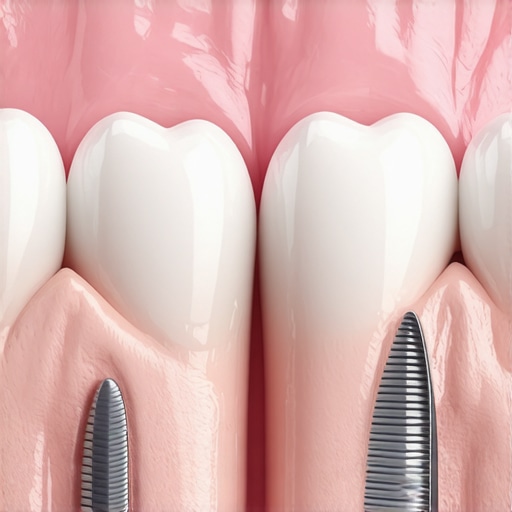
Keep the area spotless without scrubbing
Cleaning a surgical site is a delicate balance where you cannot just go in with a power brush. For the first few days, your best friend is a warm salt-water soak. I remember my surgeon telling me that the salt water is not just for germs; it acts like a mild astringent that helps the gum tissue ‘hug’ the stitches tighter. If you skip this, the threads can become caked with food particles, making them feel much larger and more irritating than they actually are. Don’t spit aggressively; just let the water roll out of your mouth into the sink. This technique is very similar to how to soothe your gums after a deep cleaning session where the primary goal is to reduce bacteria without mechanical friction. If you have had more complex work done, such as an implant, you must learn how to safely clean a dental implant without scratching the post, as even the smallest abrasion on the titanium or abutment can harbor plaque later on.
Spotting the difference between a stitch and a loose implant
One of the scariest moments during recovery is feeling something ‘wiggle’ when you swallow or talk. It is vital to distinguish between a silk thread moving and the actual dental hardware shifting. If you feel a slight tugging or a ‘hair-like’ sensation when you move your tongue, it is almost certainly the stitch. However, if the sensation is deep in the jawbone and feels like a structural movement, you might worry why your dental implant crown feels like it is wiggling. A stitch will feel ‘fuzzy’ or ‘stringy’ against your lip, while a loose healing abutment or crown feels like a rock shifting in its socket. If you have just had surgery, that ‘itchy’ sensation is usually just the nerve endings waking back up and the tissue contracting around the thread. If the ‘thread’ you are feeling is hard, metallic, and clicking against your other teeth, stop touching it immediately and contact your dentist, as that is a sign the hardware needs tightening, not the stitches coming out.Most patients assume that if a surgeon uses ‘dissolvable’ stitches, they will simply melt away like sugar in tea within a couple of days. This is a massive misconception that leads to panicked calls to the clinic on day five. In my experience, these threads are designed to maintain their structural integrity for a specific window of time. According to research published in the Journal of Oral and Maxillofacial Surgery, synthetic resorbable sutures like polyglactin 910 retain substantial tensile strength for up to 14 days to ensure the wound edges stay apposed during the critical early stages of collagen formation. If yours are still hanging on, they aren’t ‘stuck’; they are doing exactly what they were engineered to do.
Dissolvable threads don’t just disappear
The contrarian reality is that ‘faster’ isn’t better when it comes to resorption. If a stitch dissolves too quickly, you risk the wound dehiscing—or popping open—which leads to a much longer recovery. I have seen countless people try to speed up the process by rinsing with aggressive mouthwashes, thinking they can ‘melt’ the string. This is a dangerous trap. Mechanical or chemical interference can cause the knot to fail prematurely. It is far better to follow family dentistry tips for a lifetime of healthy smiles and let your body’s natural enzymes do the work at their own pace.
The trap of the over-cleaner
The biggest ‘oops’ factor I see in post-op recovery is what I call the ‘cleaning obsession.’ We are so afraid of infection that we over-scrub or use high-pressure water flosser settings directly on the surgical site. I’ve seen people accidentally blast their stitches out before the tissue has even begun to bridge the gap. This is the same reckless logic behind the danger of using a safety pin to remove food from your gums—mechanical trauma is far more destructive than a few stray food particles. If you’re too aggressive, you might even start to worry why your dental implant feels heavy in your jaw bone because of the localized inflammation you’ve caused by poking at the site.
Why does the surgical site feel tighter at night?
It’s not just stitches that can feel strange during the ‘settling’ phase. Much like how the reason your dental implant crown feels tighter than the others often comes down to the way your surrounding teeth adjust to new pressure, stitches can feel more restrictive as your swelling goes down. Your gums are literally shrinking back to their original size, which makes the thread feel like it’s digging in. This sensation is actually a sign of success. It shows that how dental implants reshape your oral health in 2025 involves a complex integration of soft tissue management. #IMAGE_PLACE_HOLDER_C#
Cosmetic work requires biological respect
When it comes to high-end cosmetic work, the nuance is even finer. People often think veneers transformation is just about the porcelain, but the way your gums heal around the margins is the real secret. A common mistake is ignoring the ‘biological width’—the space the gum needs to stay healthy. This is exactly the mistake that makes porcelain veneers look like piano keys; focusing on the tooth while ignoring the foundation. Advanced dental implants 2025 innovations that redefine comfort and durability rely on this same respect for tissue. Have you ever fallen into the trap of thinking a loose thread or a tight crown was a surgical failure? Let me know in the comments.Once those threads are finally gone, you aren’t just ‘done’ with your recovery; you’re transitioning into the stewardship phase of your new smile. I’ve seen people spend thousands on a veneers transformation only to treat them like natural teeth that can handle anything. That is a recipe for disaster. To keep your work looking pristine, I swear by the ‘pressure-sensor’ rule. Most high-end electric brushes now come with a light that turns red if you push too hard. This is crucial because why your gums are receding even though you use a soft toothbrush often comes down to mechanical force, not the brush itself. For my implant patients, I specifically recommend the TePe Interdental Brushes. Unlike traditional floss that can shred, these plastic-coated wires are designed for how to safely clean a dental implant without scratching the post. According to the American Academy of Periodontology, maintaining a zero-plaque environment around the abutment is the single most important factor in preventing peri-implantitis. 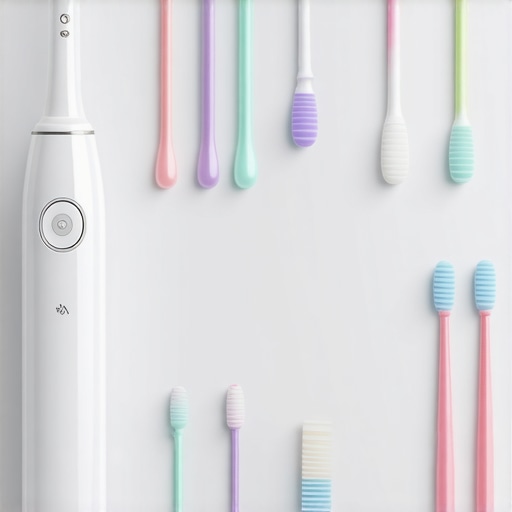
How do I keep my cosmetic work looking brand new over time?
The secret isn’t just brushing; it’s managing the ‘micro-environment’ of your mouth. I always tell my friends to look at family dentistry tips for a lifetime of healthy smiles as a baseline, but cosmetic work needs an extra layer of defense. For example, if you have porcelain, you have to be wary of ‘stain-traps.’ While porcelain itself doesn’t stain, the bonding resin at the edges can. This is why the secret to getting red wine stains off your veneers isn’t about whitening strips—it’s about prompt rinsing. Looking ahead, I predict that by 2026, we will see ‘smart’ retainers and mouthguards equipped with pH sensors that alert your phone when your saliva becomes too acidic, potentially damaging your dental implants 2025 innovations that redefine comfort and durability. If you want to stay ahead of the curve, try this advanced tip: swap your standard mouthwash for a pH-neutralizing rinse twice a week to keep the bacterial biofilm from ever getting a foothold. It’s the difference between a smile that lasts five years and one that lasts twenty.
What my dentist never explicitly told me about the itch
Looking back at my recovery, there are a few lightbulb moments that would have saved me so much anxiety. [image] First, that itchy sensation isn’t a sign of infection; it is actually your nerves reconnecting and your tissue shrinking. It is a sign of life! Second, if you see a tiny bit of white film around the thread, don’t panic. As long as it doesn’t smell or throb, it’s often just the way the mouth handles moist healing. I wish I had known these cosmetic dentistry secrets to boost your confidence during those awkward first few days. Finally, trust the ‘Slack Rule’—if the thread is hanging but the knot is tight, leave it alone. The body will eject it when the bridge of tissue underneath is strong enough to stand on its own.
My must-have essentials for dental implant recovery
You don’t need a pharmacy’s worth of supplies, but a few specific items made my life much easier. I swear by a dedicated ‘surgical’ soft brush that feels like a makeup brush for the first week. I also found that family dentistry tips for a lifetime of healthy smiles often emphasize the importance of hydration; a dry mouth makes stitches feel ten times more irritating. For those with more advanced work, I highly recommend picking up a set of plastic-coated interdental cleaners. Knowing how to safely clean a dental implant without scratching the post is a game-changer for long-term success. Lastly, keep a small bottle of saline solution handy for on-the-go rinses when you can’t get to a sink.
Watch how dental implants reshape your future
Healing isn’t a linear path, and some days will feel tighter than others. The most important thing is to be patient with your body as it integrates these changes. Whether you are recovering from a simple extraction or exploring how dental implants reshape your oral health in 2025, remember that those stitches are your silent partners in the rebuilding process. Don’t rush the removal, and don’t let a little ‘stringy’ discomfort discourage you from the amazing result waiting at the end. Your future smile is worth those few days of ‘itchy’ patience. Have you ever felt that tiny ‘fishing line’ sensation in your mouth and been tempted to pull it yourself? Let me know your experience in the comments!