I was sitting on my couch, nursing a lukewarm bowl of mashed potatoes three days after my procedure, when I felt it: a tiny, scratchy ghost of a thread tickling the back of my tongue. I froze. My heart did a slow-motion somersault as I realized that the suture meant to hold my gums together had decided to make a premature exit. If you have ever been through a major dental procedure, you know that those stitches represent your sanity. My first mistake? I had been obsessively checking the site with my tongue, convinced I could ‘feel’ if it was healing properly. In reality, I was just poking at a wound that needed rest. I spent the next hour spiraling, wondering if my whole recovery was about to unravel. Whether you are recovering from a routine extraction or trying to [transform your smile with veneers](https://straightsmileortho.com/transform-your-smile-with-veneers-expert-tips-for-perfect-results), that moment of ‘suture shock’ is terrifying. Today, I am going to walk you through exactly how to tell if you are in a real emergency or if your body is just being efficient, and the specific steps I took to save my sanity (and my gums) when my own stitches failed. [image_placeholder]
What to Do When the Thread Snaps Too Soon
It is incredibly easy to panic when you see a piece of black silk or synthetic thread on your napkin. I remember thinking that my entire [dental bone graft](https://straightsmileortho.com/how-to-tell-if-your-dental-bone-graft-is-healing-as-expected) was going to fall out right then and there. But here is the reality: not all stitches are created equal. Some are designed to dissolve, and sometimes your body decides it is done with them faster than the dentist predicted. The very first thing you need to do is stop touching the area. I made the blunder of trying to ‘tuck’ a loose end back in with a clean finger, which only increased the risk of infection. Instead, take a deep breath and look for active bleeding. According to the American Association of Oral and Maxillofacial Surgeons, while premature suture loss can occasionally lead to a ‘dry socket,’ it is often a non-event if the wound edges have already begun to bridge. If you are worried about the long-term success of your procedure, especially with [dental implants 2025 innovations](https://straightsmileortho.com/dental-implants-2025-innovations-that-redefine-comfort-and-durability) making recovery faster than ever, you have to prioritize the physical stability of the clot over the presence of the thread itself.
Are You About to Lose Your Whole Dental Implant?
This is the big fear, isn’t it? We assume the stitches are the only things holding the hardware in place. I certainly did. I was convinced that without that one loop of thread, my body would reject everything. But your surgeon likely used multiple layers of closure. One loose stitch rarely spells disaster for the entire site. Have you ever looked in the mirror and felt like your mouth was a construction zone that was falling apart too early? You aren’t alone, and most of the time, the fix is simpler than you think. You can usually tell [if your dental stitches are ready to be removed](https://straightsmileortho.com/how-to-tell-if-your-dental-stitches-are-ready-to-be-removed) based on the color of the tissue, but if they come out before day five, it’s time to follow a specific protocol to keep the area clean while you wait for a callback from the office.
Stop the Bleeding and Secure the Site
When that thread popped, my first instinct was to poke it with my finger—don’t do that. Treat the area like a fresh paint job. If there is active oozing, take a piece of sterile gauze, dampen it slightly with cold water, and bite down with steady, firm pressure for at least 30 minutes. This creates a physical barrier and encourages a blood clot to form. I once had a stitch come loose after a minor adjustment, and I panicked, thinking I needed to go back under the knife. In reality, the pressure was all that was needed to keep the tissue edges together. While you might be focused on family dentistry tips for a lifetime of healthy smiles for your kids, for your own recovery, the priority is clot stability. Think of the clot as a natural biological bandage. If you dislodge it, you risk a dry socket, which feels like a lightning bolt hitting your jaw every time you breathe.
The Saltwater Flush Technique
Once the site is stable, you must keep it clean without using a brush. Mix half a teaspoon of salt into eight ounces of warm water. Do not swish aggressively. Instead, take a sip, tilt your head toward the side with the loose stitch, and let the gravity do the work. I did this every two hours for the first day after my suture snapped. It prevented the area from becoming a magnet for bacteria, which is the same logic used when you learn how to safely clean a dental implant without scratching the post. This gentle “bath” removes food debris that could get trapped in the open gap where the thread used to be.
Assess the Structural Integrity of the Work
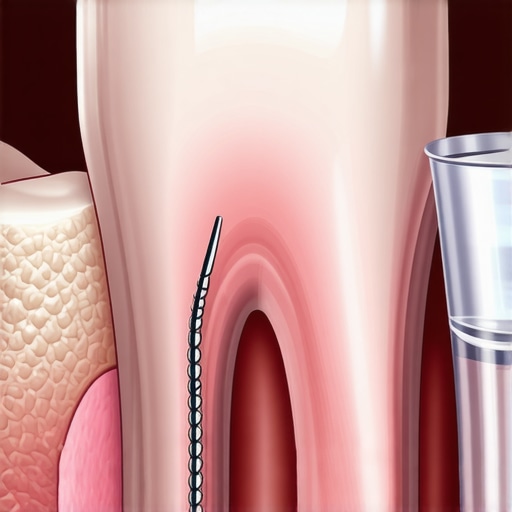
You need to determine if the loose thread is just a superficial layer or if the underlying graft is exposed. If you can see white or grayish material that looks like wet sand, that is likely your bone graft, and you need to call the office immediately. However, if the tissue just looks a bit red or “gappy,” you are likely fine until morning. When I was going through my recovery, I noticed that how dental implants reshape your oral health in 2025 relies heavily on the initial healing phase, but the body is remarkably resilient. If the stitch that fell out was one of many, the remaining loops will often pick up the slack.
Protect Your Investment From Your Tongue
Your tongue is the strongest muscle for its size, and it is incredibly curious. I call it the “detective” of the mouth. After my stitch failed, my tongue wanted to investigate that gap every thirty seconds. You have to treat the surgical site like a “no-fly zone.” If you are worried about aesthetics, like why your new veneers feel bulky against your lips, you might be tempted to check the mirror and pull your lip back. Don’t. Tension on the cheeks can pull the wound edges further apart. Keep your mouth relaxed and stick to a “no-chew” diet—think smoothies, lukewarm soups, and protein shakes—until your dentist can verify the site. This level of care is the same you’d apply when discovering cosmetic dentistry secrets to boost your confidence; the best results always come from following the post-op protocol to the letter.
I used to think that the number of stitches in my mouth was a direct reflection of how well the surgery went. Most people assume that more thread equals a more secure wound, but that is actually a common misconception. In reality, over-suturing can be a silent enemy to your recovery. When a surgeon places too many stitches or pulls them too tight, it can cause ischemia, which is a medical way of saying the blood supply to the healing tissue has been restricted. Without that vital blood flow, your gums cannot regenerate effectively. This lack of circulation is a primary reason why your gums look receding even if you have good hygiene following a major procedure. The goal is a delicate balance of tension and circulation, not a mouth full of heavy-duty knots.
Avoid the Cleanliness Trap After Surgery
The most dangerous trap I fell into was the cleanliness obsession. A few days into healing, you might notice a white or yellowish film forming over the surgical site. My first instinct was to grab a brush and scrub it away, thinking it was food debris or plaque. Stop right there. That film is often fibrin, a crucial protein that acts as a biological scaffold for new tissue. If you scrub it away, you are essentially ripping the roof off your body’s new construction site. This mistake is why how to tell if your dental implant is healing at the right speed becomes such a guessing game for many—you are resetting the healing clock every time you interfere with that natural ‘glue.’ 
Will Micro-Movements Undermine Your Bone Graft Even if the Suture Holds?
While we tend to obsess over the visible threads, the real battle for success is happening deep within the jawbone. A study published in the International Journal of Oral & Maxillofacial Implants highlights that micro-movements as small as 100 microns can prevent an implant from fusing with the bone. These movements are often caused by patients ‘testing’ the site with their tongue or trying to eat foods that require even minimal chewing. It does not matter if your stitches are perfectly intact; if the underlying hardware is shifting, the bone won’t integrate. This is why the future of dental implants cutting edge techniques in cosmetic dentistry focuses so heavily on immediate stability. Have you ever fallen into the trap of over-checking your progress in the mirror and accidentally tugging at the site? Let me know in the comments. Whether you are working to transform your smile with veneers or waiting for a graft to take, the best thing you can often do is leave it alone and let biology do the heavy lifting.
Once you’ve survived the ‘suture shock’ and the initial healing haze, you enter what I call the ‘investment protection phase.’ It is one thing to get the work done; it is another to keep it looking like it did on day one. I remember looking at my new work and realizing that my old manual toothbrush wasn’t going to cut it anymore. If you want to avoid the mistake that makes porcelain veneers look like piano keys, you have to upgrade your toolkit and your technique. I personally made the switch to an ultrasonic toothbrush with a built-in pressure sensor. Most of us brush like we are trying to scrub a stain out of a garage floor, but for veneers and implants, that abrasive force is a disaster. According to a study published in the Journal of Clinical Periodontology, excessive manual brushing force is a primary contributor to gingival recession, which is exactly why your gums look receding even if you have good hygiene. I use the sensor as a hard stop—if the light turns red, I know I am potentially damaging the delicate margin where the porcelain meets the gumline.
How do I maintain my dental implants and veneers over time?
Long-term maintenance isn’t just about mechanical cleaning; it is about the chemistry of your mouth. I have started using a non-alcohol based, pH-neutral mouthwash every single night. Alcohol-based rinses can actually soften the composite bonding agents used in cosmetic dentistry over years of use, leading to staining at the edges. For my implants, I swear by a water flosser on the ‘low’ setting. You have to be precise here: learning how to safely clean a dental implant without scratching the post involves avoiding metal-tipped tools that can create microscopic grooves where bacteria hide. I am also a massive advocate for plastic-coated interdental brushes. If you are managing family dentistry tips for a lifetime of healthy smiles, you know that getting anyone to floss correctly is a battle. These little ‘Christmas tree’ brushes get into the gaps that traditional floss misses, especially around the base of an implant crown where the shape is slightly different from a natural tooth. #IMAGE_PLACE_HOLDER_D# I predict the next five years will bring ‘smart’ restorations into the mainstream. We are already seeing dental implants 2025 innovations that include pH-sensing technology to detect early-stage infection or bone loss before you even feel a twinge. Imagine your tooth sending a notification to your phone saying it needs a professional irrigation. That is the level of cosmetic dentistry secrets to boost your confidence we are moving toward. If you want to take your maintenance to the next level today, try my ‘Fluoride Soak’ tip: after you brush, spit out the excess paste but do not rinse with water for at least five minutes. This allows the protective minerals to settle into the margins of your veneers transformation and strengthens the natural tooth structure underneath.
What My Dentist Never Mentioned About the Healing Gap
Looking back on my recovery, I realized that the panic I felt over one loose thread was mostly due to a lack of perspective. First, I had to learn that healing is not a straight line; some days the tissue looks tight and pink, and other days it looks slightly puffy or pale. Second, I realized that my own anxiety was physically slowing me down. Constant jaw tension from worrying actually hindered the blood flow to my surgical site. Finally, I discovered that the best way to handle a ‘suture scare’ is to document it—snap a clear photo with your phone and send it to your provider rather than poking it with your tongue to ‘test’ the stability.
My Essential Toolkit for Protecting a New Smile
[image_placeholder]
I didn’t realize how much the right tools mattered until I was in the thick of it. Here are the items that saved my sanity:
- The Ultra-Soft Surgical Brush: Forget your standard ‘soft’ brush. You need one designed for post-op care that feels like a cloud so you don’t irritate the margins of your veneers transformation.
- pH-Neutral Rinses: I ditched the blue, alcohol-heavy mouthwashes for saline-based or alkaline rinses to keep my oral microbiome in balance without stinging.
- Water Flossers with Pressure Control: This is vital for how to safely clean a dental implant without scratching the post, as it flushes debris without the physical friction of string floss.
- Digital Journals: I used a simple notes app to track my healing milestones, which helped me stay calm when things felt ‘off’.
Why Your Body is Better at Healing Than You Think
It is easy to get caught up in the fear of failure, but remember that your body is remarkably good at repairing itself if you just give it the space to work. Whether you are navigating the early days of a graft or finally seeing the results of cosmetic dentistry secrets to boost your confidence, the key is consistency. By staying patient and following these protocols, you aren’t just saving a stitch; you are ensuring the longevity of an investment that will change how you face the world. Don’t let a tiny piece of thread steal your peace of mind. Have you ever panicked because a stitch felt loose too soon? Let me know your ‘suture shock’ stories in the comments below!