I remember the first time I really looked—I mean, really inspected—my new dental implant crown in the bathroom mirror. I had spent months waiting for the healing process to finish, and I expected a carbon copy of the tooth I’d lost years ago. Instead, I saw this slightly narrower, differently contoured shape that felt just a bit ‘off’ against my tongue. I actually panicked and called my dentist, convinced they had grabbed the wrong size from the drawer. It was a classic rookie mistake on my part, but that moment of confusion is something almost everyone faces when they step into the world of modern dental implants. We expect a replica, but what we actually need is a specialized tool designed for a very specific job. Today, I want to pull back the curtain on why that shape discrepancy is actually your best friend when it comes to long-term oral health and why your dental implant crown feels tighter than you might have anticipated.
My new tooth looked a bit weird in the mirror
It’s a visceral feeling when you run your tongue along your gum line and notice a gap or a slope that wasn’t there before. When I first started following family dentistry tips for my own recovery, I was obsessed with symmetry. I thought if the crown didn’t perfectly mimic the flared base of my natural molar, it was a failure. I even worried that I would have to hide my smile during cosmetic dentistry consultations because of this one ‘imperfect’ tooth. But here is the reality: a natural tooth is held in by a flexible ligament, while an implant is fused directly to your bone. This fundamental difference in how they ‘sit’ in your jaw dictates every curve of that porcelain crown. If your dentist made it exactly like your old tooth, the hygiene would be a nightmare. Have you ever looked at your new crown and wondered why the base seems so much skinnier than the top? You aren’t alone, and it’s definitely not a manufacturing error.
Is my dentist cutting corners on the design?
It is easy to get skeptical when you’re paying for premium dental work and the result doesn’t look like an exact twin to your other teeth. You might worry that they used a generic abutment or that the lab was rushing. However, according to research published in the Journal of Oral Implantology, the ’emergence profile’—that’s the way the tooth comes out of the gum—must be narrower for implants to prevent the buildup of harmful bacteria that leads to peri-implantitis. Unlike your natural teeth, which have a wide neck protected by a periodontal ligament, an implant needs more space for your gums to create a tight, healthy seal. If the crown was too bulky at the bottom, it would crush your gum tissue and lead to bone loss. Learning how to safely clean a dental implant becomes much easier when the crown is shaped to allow your brush and floss to actually reach the base. We’re moving toward a future where how dental implants reshape your oral health in 2025 is more about mechanical longevity than just looking like a perfect clone. Have you noticed a specific ‘ledge’ or a different feeling when you floss around your implant compared to your other teeth? Let me know, because understanding that transition is the first step to keeping that implant for life.
Why your new crown feels like a stranger in your mouth
Your brain is currently performing a massive recalibration. Think of your natural teeth like they are sitting on tiny shock absorbers called the periodontal ligament. Implants, however, are fused directly into your bone. This means when you chew, your natural teeth give slightly, but the implant stays rigid. This is why the reason your dental implant crown feels tighter than the others isn’t just about the physical size—it is about the lack of ‘give.’ I remember trying to eat a piece of crusty sourdough three days after my final crown was placed. It felt like I was biting down on a marble. I panicked, thinking the crown was too high. In reality, my jaw was just learning how to distribute pressure without those tiny ligaments. Give your nervous system about two weeks to map out this new ‘hard’ surface before you request a bite adjustment.
Master the weird angle of your implant floss
Because the base of an implant is narrower than a natural tooth, your standard flossing motion needs a pivot. On a regular tooth, you slide the floss up and down the flat sides. With an implant, you need to ‘C-shape’ the floss around that skinny titanium neck. If you don’t, you leave a little pocket of bacteria right at the gum line. I learned this the hard way when my gums started throbbing after a week of lazy cleaning. I eventually switched to a high-quality water flosser, which is a lifesaver if why your gums bleed only when you use a water flosser is a concern you have had in the past. The goal is to flush out that ‘ledge’ where the porcelain meets the metal. Learning how to safely clean a dental implant without scratching the post is crucial because any microscopic scratch on that titanium can become a breeding ground for plaque. 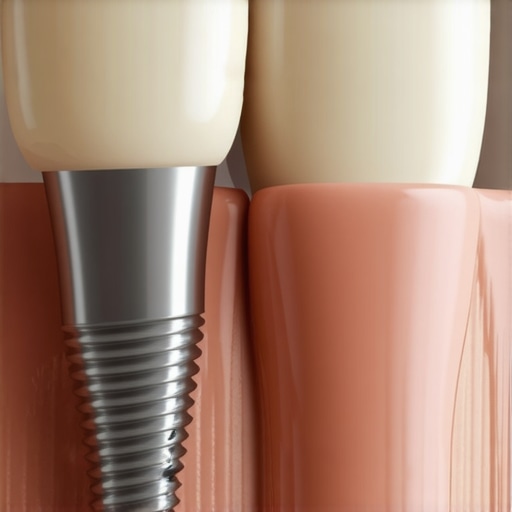
Keep an eye on the healing timeline
It is easy to get hyper-focused on the aesthetics, but the real work is happening under the surface. You should be checking how to tell if your dental implant is healing at the right speed by looking at the color of the tissue. Pink and firm is the gold standard. If you see a deep red or purple hue, that is your body telling you the crown might be putting too much pressure on the ’emergence profile.’ Some patients require a how a simple sinus lift makes dental implants possible for more people before they even get to this stage, which can change the way the final crown is angled. If you feel like your smile isn’t lining up, compare it to other options; sometimes veneers vs crowns choosing the best option for your smile comes down to how much underlying bone support you actually have left. If you have other cosmetic work, you might notice why your new veneers feel bulky against your lips feels very different from the streamlined, rigid feel of an implant crown.
Stop the ‘wiggling’ test immediately
One of the most dangerous things you can do as a new implant owner is try to ‘test’ the stability by pushing it with your tongue or finger. If you suspect why your dental implant crown feels like it is wiggling is an actual issue, it is usually just the internal screw inside the crown loosening, not the implant itself failing. However, manual ‘testing’ can irritate the delicate seal between the gum and the porcelain. I spent a whole afternoon obsessively poking at my crown with my tongue until my jaw actually started to ache. It wasn’t the tooth that was the problem; it was my own curiosity. Treat the new crown like a high-end piece of machinery—it is designed for vertical pressure (chewing), not lateral pressure (poking).
Forget the teeth—it’s all about the gums
Most people walk into a clinic obsessed with the shade of their porcelain, but here is the hidden nuance: the ‘white’ part of your smile is only as good as the ‘red’ part framing it. If your gum architecture isn’t managed correctly, the most expensive crown in the world will look like a foreign object rather than a natural tooth. According to the American Academy of Cosmetic Dentistry (AACD), the symmetry and health of the gingival margin are often more critical to a ‘natural’ look than the actual tooth color. This is where family dentistry tips for long-term tissue health transition into high-end artistry. You have to ensure you know how to tell if your gums are healthy based on their color before you even think about the final restoration. If you have a thin tissue biotype, the shadow of the titanium post can actually shine through the gum, creating a grayish tint that no amount of whitening can fix. Mastering the ’emergence profile’ means your dentist must sculpt the gum tissue over weeks using a temporary crown to create a realistic ‘cradle’ for the final porcelain piece.
The ‘piano key’ mistake you need to avoid
There is a common trap in cosmetic dentistry secrets to boost your confidence—the desire for perfectly straight, bleach-white teeth. When every tooth is exactly the same length and shade, you lose the ‘incisal translucency’ and ‘mamelons’ that make natural teeth look alive. This results in the mistake that makes porcelain veneers look like piano keys. Real teeth have character, subtle irregularities, and varying levels of transparency. If you are currently debating veneers vs crowns choosing the best option for your smile, ask your dentist about hand-layered porcelain rather than using a single block of monochromatic material. Layering allows light to pass through the tooth and reflect off the inner core, mimicking the natural dentin and enamel relationship. #IMAGE_PLACE_HOLDER_C#
Why is there a dark shadow near my gum line?
This is a sophisticated question that plagues many patients a few years after their procedure. It often happens when the metal ‘collar’ of an older-style implant or PFM (porcelain-fused-to-metal) crown starts to show because the gum tissue is naturally thinning with age. In the world of dental implants 2025 innovations that redefine comfort and durability, we now frequently use all-zirconia abutments to prevent this metallic shadow from ever appearing. If you are already seeing a change, why your gums look black or purple near an old crown is usually a sign of tissue recession or metal oxidation. Understanding these biological nuances early on can save you from a costly redo later. Have you ever fallen into the trap of choosing ‘perfect’ over ‘natural’? Let me know in the comments.I’ve spent a small fortune on my smile over the last decade, and if there is one thing I have learned, it is that the dental chair is where the work begins, but your bathroom sink is where the victory is secured. You cannot treat a $2,000 crown like a disposable tool. When I first transitioned from basic care to advanced maintenance, I realized that many standard family dentistry tips only scratch the surface of what is required for prosthetic longevity. To keep my implants and veneers looking like they were placed yesterday, I had to upgrade my toolkit and my mindset. I stopped grabbing whatever was on sale at the local pharmacy and started looking for specific gear designed to protect the ‘biological width’—that tiny, sacred space where your gum meets your dental work.
Gear that keeps my porcelain pristine
My daily routine revolves around three non-negotiables. First, I use an oscillating electric toothbrush with a pressure sensor. This is critical because many of us are ‘aggressive brushers’ without realizing it, which is exactly why your gums are receding even though you use a soft toothbrush. For the implants specifically, I use plastic-coated interproximal brushes. According to a technical study published in the International Journal of Implant Dentistry, using metal-core brushes can cause microscopic scratches on the titanium abutment, which significantly increases the rate of bacterial colonization. By switching to plastic-coated tools, you preserve the mirror-smooth finish of the post. I also swear by a high-quality water flosser on the ‘low’ or ‘sensitive’ setting. While some worry about why your gums bleed only when you use a water flosser, usually it is just a sign of early inflammation that the water jet is actually helping to clear out. It is the only way to reach the ‘ledge’ of the crown without trauma. 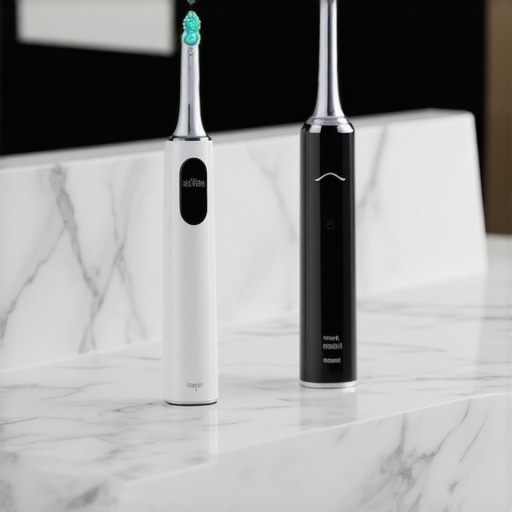
How do I keep my dental work healthy for the long haul?
Maintenance is a marathon, not a sprint. If you have moved beyond basic crowns and opted for a veneers transformation, you absolutely must wear a custom-fitted night guard. Even if you don’t think you grind your teeth, the ‘micro-stresses’ of nocturnal clenching can cause porcelain to fatigue over time. I had to learn how to remove the smell from your plastic night guard at home because I was wearing it so consistently. It’s a small price to pay for protecting the structural integrity of your smile. Furthermore, knowing how to safely clean a dental implant without scratching the post is the difference between a restoration that lasts ten years and one that lasts forty. I recommend a professional cleaning every four months rather than six if you have multiple implants, as this allows your hygienist to catch ‘peri-implant mucositis’ before it turns into bone loss.
The high-tech future of your jawbone
Looking ahead, we are entering an era where the future of dental implants involves more than just titanium and porcelain. I predict that by 2030, we will see ‘smart implants’ equipped with pH sensors that can alert your smartphone the moment they detect the acidic environment of an emerging infection. This shift in how dental implants reshape your oral health in 2025 and beyond means we will be moving from reactive repairs to proactive bio-monitoring. If you want to keep your cosmetic dentistry secrets safe, you have to embrace these technological shifts. My best advice? Start using a plastic-coated interproximal brush tonight—it is the single most effective ‘pro-level’ change you can make for under five dollars.
Lessons I Learned the Hard Way About Porcelain Longevity
One of the most profound shifts in my perspective happened when I stopped comparing my implant to my natural teeth and started treating it like a precision-engineered upgrade. It is easy to obsess over the nuances, but true peace of mind comes from knowing that your restoration is built to endure. I realized that the initial tightness wasn’t an error; it was the result of dental implants 2025 innovations that redefine comfort and durability where the fit is calibrated to the micron. Another lightbulb moment was accepting that my gums would evolve around the crown. Instead of fearing change, I learned to monitor the health of that tissue as the ultimate indicator of success. If you are still debating the path forward, comparing veneers vs crowns which is right for your smile can help you understand how different materials interact with your biology.
The Essential Arsenal for Your Bathroom Counter
To keep your smile pristine, you need more than just a standard toothbrush. I personally trust and recommend the following toolkit: First, an electric toothbrush with a pressure sensor to prevent gum recession. Second, interproximal brushes with plastic coating—these are non-negotiable for cleaning the neck of your implant without causing damage. Finally, I suggest staying updated on the latest maintenance guides from trusted professionals. If you want a tailored plan for your specific needs, don’t hesitate to contact us for a professional consultation. These tools aren’t just gadgets; they are the insurance policy for your dental investment.
Why You Should Trust the Process Today
The journey to a restored smile is often long, filled with healing phases and temporary adjustments, but the result is a level of confidence that radiates through every interaction. Whether you have just started looking for expert tips for perfect results or you are recovering from a full-arch implant procedure, remember that the weirdness is temporary, but the structural health is permanent. You are not just fixing a gap; you are reclaiming your ability to eat, speak, and laugh without hesitation. The future of your oral health looks brighter than ever, and you have already taken the hardest step by educating yourself on the journey. Have you noticed a specific sensation or shape in your new crown that surprised you? Let me know in the comments below!