I remember the first time I sat down for a celebratory iced latte after my veneers transformation. I was feeling like a million bucks. Then, the straw hit my front tooth. It felt like a tiny lightning bolt had decided to take up residence in my jaw. I almost choked on my drink. It turns out that while cosmetic dentistry can give you a Hollywood smile, the transition period isn’t always red-carpet ready. If you’ve ever winced after a bite of ice cream or a sip of cold water, you aren’t alone. I have been there, and I have learned exactly how to handle it. [image-placeholder]
That Sharp Zinger When You Sip Your Morning Cold Brew
When I first started looking for expert tips for perfect results, I was so focused on the ‘after’ photo that I didn’t really prepare for the ‘during.’ My biggest mistake? I assumed any discomfort was a sign the whole procedure had failed. I even went back to my old habit of using a harsh whitening toothpaste, thinking I needed to keep my new porcelain bright. Big mistake. That just made the sensitivity worse, much like the reason your teeth hurt when you eat citrus fruits where the nerves are already under stress. According to the American Dental Association, about 12 percent of people have sensitive teeth naturally, and that number can spike right after dental work because the underlying dentin is temporarily irritated during the bonding process. But do not panic. Today, I am going to share the tricks I used to calm my nerves—literally—and get back to enjoying my favorite drinks without the wince.
Wait, did I just ruin my teeth for a prettier smile?
I know what you are thinking because I thought it too: ‘Did I pay all this money just to never enjoy an iced tea again?’ It is a common fear. But here is the reality: your teeth are alive, and they have just been through a bit of a remodel. We are going to dive into why this happens and how to manage it until your mouth settles into its new normal. Have you ever felt that sudden, sharp pain after a dental appointment? Let me know, because I promise there is a light at the end of the tunnel.
Stop Scrubbing Your New Enamel Like a Cast Iron Pan
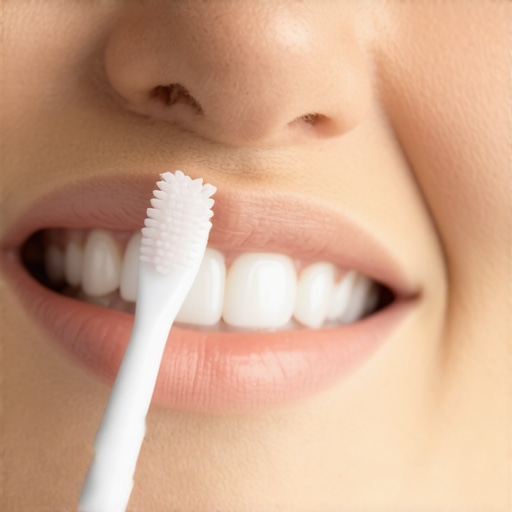
The very first thing I did wrong was trying to keep my new veneers clean with the same intensity I used on my old, coffee-stained teeth. You have to treat the bonding period with kid gloves. Switch immediately to a high-quality desensitizing toothpaste containing potassium nitrate. This compound works like a tiny shield for your dental nerves, blocking the transmission of pain signals from the surface to the center of the tooth. If you were previously a fan of DIY brightening, stop now; the truth about whitening strips and sensitive enamel is that they are far too abrasive for freshly bonded teeth. I learned this the hard way when I tried to ‘buff out’ a tiny spot and ended up with a throbbing ache that lasted three hours.
The Two-Week Patience Rule
I remember sitting in a business meeting, desperately wanting a glass of ice water but knowing the ‘zinger’ would ruin my presentation. I had to force myself to drink everything at room temperature for exactly fourteen days. It felt like a lifetime, but it gave my dentin time to settle. Understanding veneers vs crowns choosing the best option for your smile is important during the consultation, but once the porcelain is on, the biological reality is the same: your teeth need a break from thermal shocks. If you skip this step and keep testing your limits with hot soup or iced lattes, you are just keeping the inflammation alive.
Ditch the Acid and the Ice While You Heal
Your teeth are currently hyper-reactive, much like the reason your teeth hurt when you eat citrus fruits, because the bonding process involves a mild acidic etch that makes the teeth temporarily more porous. For the first week, avoid lemons, sodas, and even heavy balsamic dressings. I once made the mistake of eating a grapefruit salad two days after my appointment, and I genuinely thought a veneer had cracked. It hadn’t; it was just the acid hitting those sensitive pathways. Stick to ‘boring’ foods like pasta, mashed potatoes, or lukewarm soup until that initial raw feeling subsides.
Check Your Bite for Rough Spots
Sometimes the sensitivity isn’t just about temperature; it is about physics. If the reason your porcelain veneer feels rough to your tongue is due to tiny remnants of bonding resin, it might be affecting how your teeth meet. If your bite is even a millimeter off, it puts extra pressure on the nerve every time you chew. I found that I was subconsciously tensing up to avoid a specific tooth, so I had to learn how to stop clenching your jaw during the workday to prevent putting unnecessary pressure on the new porcelain. If you feel a ‘high spot’ when you bite down, call your dentist immediately for a quick polish—it takes two minutes and can stop the sensitivity overnight.
The Warm Salt Water Hack That Actually Works
It sounds like something your grandmother would suggest, but a warm salt water rinse is a legitimate clinical tool for reducing gum inflammation. When your gums are irritated, they pull back slightly, exposing the margin where the veneer meets the tooth. This is a prime spot for sensitivity. Dissolve half a teaspoon of salt in eight ounces of warm water and swish gently for thirty seconds. I did this every night before bed during my recovery, and it was the only thing that calmed the dull ache after a long day of talking and eating. It keeps the area clean without the harsh chemicals found in many commercial mouthwashes that can sometimes irritate the bonding site.
Most people assume that once the porcelain is bonded, the job is 100% finished. But here is the contrarian truth: the success of your new smile depends more on your bite mechanics than the actual porcelain. If your dentist doesn’t spend a significant amount of time checking your occlusion, you are in for a world of hurt. I have seen so many people focus on the shade of white—falling into the mistake that makes your teeth look too white and fake—while ignoring how their teeth actually meet. Often, why your porcelain veneers look opaque and not natural comes down to prioritizing brightness over the natural translucency of real enamel. 
Is that lingering sensitivity a sign of a failed procedure?
I get asked this all the time. If the ‘zinger’ lasts more than a few weeks, we need to look deeper. A study published in the Journal of Prosthetic Dentistry highlights that ‘occlusal interference’—basically a high spot—can cause chronic pulpitis, which feels exactly like temperature sensitivity. It is not always the cold drink; it is the constant micro-trauma from your bite. This is also why why your dental implant is sensitive to heat but not cold can be so confusing for patients who think the implant is a ‘dead’ piece of metal. Your body is a system, and every millimeter matters.
Don’t Wait for Your Bite to Feel Right
The ‘Oops’ factor you must avoid is the ‘wait and see’ approach with your bite. If one tooth feels even slightly ‘taller’ than the others when you close your mouth, do not wait. This puts immense pressure on the ligament, leading to inflammation that mimics a cavity. I once ignored a slight ‘clink’ on my left side for a month, thinking I would get used to it. Instead, I ended up needing a bite adjustment and a week of anti-inflammatories. Have you ever fallen into this trap of thinking you just need to ‘break in’ your new teeth? Let me know in the comments. We are moving toward dental implants 2025 innovations that redefine comfort and durability, but the fundamental biology of how your jaw moves has not changed. You need to be your own best advocate.
Once you move past the initial sensitivity, you enter the ‘forever’ phase. People often think the porcelain does the work for you, but that is a myth. I personally switched to a high-pressure water flosser with a specialized tip for crowns and bridges. Why? Because manual floss can occasionally catch on the margins of a veneer, and if you are not careful, you can create a microscopic gap. This is especially vital for family dentistry tips for a lifetime of healthy smiles where we want these investments to last twenty years, not five. I use the ‘Plaque Seeker’ tip on my Waterpik specifically because it is designed to get around those prosthetic margins without being abrasive.
How do I keep my new smile looking fresh for decades?
The secret is not just cleaning; it is protection. If you have invested in cosmetic dentistry, you must own a custom-made night guard. A study in the Journal of Oral Rehabilitation found that nighttime clenching forces can exceed 250 pounds of pressure per square inch. Porcelain is strong, but it is not indestructible. I make it a point to check my guard for ‘wear facets’ every month. If I see a shiny spot on the plastic, I know I have been grinding, which means I need to revisit how to stop clenching your jaw during the workday to manage my stress. This is not just about the teeth; it is about the muscles and the bone supporting them. When we look at how dental implants reshape your oral health in 2025, we see that the integration of the prosthetic with the living bone is what dictates longevity. Treating your veneers with the same level of structural respect is non-negotiable.
The Future of Your Mouth is Digital
We are entering an era where the future of dental implants cutting edge techniques in cosmetic dentistry will likely include embedded sensors to track bite force in real-time. But until your teeth can talk to your smartphone, you have to be the sensor. I have started using a high-definition intraoral camera at home—they are surprisingly accessible now—to look at the back of my veneers once a week. It allows me to see if why your gums look dark around a porcelain fused to metal crown is starting to happen due to recession or if everything is still sealed tight. Staying ahead of dental implants 2025 innovations that redefine comfort and durability means being proactive about the biology you already have.
Stop Using Alcohol-Based Mouthwash Today
Seriously, if there is one advanced tip you take away from this, it is to check the label on your mouthwash. Alcohol is a solvent. Over years of use, it can theoretically degrade the bonding agents used in a veneers transformation. I only use pH-neutral, alcohol-free rinses. It is a small change that preserves the integrity of the resin. Look for a brand that contains xylitol to keep the bacterial load low without drying out your tissues. If you have not swapped your mouthwash yet, go to your bathroom right now and check the ingredients—it could be the difference between a ten-year result and a thirty-year result. Try switching to a xylitol-based rinse for just thirty days; you will notice your mouth feels less ‘sticky’ and more balanced almost immediately.
Three Survival Lessons Every New Veneer Owner Needs
Reflecting on my own journey, the first thing I realized is that sensitivity isn’t a failure—it is a conversation your body is having with you. If I could go back, I would tell myself that the ‘perfect’ look happens on day one, but the ‘perfect’ feel takes about a month. Secondly, your brain needs to relearn how to bite. I spent the first week terrified to eat a sandwich, but once I trusted the bonding, the fear vanished. Lastly, do not compare your day three to someone else’s year five. A veneers transformation is a biological process, and everyone heals at a different pace. If you are worried that the zingers are lasting too long, check out how to tell if your tooth pain is a cavity or just a sinus infection to rule out other culprits, but usually, it is just time doing its work.
My Personal Toolkit for Maintaining Porcelain
I have narrowed down my maintenance routine to three non-negotiables that keep my smile bright and my nerves calm. First, a high-quality water flosser is a game changer for keeping those margins clean without the risk of ‘tugging’ on the porcelain. Second, I only use a custom-fitted night guard—and I make sure I know how to clean your night guard without damaging the material to avoid bacterial buildup. Finally, I keep a dedicated ‘sensitivity kit’ with potassium nitrate toothpaste for those rare days when I overindulge in iced coffee. These simple habits are the core of family dentistry tips for a lifetime of healthy smiles, ensuring your investment pays off for decades. If you have questions about which products are safe for your specific bonding, feel free to contact us for a professional recommendation.
Don’t Let Fear Keep You from This Transformation
The transition period is just a small hurdle in the grand scheme of your oral health journey. It is easy to feel overwhelmed when a cold drink causes a wince, but remember that cosmetic dentistry is about more than just looks; it is about feeling proud every time you speak or laugh. Your new smile is a powerful tool for self-assurance, and with the right care, the sensitivity will soon be a distant memory. Take it one day at a time, treat your teeth with respect, and enjoy the incredible results of your veneers transformation. Have you ever struggled with persistent sensitivity after a dental visit? Tell me your story in the comments!