I was halfway through a celebratory dinner—medium-rare steak, nice glass of red—when it happened. I bit down, and instead of the solid, bone-deep resistance I expected, I felt a tiny, sickening wobble. It wasn’t painful. It was just wrong. I froze. My heart dropped into my stomach because I’d spent months (and a fair bit of savings) on this journey. I immediately assumed the worst: my jaw was rejecting the titanium, or the whole thing was falling out. I made a classic mistake back then; I waited three weeks to call my dentist, convinced it would magically “tighten up.” Spoiler alert: teeth don’t heal themselves like a scraped knee. If you are currently poking at your crown with your tongue, wondering if your investment is about to go down the drain, take a deep breath. We are going to figure out exactly why that tooth is moving and how to secure your smile without the panic.
That Sinking Feeling When Your New Tooth Moves
The good news? A wiggly sensation usually doesn’t mean the implant itself is failing. Most of the time, it’s just the porcelain crown or the abutment (the connector piece) that has wiggled loose from the post. Think of it like a loose lug nut on a car wheel—the wheel is fine, but the bolt needs a turn of the wrench. In my early days of family dentistry visits, I didn’t realize how common these minor mechanical hiccups were. I spent nights scouring the internet for the truth about why your dental implant feels loose, convinced I was the only one.
Is a Wobbly Crown the End of My Dental Implant?
It is the question we all ask: is the whole thing ruined? Honestly, no. According to a study published in the Journal of Oral Implantology, mechanical complications like screw loosening occur in about 5.3% of cases within the first five years, making it a common but fixable annoyance rather than a total failure. Modern dental implants 2025 innovations have actually made these components more durable, but the forces of chewing are incredibly strong. If you’ve been grinding your teeth or eating particularly sticky foods, that tiny screw can simply back out a fraction of a millimeter. Have you ever felt that heart-stopping shift while eating your favorite meal? I’d love to hear your story in the comments. While the truth about the lifespan of a dental implant is generally very positive, keeping that crown tight is essential to preventing bacteria from sneaking into the gaps. Let’s look at the specific signs that separate a simple loose screw from a more serious issue with the bone itself.
First Steps to Protect Your Investment
First, stop the ‘tongue-test’ immediately. I know it’s tempting to wiggle the tooth to see if it’s gotten worse, but you are effectively unscrewing a lightbulb one microscopic turn at a time. If you strip the threads inside the titanium post, you transform a ten-minute fix into a surgical nightmare. Switch to a soft-food diet—yogurt, smoothies, and mashed potatoes—until you get into a dental chair. This isn’t just about comfort; it’s about mechanical stability. When I ignored my first wobbly crown, the shifting actually caused swelling around the new crown that made it impossible for my dentist to reach the screw without numbing me up first.
Distinguish Between a Loose Screw and a Failing Post
Perform a gentle diagnostic check at home. Wash your hands thoroughly and use a clean finger to apply light pressure to the tooth. Does it move vertically or horizontally? If it’s horizontal (side-to-side), you’re likely dealing with a loose abutment screw. If it moves up and down or if the entire gum area feels ‘squishy,’ you might be looking at a bone integration issue. Knowing how to tell if your dental implant is rejecting or just healing is vital here. If the post itself is moving in the bone, that is a clinical emergency. If it’s just the porcelain ‘cap’ spinning or tilting, it’s a mechanical loose end. 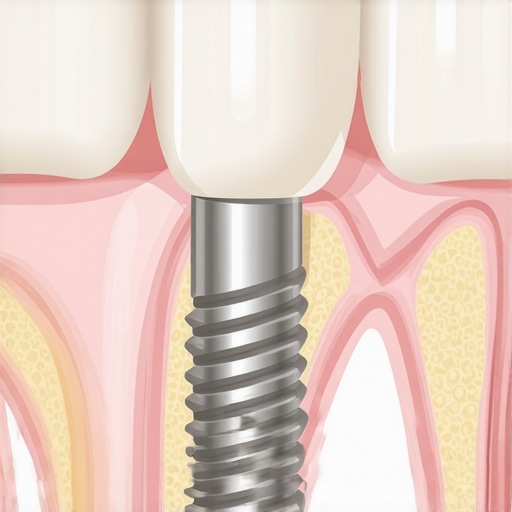
Understand the Hat vs. Head Analogy
Think of the titanium post as your head and the porcelain crown as a baseball cap. If the cap is loose, we just tighten the strap. If your ‘head’ feels like it’s moving, we have a structural problem. Most cosmetic dentistry issues with implants involve the ‘strap’ (the internal screw). However, if you’ve been grinding your teeth at night, you might have put enough lateral force on the crown to snap that screw entirely. This is why the risk of skipping your night guard is so high for implant patients; porcelain doesn’t have the natural ‘give’ of a real tooth’s ligament, so the screw takes 100% of the impact.
Why Speed Prevents Secondary Infections
When you call your provider, use specific language. Don’t just say ‘my tooth is loose.’ Tell them, ‘My implant crown has mobility, but the post feels stable.’ This helps the triage team prioritize your appointment. If you wait, you risk the ‘pumping effect.’ This happens when the loose crown moves every time you swallow, creating a vacuum that sucks saliva and bacteria into the space between the crown and the post. I’ve seen cases in family dentistry settings where a simple loose screw turned into a localized infection because the patient waited a month. The danger of wait-and-see is real; a loose component acts like a bacterial doorway that can eventually compromise the bone itself. Even if why your dental implant crown feels loose after years of use seems like a mystery, the fix is usually as simple as a new screw and a torque wrench.One of the biggest myths I encounter is that once the titanium is in the bone, the job is 100% done. People often treat their implants like they are indestructible, but this is a dangerous misconception. In fact, the reason your dental implant feels different than a natural tooth is the lack of a periodontal ligament (PDL). Your natural teeth are suspended by thousands of tiny fibers that act as biological shock absorbers. Implants are ‘ankylosed,’ meaning they are fused directly to the bone. This absence of ‘give’ means that any misalignment in your bite or a slightly loose screw doesn’t get buffered—it gets amplified. If you’ve ever wondered why your dental implant feels like it is vibrating when you chew, you are actually feeling the lack of that biological cushion.
Why Does My Implant Feel Like It Vibrates When I Speak?
This sensation, often described as a ‘buzzing’ or ‘ringing’ in the jaw, is a sophisticated nuance that beginner guides rarely mention. It’s called bone conduction. Because the metal is integrated directly into your skeleton, it picks up acoustic frequencies differently than a natural tooth. While dental implants 2025 innovations have improved the surface textures to dampen this, it remains a common experience for those with very dense jawbones. A study in the International Journal of Implant Dentistry notes that perceptual differences in tactile and acoustic feedback are expected outcomes of successful osseointegration, not signs of failure. However, if that vibration is accompanied by a clicking sound, that is your early warning signal that the internal screw is losing its ‘preload’ tension. #IMAGE_PLACE_HOLDER_C#
Don’t Fall for the DIY Cement Trap
Here is the ‘oops’ factor that keeps dentists up at night: the temptation to use over-the-counter crown repair kits or, heaven forbid, superglue. I have seen patients try to secure a wobbly crown themselves, only to realize they’ve permanently blocked the access hole to the screw. If your dentist can’t reach that screw, they may have to break your expensive porcelain crown to get to it. When considering veneers vs crowns for your restoration, remember that the attachment method is precise. Transforming your smile with veneers or implants requires professional torque tools, not a steady hand and a hardware store adhesive. Most people don’t realize that the screws holding your crown are designed to be the ‘weakest link’ on purpose. It is better for a $50 screw to loosen or break than for your $2,000 titanium post to fracture your jawbone. This is a design feature, not a flaw. When you visit for family dentistry checkups, we aren’t just looking for cavities; we are checking the torque on these mechanical components. How dental implants reshape your oral health depends entirely on keeping those connections sterile and mechanically sound. Maintaining cosmetic dentistry secrets to boost your confidence involves understanding that your mechanical teeth need more technical oversight than your real ones. Have you ever fallen into this trap of thinking your implant was invincible or tried a ‘quick fix’ at home? Let me know in the comments.I didn’t just buy a new tooth; I bought a mechanical commitment. Once I realized that my implant wasn’t a ‘set it and forget it’ gadget, I had to overhaul my morning routine. If you are still using standard waxed floss and a manual brush, you are essentially trying to clean a Tesla with a kitchen sponge. You need tools that respect the unique architecture of a titanium post.
How do I maintain my dental investment over the next decade?
It starts with high-pressure irrigation. I personally recommend the Waterpik Aquarius because of its specialized ‘Plaque Seeker’ tip. This isn’t just about blasting out food; it’s about disrupting the biofilm that loves to colonize the junction where the crown meets the gum. Standard flossing often fails here because it can’t wrap around the circular post effectively. In fact, learning how to clean under a dental bridge without shredding your floss is a skill that translates perfectly to implants. If you find your floss constantly catching, it’s a sign of a rough margin or a loose screw, not a lack of flossing skill. 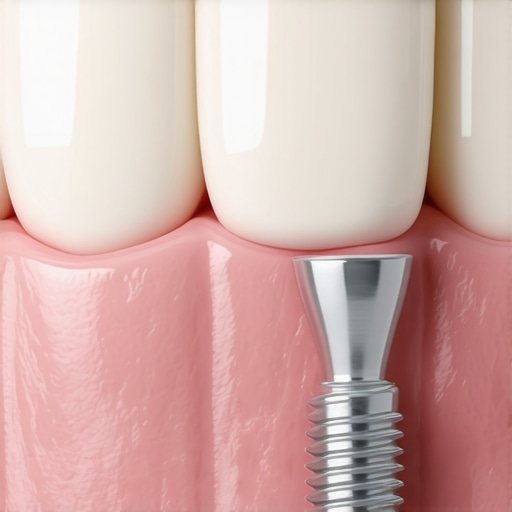
Ditch the String and Grab a Water Flosser
My personal turning point was realizing that mechanical stability is a moving target. Your jawbone changes as you age, but your implant does not. This creates a ‘bite mismatch’ over time. Every two years, I insist on a bite check. This is where cosmetic dentistry secrets to boost your confidence meet hard engineering. If your natural teeth shift even a fraction of a millimeter, your implant (which stays rooted like a steel beam) will begin to take too much force. The Straumann Group’s technical documentation emphasizes that screw-retained restorations require specific preload values—usually 35 Ncm—to prevent the very loosening we’ve been discussing. If your dentist isn’t checking these values periodically, you’re leaving your smile to chance.
Why You Need a 3D Scan Every Few Years
We are moving toward a future where 2D X-rays are becoming obsolete for implant patients. I’ve become a huge advocate for the CBCT (Cone Beam Computed Tomography) scan. I learned what your Culpeper dentist sees on a CBCT scan is far more detailed than a flat image; it shows the actual density of the bone surrounding the titanium. In the future of dental implants cutting edge techniques, we’ll likely see smart implants with built-in sensors that alert your phone if a screw is loosening. Until then, you have to be the sensor. If you notice you’ve been stressed lately, you must learn how to stop clenching your jaw during the workday. That constant pressure is the number one killer of even the best veneers vs crowns or implant restorations. My advanced tip? Next time you’re in the chair, ask your dentist to perform a ‘T-Scan’ digital bite analysis. It’s an incredibly precise way to ensure your implant isn’t carrying the weight of your entire jaw. Go ahead and call your office today to ask if they offer digital occlusal mapping—it’s the single best way to ensure your investment stays tight for twenty years instead of five.
Lessons I Learned the Hard Way About My Titanium Tooth
After navigating the ups and downs of restorative work, I realized that many of us fall for the same traps. First, the ‘forever’ promise can be misleading; while the truth about the lifespan of a dental implant is that they can last decades, the mechanical components—the screws and crowns—are designed to be serviced. I also learned that silence isn’t always golden. Sometimes a loose screw doesn’t wiggle; it just creates a tiny ‘click’ when you swallow. If I had known that my porcelain didn’t have the shock absorbers of a real tooth, I would have been much more careful with that first steak dinner. Lastly, your general dentist is your best ally, but for implants, you want someone who understands the mechanical torque requirements of dental implants 2025 innovations. It’s a specialized world, and treating it like a standard filling is a recipe for a wobbly surprise.
The Only Gear You Need to Protect Your Investment
If you want to keep your restoration stable for twenty years, you need a specific toolkit. I swear by my high-end water flosser with a specialized bridge tip; it’s the only way to clear the bacteria that could lead to bone loss around the post. I also recommend keeping a copy of your implant ‘passport’ or serial number—this ensures any dentist you visit can order the exact screwdriver for your specific brand of hardware. To truly stay ahead of the curve, I keep an eye on the future of dental implants cutting edge techniques to see how new biocompatible materials might help my bone stay dense as I age. Finally, never underestimate a custom-fitted night guard; it is the ultimate insurance policy for your porcelain.
A Future Where Your Smile Stays Exactly Where It Belongs
You’ve already done the hard part by making the investment in your health. Now, it’s just about being a proactive guardian of that investment. Don’t let a tiny wiggle turn into a big worry. By staying on top of your maintenance and using cosmetic dentistry secrets to boost your confidence, you can ensure that your smile remains a source of joy rather than a source of stress. If you’re currently feeling a shift, don’t wait for it to ‘heal’—reach out to a professional through a contact us page and get that screw tightened. Your future self will thank you for the five minutes you spent in the chair today. Have you ever felt that heart-stopping shift while eating your favorite meal, or are you just starting your implant journey? Let me know your story in the comments below!