I remember sitting at my kitchen table, finally treating myself to a perfectly seared steak, when it happened. I took a bite, chewed down, and felt a bizarre, high-frequency “buzz” shoot through my jawbone. It wasn’t pain, exactly. It was more like my tooth had suddenly turned into a silent pager. I froze, fork halfway to my mouth, wondering if I’d just broken a multi-thousand-dollar investment. I spent the next hour frantically Googling why my tooth was humming, convinced I was the only person on the planet experiencing this mechanical shimmy. The reality is that while it feels like a sci-fi glitch, there is usually a very logical explanation for that vibrating sensation in your mouth.
Why Your Implant Feels Like a Tuning Fork
It’s a disconcerting sensation, especially after you’ve gone through the journey of how dental implants reshape your oral health in 2025. You expect the new tooth to be solid, like a rock. When it starts to hum or oscillate against your tongue, your mind immediately jumps to the worst-case scenario. Today, I’m going to pull back the curtain on why this happens and, more importantly, how we can get your bite back to being silent and steady. We will look at everything from bite alignment to the tiny mechanical components that keep your smile together. Have you ever felt that strange “buzzing” sensation when you chew? If so, you’re definitely not alone in that vibrating boat!
Is this vibration a sign my implant is failing?
This is the big fear that keeps most of us up at night. I spent weeks worrying about this same thing after my surgery. Early on, I made the classic mistake of thinking I could just “tough it out” and wait for the vibration to go away on its own. I figured it was just my body getting used to the titanium. Big mistake. I actually ended up putting more stress on the surrounding bone because my bite was slightly off, making the vibration significantly worse. According to the American Academy of Implant Dentistry, successful osseointegration means the metal is fused to the bone, but if the porcelain crown on top is hitting just a fraction of a millimeter too hard, it creates “fremitus,” which is essentially a tiny, repeatable vibration. Knowing how to tell if your dental implant is rejecting or just healing is vital, but most of the time, that buzzing is a sign of a mechanical conflict rather than a biological failure.
Identifying the Culprit Behind the Buzz
Sometimes the issue isn’t the implant post itself, but the hardware attached to it. Just like why your dental implant crown feels loose after years of use, the connection between the post and the crown can sometimes mimic a vibration if the internal screw has backed out even a hair. Whether you are exploring cosmetic dentistry secrets to boost your confidence or just trying to eat a sandwich in peace, knowing if you should be worried is the first step. We need to distinguish between the natural dense feeling of a new fixture and the reason your dental implant feels different than a natural tooth. Often, the vibration is simply a sign that your jaw is working harder to accommodate a new height in your bite, and a quick trip to the chair for a minor polish can solve the whole mystery.
Adjust the Bite for Instant Relief
The most common reason for that phantom vibration is what dentists call ‘occlusal interference.’ Think of your teeth like the tires on a high-end sports car. If one tire is slightly larger than the others, the whole car shakes at high speeds. Your implant is the same way. Because it is fused directly to your bone, it has zero ‘give’ compared to natural teeth, which have a tiny ligament to cushion impact. When your bite is off by even a hair, the force of your jaw hitting that solid metal post creates a resonance that feels like a hum. When I went back to my dentist for my buzzing issue, he had me bite down on a thin strip of blue articulating paper. He saw a tiny dark spot where my top tooth was striking the implant a fraction of a second too early. He used a polishing tool to shave off a microscopic amount of porcelain, and the vibration vanished instantly. It is a precision game, and sometimes you just need a tune-up to ensure you are not experiencing the reason your dental implant feels different than a natural tooth in a negative way. 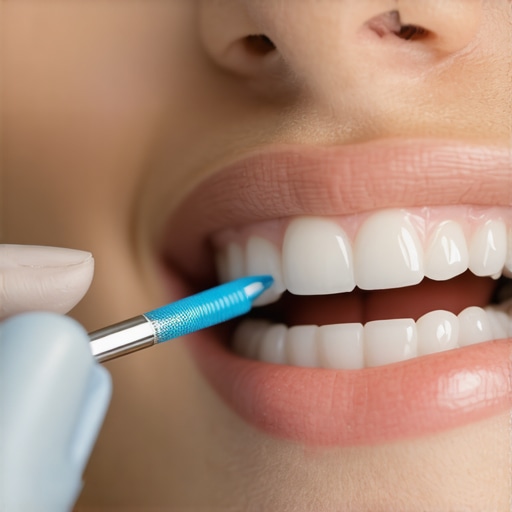
Check the Hardware Under the Hood
If the bite is perfect but the vibration persists, we have to look at the assembly. A dental implant isn’t one solid piece; it’s a system of a post, an abutment, and a crown. These are held together by a tiny internal screw. If that screw loses its ‘preload’—the specific amount of tension holding it tight—the crown can micro-move. This isn’t the same as a tooth being loose in the socket; it’s more like a loose lug nut on a wheel. You might not see it move in the mirror, but you will definitely feel the vibration when you chew or even speak. This is often the truth about why your dental implant feels loose or shaky. A quick visit to have the dentist re-torque that screw to the proper Newton-centimeter specifications usually kills the buzz for good.
Protect Your Investment from Nighttime Grinding
Many of us don’t realize that we are our own worst enemies when it comes to implant vibration. If you wake up and the ‘buzzing’ is more prominent during your morning coffee, you are likely clenching your teeth at night. This puts immense lateral pressure on the implant, which can inflame the surrounding tissues and make the fixture feel hyper-sensitive to any vibration. I learned the hard way that skipping my protective gear was a recipe for disaster. Understanding the risk of skipping your night guard for just one week is essential because that constant pressure can lead to mechanical fatigue. If you’re a daytime clencher, learning how to stop clenching your jaw during the workday can drastically reduce the ‘fremitus’ sensation. By keeping your jaw relaxed, you allow the bone and the titanium post to coexist without the constant ‘chatter’ of stressed muscles. While you want to ensure the truth about the lifespan of a dental implant remains a long and happy one, managing these mechanical stresses is the most effective way to keep the vibration at bay.
Let’s dig deeper into a nuance that even some general dentists overlook: the ‘proprioception gap.’ Most people believe that once an implant is in, it’s basically a natural tooth made of metal. However, unlike your natural teeth, an implant has zero periodontal ligament—those tiny ‘shock absorbers’ that tell your brain exactly how hard you’re biting. In my experience, patients often think a vibrating sensation is a sign of a ‘cheap’ implant, but the reality is often the opposite. Even with the latest dental implants 2025 innovations that redefine comfort and durability, the lack of biological feedback means your jaw can easily over-apply force without you realizing it.
This mechanical overload is what creates that high-frequency buzz. A study published in the Journal of Oral Implantology confirms that dental implants are significantly more susceptible to ‘occlusal overload’ because they lack the tactile sensitivity of natural dentition. This is a huge trap: don’t assume that because it doesn’t ‘hurt’ like a traditional toothache, it isn’t causing damage. The ‘oops’ factor here is waiting until you actually feel ‘movement.’ By the time you can see the tooth move in the mirror, you’re already in the territory of needing to know how to save a dental implant that feels slightly mobile. I once waited three months to report a ‘humming’ sensation, thinking I was just being paranoid. I eventually found out I was micro-fracturing the porcelain edge because my bite was heavy. Have you ever fallen into this trap of ignoring a weird sensation because it didn’t technically ‘pain’ you? Let me know in the comments.
How can a tiny bite misalignment cause such a massive buzz?
It comes down to resonance and physics. When your upper and lower teeth meet, they should distribute force evenly across the entire arch. If your implant crown is even 20 microns too high—thinner than a human hair—it becomes the ‘lightning rod’ for every ounce of pressure. This doesn’t just happen with implants; I’ve seen similar issues where why your porcelain veneers don’t match your natural teeth in terms of thickness can throw off your entire bite rhythm. If you are exploring the reality of getting dental implants after age seventy, your bone density might also play a role in how that vibration is transmitted through the jaw bone. 
Don’t Mistake Mechanical Noise for Biological Failure
One of the biggest myths in cosmetic dentistry is that a ‘weird’ feeling always means the body is rejecting the hardware. In reality, your body is incredibly resilient. Most ‘vibrations’ are simply physics at work, not a sign of infection. When we look at veneers transformation unlocking your best smile yet, we see a similar phenomenon: the transition period involves the brain recalibrating its ‘map’ of the mouth. If you’re feeling a buzz, it’s a signal to tune the instrument, not to throw it away. Always prioritize a bite-balance check over a ‘wait and see’ approach. Your investment is worth those ten minutes in the dental chair to ensure everything is hitting exactly where it should.
I’ve spent a lot of time trial-and-erroring my way through home care, and if there is one thing I’ve learned, it’s that your standard drug-store toothbrush isn’t going to cut it for a high-tech implant. I switched to the Waterpik Aquarius because it reaches into the tiny sulcus around the implant where bacteria love to hide. Traditional floss can actually shred against the titanium or the underside of a bridge, leaving tiny fibers that cause ‘floss-itis’ or chronic irritation. You really need to know how to clean under a dental bridge without shredding your floss, because the same logic applies to your implant’s longevity. I also ditched the high-grit whitening toothpaste. Most of them contain silica which is too abrasive for porcelain. If you use a high-RDA paste, you’ll slowly dull the luster of your veneers transformation unlocking your best smile yet or your implant crown, making them look flat and lifeless over time.
How do I maintain dental implants over time?
Maintaining your investment is about more than just brushing; it’s about managing the biological and mechanical environment. To prevent peri-implantitis—the implant equivalent of gum disease—I use a low-abrasive gel to keep the area around the metal collar pristine. These aren’t just advanced hacks; these are foundational family dentistry tips for a lifetime of healthy smiles that apply to everyone. My biggest game-changer was finding a provider who uses T-Scan analysis. While old-school blue articulating paper shows you where you hit, the T-Scan Novus system—a piece of digital occlusal tech championed by specialists like Dr. Robert Kerstein—shows the timing and force of every tooth contact in milliseconds. This tool finally identified my problem: my implant was hitting 0.5 seconds too early, absorbing 40% of the bite force. No wonder it felt like a tuning fork!
The tech that finally killed the phantom hum
When the T-Scan data appeared on the screen, it looked like a 3D weather map of my mouth. The ‘peaks’ showed exactly where the pressure was too high. By using this data, the dentist could precisely calibrate the crown without the guesswork of ‘how does that feel?’ This is part of the future of dental implants cutting edge techniques in cosmetic dentistry where we use data, not just intuition, to ensure comfort. It’s about moving away from the ‘if it doesn’t hurt, it’s fine’ mentality. 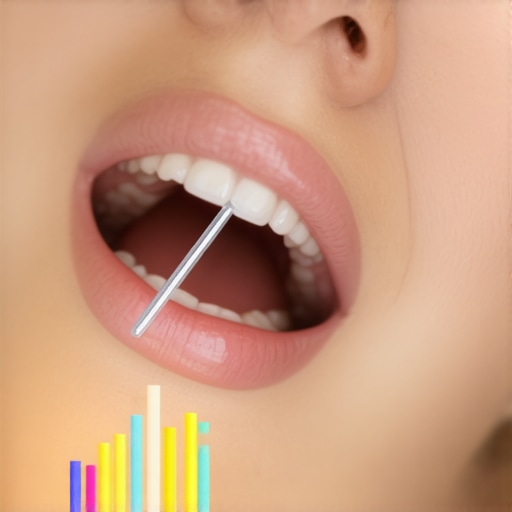
Why your cleaning routine needs a 2025 upgrade
Looking at the road ahead, I predict we are very close to seeing ‘smart implants’ equipped with tiny internal sensors. Imagine getting a notification on your smartphone if your implant screw is losing its torque or if your nighttime grinding is reaching dangerous levels of force. We are already seeing dental implants 2025 innovations that redefine comfort and durability that utilize better materials, but the real revolution will be in bio-feedback. For now, your best defense is a proactive offense. Don’t let the truth about the lifespan of a dental implant become a cautionary tale for you because of a simple bite issue. The next time you go in, ask about digital bite mapping. It’s a specific, high-tech request that shows you’re serious about your oral health. If your current office isn’t equipped for that level of precision, it might be time to contact us to explore your options. Balancing your bite is one of the most overlooked cosmetic dentistry secrets to boost your confidence.
What I Learned the Hard Way About My Robotic Tooth
Going through the process of getting a new tooth involves a massive learning curve. One of the biggest lightbulb moments for me was realizing that my implant isn’t ‘alive.’ Because it doesn’t have the same sensory nerves as a natural tooth, that reason your dental implant feels like its vibrating is often just your jaw searching for a comfortable place to rest. I also learned that silence is golden—if your bite is making noise or feeling ‘buzzy,’ it’s a mechanical cry for help, not a biological rejection. Finally, I realized that the technology used during the fitting is just as important as the surgeon’s skill; if the office doesn’t use digital bite mapping, you might be missing out on true comfort. #IMAGE_PLACE_FINAL#
My Go-To Toolkit for a Silent Smile
Maintaining a high-end restoration requires more than just a quick brush. I’ve found that the Waterpik Aquarius is non-negotiable for keeping the base of the implant clean without the risk of shredding floss. For those who suspect their ‘buzz’ is caused by nighttime clenching, I cannot stress enough the risk of skipping your night guard for just one week. It’s the cheapest insurance policy for your smile. I also recommend looking for a provider who utilizes the T-Scan system—it’s the only way to truly see if your bite is balanced. If you’re currently feeling that oscillation, knowing how to save a dental implant that feels slightly mobile starts with getting the right tools in your hands early.
The Path to a Worry-Free Bite
Getting a dental implant is an investment in your quality of life, and you deserve to enjoy every meal without worrying about a ‘phantom hum.’ By staying proactive and embracing the future of dental implants cutting edge techniques in cosmetic dentistry, you can ensure your smile remains as solid as it looks. Don’t let a tiny vibration steal your confidence. Take a breath, book that adjustment, and get back to living your life. Have you ever felt a strange ‘buzz’ or humming sensation with your dental work? Let me know in the comments below!