I still remember the cold sweat that broke out on my forehead when I felt that sudden, sharp crunch that definitely wasn’t part of my dinner. I was at a friend’s wedding, trying to look sophisticated, and I’d made the classic mistake of thinking a crusty sourdough roll was safe. Suddenly, my tongue discovered a cavernous gap where my molar used to be. My temporary crown hadn’t just loosened; it had staged a full-scale escape onto my dinner plate. I spent the next half-hour in the venue bathroom, staring at a tiny piece of tooth-colored resin in my palm, feeling like my entire face was vibrating with anxiety. That moment was my visceral realization that a temporary fix requires permanent attention. If you’re currently nursing a sensitive tooth or worried your own crown is about to bail, I’m here to help. We’re going to solve the mystery of why these things feel so flimsy and how you can baby yours until the big day.
Why Your Temporary Crown Feels Like It’s Barely Hanging On
It sounds like a bad joke, but your dentist actually wants that glue to be easy to break. According to the American Dental Association, temporary restorations are essential for pulp protection and maintenance of tooth position, but they must be easily removable to avoid damaging the tooth during the final fitting. I used to think it was a mistake, but the reality is that the cement is a fragile balance. It’s susceptible to heat, pressure, and the [6 habits that cause your porcelain veneers to pop off unexpectedly](https://straightsmileortho.com/6-habits-that-cause-your-porcelain-veneers-to-pop-off-unexpectedly-2) or crowns to fail. I once made the mistake of thinking I could chew gum because I was stressed—don’t do it. I even once tried to floss like normal, yanking the string straight up, and heard that dreaded pop. That was my first lesson: always slide the floss out sideways. Have you ever had a dental emergency strike on a Saturday night? I want to hear how you handled it in the comments! Before you have to look up how to [handle a chipped tooth](https://straightsmileortho.com/how-to-handle-a-chipped-tooth-until-you-see-a-dentist-2), let’s understand the mechanics of the temporary phase.
Is the Anxiety of a Temporary Actually Worth the Trouble?
You might be tempted to think that if it falls out, you can just wait a week without it. I thought that once, and the resulting sensitivity made a simple glass of water feel like an electric shock to my brain. The temporary crown is doing heavy lifting behind the scenes. It keeps your gums from encroaching on the work area and prevents your other teeth from shifting out of alignment. If you’ve been looking into [veneers vs crowns](https://straightsmileortho.com/veneers-vs-crowns-choosing-the-best-option-for-your-smile), you know that every millimeter counts. A shifted tooth means your custom-made permanent crown won’t fit, and you’ll be back in the chair for more impressions. Protecting this temporary state is the only way to ensure your final [cosmetic dentistry secrets](https://straightsmileortho.com/cosmetic-dentistry-secrets-to-boost-your-confidence) result in the smile you actually paid for. It is a minor inconvenience now for a lifetime of comfort later.
Protect Your Investment with These Simple Rules
Think of the cement holding your temporary crown in place like a high-end sticky note. It is designed to stay put during normal activity but peel away cleanly when your dentist is ready for the permanent upgrade. Because this bond is intentionally weak, you have to adjust your mechanics. It is not just about avoiding the ‘forbidden’ foods; it is about changing how you physically interact with your teeth. If you treat it like a natural tooth, you are essentially engaging in the [6 habits that cause your porcelain veneers to pop off unexpectedly](https://straightsmileortho.com/6-habits-that-cause-your-porcelain-veneers-to-pop-off-unexpectedly-2) or crowns to dislodge.
Keep Your Menu Soft and Safe
The primary enemy of temporary resin is ‘shear force.’ This happens when you bite down and slide your teeth, like when you are tearing through a bagel or gnawing on a piece of steak. For the next two weeks, your diet should look like a tour of the soft food aisle. Think scrambled eggs, flaky fish, mashed potatoes, and pasta. I remember the time I tried to test the limits of my temporary by eating a slice of thick, crusty pizza. I thought I was being clever by chewing only on the left side, but a stray piece of crust caught the edge of the temporary on the right. I felt that sickening ‘click’—the cement had failed. I had to spend the rest of the weekend with a glob of messy denture adhesive just to keep the tooth covered until Monday. It was a stressful, chalky lesson in humility. Avoid anything sticky like caramel or gummy vitamins, which act like tiny winches, literally pulling the crown off the tooth prep. 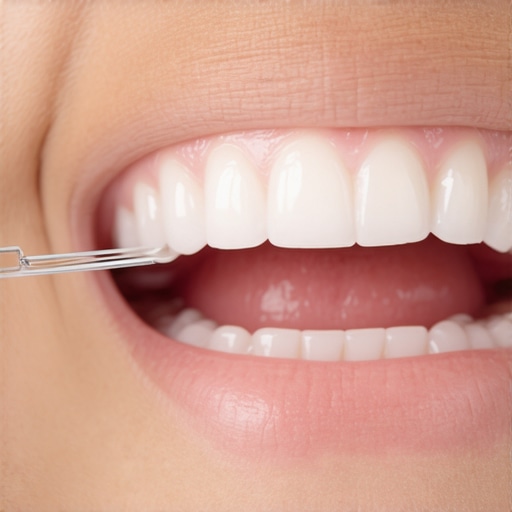
The Lateral Floss Technique
You cannot skip hygiene just because you are scared of the crown popping off. Plaque buildup can cause gum inflammation, making the final fitting painful. However, you must change your flossing physics. Instead of pulling the floss back up through the contact point—which creates an upward ‘hook’ that can snag the edge of the resin—you must let go of one end and pull the string out sideways through the gap. This sideways motion is a skill you will also need if you eventually look into [how to clean under a dental bridge](https://straightsmileortho.com/how-to-clean-under-a-dental-bridge-without-shredding-your-floss-2). Keeping the area clean ensures that your [family dentistry tips for a lifetime of healthy smiles](https://straightsmileortho.com/family-dentistry-tips-for-a-lifetime-of-healthy-smiles) are actually put into practice.
Dealing with the What-Ifs
If the crown does come off, do not panic. The first thing to do is find the crown. If it is intact, you can often gently slide it back over the tooth with a tiny dab of toothpaste or over-the-counter temporary cement to act as a temporary seal. This protects the sensitive dentin from air and temperature. However, if the crown is broken or the underlying tooth feels jagged, you need to know [how to handle a chipped tooth](https://straightsmileortho.com/how-to-handle-a-chipped-tooth-until-you-see-a-dentist-2) to avoid further damage. If you cannot get it to stay or if you feel a sharp pain, it is best to [contact us](https://straightsmileortho.com/contact-us) immediately. Never leave the tooth exposed for more than a day, as your teeth can begin to shift in as little as 24 hours, potentially ruining the fit of the permanent crown that is currently being crafted in the lab.Let’s dig deeper than the surface-level advice you’ll find on most forums. Many people assume that the strongest restoration is the one that covers the most tooth structure, but that’s a dangerous myth. In my experience, the secret to a long-lasting veneers transformation isn’t about how much porcelain you can glue on, but how much original enamel you can save. When you choose veneers vs crowns: choosing the best option for your smile, you have to realize that once enamel is gone, your bonding strength drops significantly.
Why Enamel is More Valuable Than Porcelain
Most patients want to jump straight to the white finish, but how to tell if your veneers were bonded correctly to the enamel is the real key to success. A study published in the Journal of Prosthetic Dentistry suggests that ceramic bonded to enamel is significantly more durable over a ten-year period than ceramic bonded to dentin. This is why aggressive drilling can actually lead to shorter lifespans for your restorations. If your dentist is pushing for full crowns when a veneer could work, ask why—preserving that natural tooth structure is a cornerstone of family dentistry tips for a lifetime of healthy smiles.
Stop Chasing the ‘Toilet Bowl’ White Shade
The biggest ‘oops’ factor in cosmetic work is what I call the Chiclet Trap. We’ve all seen it: someone gets work done and their teeth look like flat, opaque rectangles that glow in the dark. This happens when you prioritize shade over texture and translucency. If you don’t account for light-play, you’ll end up wondering why your veneers look like white chiclets and how to fix the texture. Real teeth have micro-ridges and vary in opacity from the gumline to the tip. Falling into the mistake that makes your new crowns look like chiclets is the fastest way to make your investment look ‘cheap.’ 
Does My Jaw Anatomy Impact Whether an Implant Will Fail?
For those looking into more permanent solutions, the nuance shifts from surface aesthetics to deep biomechanics. You might hear that anyone can get an implant, but your bite force and bone density are the true gatekeepers. Advanced patients should ask about their biotype and how it affects tissue stability. If you’re a grinder, you’re in a high-risk category for 6 habits that cause your porcelain veneers to pop off unexpectedly or even cracking a titanium post. Understanding these cosmetic dentistry secrets to boost your confidence requires looking at your mouth as a mechanical system, not just a photo opportunity. Have you ever felt like your dental work didn’t quite match your face? Let me know in the comments—I’d love to hear your story! If you’re ready for a change, the next step is often just a quick contact us away.If you have spent the money on a veneers transformation, the last thing you want is for that investment to chip while you are sleeping. I personally learned this the hard way after my first crown. I thought once it was bonded, it was invincible. I was wrong. The secret to longevity is not just the skill of the dentist, but the specific toolkit you use at home every morning and night.
Stop Brushing Like You’re Scrubbing a Tile Floor
Most people treat their teeth like they are trying to remove grout stains. When you have porcelain, you have to be even more surgical. I transitioned to a sonic toothbrush with a pressure sensor because I realized I was a ‘heavy-handed’ brusher. If you are curious about hardware, you need to know how to pick a toothbrush that wont destroy your enamel or the glaze on your new porcelain. A study published in the Journal of Clinical Periodontology confirms that oscillating-rotating brushes significantly reduce the risk of gingival recession compared to manual scrubbing, which is vital because receding gums expose the margins of your crowns and veneers.
How do I maintain my veneers and implants over time?
Maintenance is a game of consistency and the right accessories. For my implants, I swapped traditional string floss for a high-powered water flosser. Why? Because string floss can actually shred and leave fibers behind in the tiny gaps around the implant post, leading to inflammation. If you have a bridge, knowing how to clean the underside of a dental bridge without shredding your floss is a non-negotiable skill. I also swear by a custom-molded night guard. Even if you do not think you grind your teeth, the ‘micro-clinching’ that happens when we stress can cause ceramic fatigue. Seriously, the risk of skipping your night guard for just one week is not worth the potential for a hairline fracture in a ten-thousand-dollar smile. 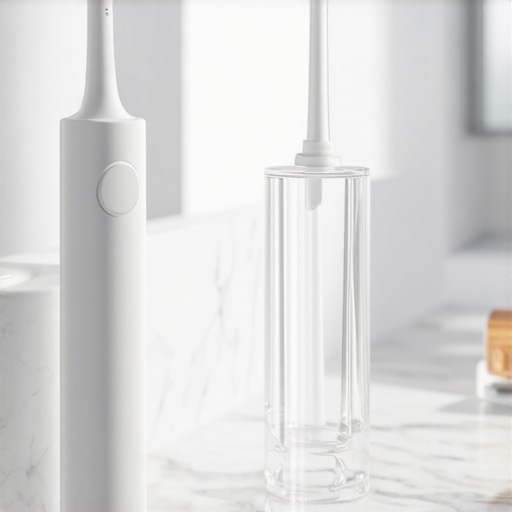
Bio-Printing and the End of Traditional Crowns
Looking ahead, the way we maintain and replace teeth is shifting toward ‘Bio-Interactive’ materials. We are moving away from inert metals and ceramics toward materials that actually release fluoride or calcium to the surrounding tooth structure. We are already seeing the beginning of this in the future of dental implants: cutting edge techniques in cosmetic dentistry. I predict that within the next decade, we will see 3D-printed ceramic structures that mimic the shock-absorbing properties of natural periodontal ligaments. This means your ‘fake’ teeth will eventually feel even more like the real thing. To truly maximize the life of your work, I recommend following these 3 secrets to making your porcelain veneers last twenty years. If you are currently feeling any movement or discomfort, do not wait until your next cleaning; you should contact us immediately to ensure a small adjustment does not become a major replacement. Try switching to an extra-soft bristled brush tonight and see how your gum line responds after just one week.
What My Teeth Taught Me While Waiting for the Permanent Fix
Going through the temporary crown process isn’t just a dental procedure; it’s a lesson in patience. One thing I realized is that your brain actually maps your mouth’s geography with incredible precision. When that temporary is in place, your tongue might feel ‘off’ because the resin doesn’t perfectly mimic the smoothness of natural enamel. I’ve also learned that the anxiety of it falling out is usually worse than the event itself. If it does pop off, it’s not a failure—it’s just a signal that the temporary bond did its job and is ready to let go for the real thing. I’ve come to see these few weeks as a transition period where I get to practice the high-level care my veneers transformation will eventually require. It is essentially a mental rehearsal for a lifetime of better oral hygiene habits.
Tools That Keep My Smile From Falling Apart
I don’t just rely on luck to keep my dental work intact. My daily routine involves a few non-negotiables that I trust completely. First, a high-quality water flosser is a game changer, especially if you need to know how to clean the underside of a dental bridge without shredding your floss. Second, I never travel without my custom-molded night guard. I’ve seen too many people regret the risk of skipping your night guard for just one week only to wake up with a hairline fracture in their expensive porcelain. Finally, I keep the number of a trusted local clinic saved in my phone. Whether it is for family dentistry tips for a lifetime of healthy smiles or a sudden emergency, having a professional on speed dial reduces the ‘panic factor’ significantly.
Believe in the Future of Your Smile
We are living in an incredible era for dental technology. From bio-interactive materials to the future of dental implants: cutting edge techniques in cosmetic dentistry, the options for restoring your confidence are better than ever. Don’t let a temporary inconvenience like a loose crown discourage you from the bigger picture. Your smile is your signature, and taking care of it is one of the best investments you can make for your long-term health and self-esteem. If you have any concerns about your current restoration or are ready to take the next step toward a cosmetic dentistry breakthrough, don’t hesitate to reach out. Have you ever had a temporary crown come off at the worst possible moment? Let me know in the comments how you handled it!