I remember the exact moment I pulled down the sun visor in my car, ready to admire my brand-new smile, only to find a stranger staring back with teeth that looked like they belonged on a bathroom wall. They were bright—blindingly so—but they were flat, opaque, and utterly devoid of life. It was a gut-punch. I’d invested so much time and money into this transformation, yet I’d made the classic mistake of thinking that “whiter” automatically meant “better.” If you feel like your new teeth look a bit like a row of chalky white Chiclets, you aren’t alone, and more importantly, you aren’t stuck with them forever. Today, I want to pull back the curtain on why this happens and how we can bring back that organic, light-catching glow that real teeth naturally have.
Stop Settling for a Smile That Looks Like Plastic
When I first sat in that dental chair, I was so focused on erasing years of staining that I practically begged my dentist for the brightest shade on the chart. I made the mistake of ignoring the subtle nuances of translucency. Real teeth aren’t just one solid block of color; they are complex layers of dentin and enamel. When your veneers look like white chiclets, it’s usually because they lack the “incisal translucency” found at the bottom edges of natural teeth. According to research published in the Journal of Esthetic and Restorative Dentistry, natural tooth enamel is polychromatic, meaning it filters and reflects light in different ways across the surface. If your porcelain is too dense or monochromatic, it blocks that light, resulting in that dreaded “flat” look. We’re going to fix that by focusing on texture and depth rather than just brightness.
Will my teeth always look this fake?
It’s the fear that keeps most people from ever getting cosmetic dentistry in the first place. You worry that everyone will know you’ve “had work done” the second you open your mouth. But here is the secret: natural-looking results come from imperfection. When I finally went back to address my own opaque disaster, I realized that the lack of surface anatomy—the tiny ridges and grooves on a real tooth—was the culprit. Without those details, the light just bounces off in one harsh direction. Have you ever felt like your smile was too “loud” in a room full of people? If you’re struggling with veneers that don’t match your natural teeth, don’t lose hope. Learning the secrets to making porcelain veneers last and look real is a journey, and we’re starting with the science of light.
Force Your Dentist to Use a Diagnostic Wax-Up
Before any enamel is touched, you need a blueprint. I used to think a verbal description was enough, but in the world of cosmetic dentistry secrets to boost your confidence, a physical model is king. A diagnostic wax-up is a 3D representation of your final results. It allows you to see the proportions and, more importantly, how the light hits the ‘teeth.’ Think of it as a test drive for a car; you wouldn’t buy a Ferrari based on a sketch, so don’t buy a smile based on a promise. When I ignored this step during my first procedure, I ended up with the mistake that makes your new crowns look like chiclets: they were too long and had no tapering at the edges.
Take your temporaries out into the real world
Most people make the final decision while staring into a high-powered LED dental lamp. This is a massive error. Real life doesn’t happen in a dental operatory. I remember wearing my temporary set to a local park just to see why your veneers look different in sunlight versus indoor lighting. In the harsh midday sun, my ‘perfect’ white teeth suddenly looked like glowing neon signs. If you don’t test the look in natural light, you’re flying blind.
Add Micro-Geometry to Break Up the Light
The reason natural teeth don’t look like plastic is because of ‘perikymata.’ These are microscopic horizontal ridges formed during enamel development. If your porcelain is polished to a mirror-like finish, it reflects light in a single, flat plane—this is the hallmark of a fake smile. To fix this, you must insist on surface characterization. I once sat with a technician and watched him use a fine diamond bur to create tiny, nearly invisible grooves on the porcelain surface. It felt counterintuitive to ‘scratch’ something so expensive, but as soon as he was done, the teeth went from looking like ceramic tiles to looking like living tissue. 
How tiny grooves mimic natural enamel
When light hits a smooth surface, it bounces back directly. When it hits a textured surface, it scatters. This scattering is what gives teeth their ‘soft’ glow. If you are currently unhappy with your results, ask your dentist how to fix the texture by hand-polishing and adding these subtle anatomy markers. It’s the difference between a flat matte paint job and a deep, multi-layered metallic finish on a luxury vehicle.
Prioritize Multi-Layered Porcelain Over Monolithic Blocks
The industry has moved toward ‘monolithic’ zirconia because it’s incredibly strong, but it’s often the culprit behind the opaque, ‘dead’ look. Real teeth are translucent, especially at the bottom. You should be looking for feldspathic porcelain or e.max that is layered by a master ceramist. If your teeth look like solid blocks, it’s because they are missing the internal ‘maverick’ colors—the ambers and grays that live inside the tooth. I found that the truth about why your teeth look transparent at the bottom edges is that this transparency is actually what makes them look healthy.
Demand an incisal halo
Look closely at a teenager’s tooth. The very bottom edge often has a thin, bright white line followed by a translucent ‘window.’ This is called the incisal halo. When I requested this specific detail for my revision, the change was staggering. Suddenly, my smile had depth. If you are investigating choosing the best option for your smile, always ask if the lab technician uses a ‘cut-back’ technique to layer clear porcelain over the shaded core. This prevents that ‘chalky’ appearance that plagues so many modern smile makeovers.Most people assume that the goal of a high-end smile makeover is to achieve a mirror-image on both sides of the mouth. This is what I call the Symmetry Trap. While we often talk about a veneers transformation unlocking your best smile yet, we forget that natural beauty actually thrives on subtle variances. In my early days of obsessing over dental aesthetics, I wanted every tooth to be a carbon copy of its neighbor. But here is the contrarian truth: perfect symmetry is an instant giveaway that your teeth are fake. Real teeth have ‘dynamic’ positioning, where the axial inclination—the slight tilt of the tooth—varies by a degree or two from left to right. 
Throw Away the Ruler and Embrace Human Flaws
The reason those Hollywood smiles sometimes look like ‘flippers’ is the lack of characterization. A study published in the International Journal of Esthetic Dentistry found that smiles with minor irregularities were perceived as more attractive and ‘trustworthy’ than those with mathematical precision. If your dentist doesn’t account for these human touches, you’ll end up with a smile that looks like a stock photo. This is a common issue when your porcelain veneers don’t match your natural teeth. We want harmony, not a Xerox copy. Have you ever fallen into this trap of thinking ‘perfect’ meant ‘identical’? Let me know in the comments.
The Biological Foundation You Might Be Ignoring
The ‘Oops’ factor that most patients miss isn’t about the teeth at all—it’s about the ‘Biological Width.’ I have seen countless cases where patients rush into expert tips for perfect results without realizing their gum tissue is the boss. If a veneer or crown is pushed too deep into the sulcus, the body perceives it as a foreign invader. This leads to chronic inflammation, and no amount of brushing will fix that persistent ‘red line’ at the top of your tooth. It’s a nuance that separates a basic dentist from a master of the craft. When looking at the future of dental implants and cutting-edge techniques, we see that preserving this delicate tissue barrier is just as important as the tooth itself.
Why does your new tooth look gray in a dim room?
This is a sophisticated problem known as the ‘Gray Ghosting’ effect. It usually happens with older techniques or when a dentist uses a metal-based abutment for an implant. Even if the crown on top is beautiful, the metal underneath absorbs light rather than reflecting it. In 2025, innovations that redefine comfort and durability have introduced zirconia and gold-hue abutments that mimic the warmth of a natural tooth root. If you don’t ask about the underlying materials, you might find your smile looks great in the dental office but ‘dead’ at a candlelit dinner. Expertise isn’t just about the white part of the tooth; it’s about what’s happening underneath the surface.Once the final restorations are bonded and you’ve walked out of the office with that high-end glow, the real work begins. I’ve seen people treat their new porcelain like it’s invincible, but that’s the fastest way to end up back in the chair for an expensive redo. You have to remember that while porcelain doesn’t decay, the natural tooth structure underneath and the gum tissue surrounding it are still vulnerable. When we talk about veneers transformation unlocking your best smile yet, we have to talk about the hygiene habits that actually protect that investment. In my own routine, I’ve swapped out my standard drugstore paste for something with a low RDA (Relative Dentin Abrasivity) score. According to the Journal of Clinical Dentistry, using a toothpaste with an RDA score above 70 can microscopically scratch the surface of your porcelain over time, dulling that luster we worked so hard to achieve.
Ditch the Gritty Scrubs and Protect the Polish
I personally recommend using a non-abrasive gel specifically formulated for cosmetic work. If you are still using ‘whitening’ toothpastes with silica or baking soda, you are essentially sanding down your smile every morning. This is one of the most important family dentistry tips for a lifetime of healthy smiles: the tool is only as good as the technique. I’ve found that an ultra-soft electric toothbrush, when used on a sensitive setting, provides enough vibration to disrupt plaque without compromising the bond strength of your veneers or crowns. If you’re wondering how to pick a toothbrush that wont destroy your enamel, look for high-tapered bristles that can reach the gingival margin without aggressive scrubbing. 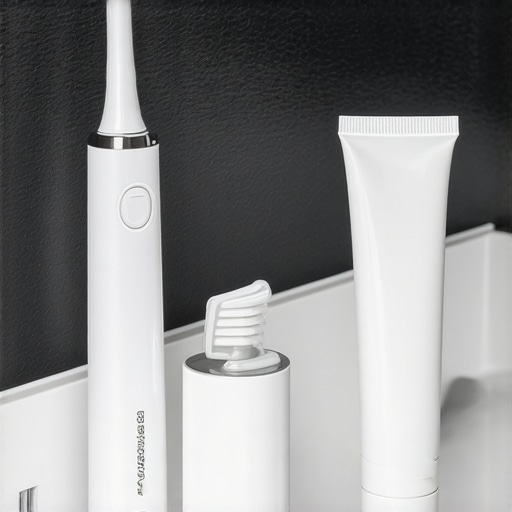
How can I make my cosmetic investment last twenty years?
It’s a question I get constantly. The answer isn’t just about what you do in the bathroom; it’s about what you do in your sleep. If you have spent money on cosmetic dentistry secrets to boost your confidence, you absolutely must wear a custom-fabricated occlusal guard. Even if you don’t think you grind your teeth, the micro-movements of your jaw at night can create ‘craze lines’ in the porcelain. I didn’t take this seriously until I noticed a tiny hairline fracture on my own lateral incisor. Now, my night guard is as essential as my car keys. This protective layer ensures that the force of your bite is distributed evenly, preventing the habits that cause your porcelain veneers to pop off unexpectedly.
The Future of Bio-Compatible Smile Maintenance
As we look toward dental implants 2025 innovations that redefine comfort and durability, I predict we will see a shift toward AI-integrated oral health monitoring. We are already seeing smart brushes that can detect the chemical composition of your saliva to warn you of impending gum inflammation before you even see a drop of blood. In the world of the future of dental implants and cutting-edge techniques, we will likely see ‘living’ restorations that can actually signal to your phone when the biological seal is being compromised. If you’re worried about how to save a dental implant that feels slightly mobile, these early warning systems will be a game-changer. For now, my best advice is to treat your dental checkups as a ‘performance tune-up’ rather than a chore. Go check your current toothpaste’s RDA score right now—if it’s over 100, toss it in the bin and get a low-abrasivity gel today to save your porcelain’s life.
Lessons I Learned After My Own Dental Disaster
Looking back at my journey, the biggest “lightbulb moment” was realizing that texture is more important than color. When we obsess over getting the whitest shade possible, we often lose the personality and depth that make a smile look real. I also learned that you should never rush the temporary phase; those few weeks are your only chance to live with the shape and feel of your teeth in the real world before they are permanent. Finally, I discovered that cosmetic dentistry secrets to boost your confidence aren’t just about the porcelain—they are about finding a provider who treats the health of your gum line with as much respect as the aesthetics of the enamel.
My Daily Routine for Protecting a High-End Smile
To keep that organic, light-catching glow, I have curated a specific toolkit that I use every single day. First, I only use a low-abrasivity gel to avoid creating micro-scratches that dull the finish over time. I also prioritize family dentistry tips for a lifetime of healthy smiles, such as using a water flosser to keep the margins clean without tugging at the delicate bonds. If you want to avoid the habits that cause your porcelain veneers to pop off unexpectedly, wearing a custom-fitted night guard is non-negotiable. I trust my heavy-duty occlusal guard to protect my investment far more than I trust my own jaw muscles during a stressful night of sleep. #IMAGE_PLACEHOLDER_E#
Believe in the Power of Your New Smile
It is easy to get caught up in the technical details of translucency and micro-geometry, but don’t forget the end goal: a version of yourself that smiles without hesitation. Whether you are opting for a full veneers transformation unlocking your best smile yet or simply replacing an old crown, the result should feel like you, only enhanced. You deserve a smile that catches the light and tells a story of vitality rather than a story of dental work. With the right expert tips for perfect results, you can achieve that elusive balance of high-end beauty and biological health. Have you ever been worried that your new teeth might look a little too “perfect” or fake? Let me know in the comments below!