I’ll never forget that Sunday morning brunch where a piece of everything bagel got wedged so deep under my brand-new bridge that I spent twenty minutes in the restaurant bathroom crying over my reflection. I had just spent thousands of dollars on what I thought was a permanent fix for my missing tooth, and yet, there it was: a tiny, annoying gap between the porcelain and my gum line that wasn’t there when the dentist first cemented it. It felt like a betrayal of my investment in cosmetic dentistry. I felt like I’d failed at basic maintenance, even though I was trying my best. It wasn’t just about the food trap; it was the way it looked when I laughed—a shadow that shouldn’t be there. [image]
Stop Panicking Over That New Space Between Your Teeth
It starts small. Maybe you just notice that your bridge feels loose or different when you chew. Then, you see the ‘black triangle’ or the ‘bridge moat’ as I liked to call mine. I initially thought my dentist did a shoddy job, but the truth is often more about how our bodies react to change. Bone and tissue don’t just stay static once a tooth is gone. We’re going to look at exactly why your gums might be pulling a disappearing act and, more importantly, how we can close that gap or at least manage it so you aren’t living in fear of the next meal. Whether you chose veneers vs crowns or a full bridge, the gum tissue is the boss of the aesthetic result. This problem matters right now because ignoring it can lead to more than just bad breath; it can compromise the very teeth holding that bridge in place.
Is this gap actually going to rot my remaining teeth?
This is the big fear, right? That the gap is a gateway for bacteria. Early on, I made the massive mistake of trying to ‘scrub’ the gap away with a stiff-bristled brush, thinking I could stimulate the gum to grow back. I thought if I just worked harder, I could force the tissue to respond. Spoiler: I just made it bleed and recede further. According to the American Academy of Periodontology, gum recession can be caused by localized inflammation or even just the natural remodeling of bone after a tooth is lost. It’s a biological response, not a personal failing. If you’re feeling a dull ache, you might want to check out how to treat the throbbing pain under an older bridge to see if you’re dealing with an infection or just a mechanical fit issue. Before we dive into the chairside fixes, I have to ask: Have you noticed your ‘permanent’ dental work shifting lately, or is it just me? I’ve found that learning how to clean under a dental bridge properly was the first step to keeping the remaining tissue healthy while I waited for a permanent solution. Today, we’re going to break down the professional fixes that actually work.
Assess the Integrity of Your Dental Work First
Before you buy a lifetime supply of floss threaders, you need to know if you are dealing with a mechanical failure or a biological one. I remember the exact moment I realized my bridge was the problem—I was eating a piece of sourdough at a cafe and felt a sharp, sickening tug. If you feel movement, it is not just a gap; it is a structural issue. You should immediately check why your bridge feels loose every time you eat sticky bread to see if the cement has failed. If the bridge is solid but the gap is growing, we move to the fixes. The gap often appears because the bone beneath the ‘pontic’ (the fake tooth) resorbs over time. It is a ‘use it or lose it’ situation with jawbone density. If the gap is just a tiny sliver, your dentist might suggest a specialized cleaning regimen before jumping into surgery.
Stop the Food Traps with Professional Adjustments
The first thing your dentist might suggest is not a whole new bridge. If the gap is small, they can sometimes use pink porcelain to mimic gum tissue. I once had a small porcelain ‘shim’ added to a posterior bridge, and it changed my life—no more spinach hiding in my smile for hours. If you have invested in a veneers transformation unlocking your best smile yet, you know that every millimeter of symmetry counts. For bridges, adding material to the underside of the pontic can literally bridge the gap without a full replacement. In some cases, a removable ‘gingival mask’ made of medical-grade silicone can be worn to hide larger areas of recession, especially if you have several units of cosmetic dentistry that you are not ready to replace entirely. 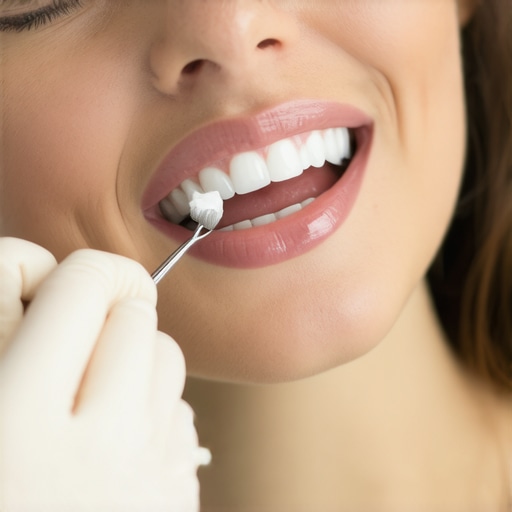
Master the Cleaning Routine That Saves Your Gums
My biggest mistake was thinking more pressure meant cleaner teeth. I actually caused more damage by scrubbing the area raw. You have to learn how to clean the underside of a dental bridge without shredding your floss. I once tried to use a water flosser on the highest setting right against the gap, thinking I could blast the bacteria away. Instead, I gave myself a localized bruise on my palate that lasted a week. Now, I use a specialized proxy brush or a floss threader with a spongy middle section. It is about finesse, not force. If you find you are still seeing redness or swelling, it is worth asking why your gums are receding even though you brush twice a day. It could be that your aggressive hygiene is actually the culprit, or you might be experiencing a localized reaction to the bridge material.
Prevent Future Recession with Bone-Stimulating Implants
If the gap becomes a chronic infection site or the ‘black triangle’ is too large to ignore, it is time to stop patching a sinking ship. A bridge relies on the neighboring teeth, which are now doing double the work. This is where how dental implants reshape your oral health in 2025 becomes a vital part of the conversation. Unlike a bridge, an implant acts like a root, stimulating the bone and preventing that ‘sinking’ look in the first place. When I finally switched my bridge for an implant, the gap disappeared because the new crown was shaped to emerge naturally from the gum line. While it feels different, understanding the truth about all-on-4 implants and how they feel in your mouth can help you decide if a more permanent, bone-supporting solution is better than another ten years of bridge maintenance.
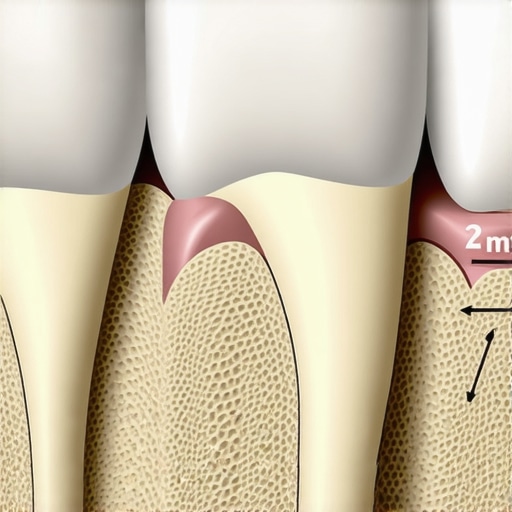
What most people get wrong about cosmetic dentistry is the belief that the material is the most important factor. It’s not. It is the physics of how that material interacts with your living tissue. I used to think my porcelain was the problem, but it was actually the ‘biological width.’ This is a fancy term for the two millimeters of space your body demands between the edge of a crown and the bone. If your bridge or crown invades this space, your body will literally destroy its own bone to get away from the restoration, causing that dreaded gap. A study published in the Journal of Periodontology confirms that violating this space leads to chronic inflammation and unpredictable recession. It is not that you aren’t brushing enough; it is that your restoration is essentially ‘bullying’ your jawbone. This often leads to the mistake that makes your new crowns look like chiclets, where the teeth look like they are just stuck onto the gums rather than growing out of them.
Stop Obsessing Over the Shade and Look at the Shape
The biggest ‘oops’ I see? People focus so hard on getting the ‘brightest white’ that they ignore the texture and the light reflection. If you have ever wondered why your veneers look like white chiclets, it is usually because they lack the microscopic surface characterization of a real tooth. Real teeth are not flat mirrors; they have ridges and valleys that catch the light. When a lab makes them too smooth, they look fake the second you step into the sun. It is a common pitfall in transforming your smile with veneers. You need to ensure the technician mimics the ‘perikymata’—those tiny horizontal growth lines—or the results will look like plastic. This nuance is why why your porcelain veneers dont match your natural teeth even if the color is technically a perfect match.
Why does my dental implant feel like a ‘thud’ while my other teeth feel like a ‘click’?
This is the ultimate nuance of the implant world. Your natural teeth are suspended by the periodontal ligament (PDL), which acts like a tiny shock absorber filled with nerves. Implants are fused directly to the bone via osseointegration. There is no ligament. This is why your dental implant feels different than your natural teeth when you bite. You lose that ‘tactile sense’—the ability to feel exactly how hard you are biting. If you do not account for this, you might end up biting down too hard and chipping the porcelain on the opposite tooth. It is a mechanical reality that requires a slight shift in how you chew. Furthermore, ensure you know how to tell if your veneers were bonded correctly, as a poor bond can lead to micro-leakage that mimics the feeling of a loose implant.
The Secret to Longevity is Respecting the Gum Architecture
Before you commit to your next procedure, ask your dentist about the ’emergence profile.’ If they cannot explain how they plan to shape the porcelain to support your specific gum architecture, you might be heading for another gap-related heartbreak. A bridge should look like it is emerging from the gum, not sitting on top of it like a piece of furniture. When the shape is wrong, the gum tissue has nowhere to go, so it retreats. Have you ever fallen into the ‘too white, too flat’ trap with your dental work? Let me know in the comments—I would love to hear how you handled the adjustment period or if you had to go back for a remake.
Stop Using String Floss Like It’s 1995
I used to think that as long as I was ‘flossing,’ I was doing enough. But when you have advanced cosmetic dentistry, standard waxed string can actually be your worst enemy—it often catches on the margins of crowns or shreds against the underside of a bridge. I personally switched to using GUM Proxabrushes with a specialized coating. I use the ‘ultra-tight’ size specifically for the areas where my veneers vs crowns meet the gum line. These little brushes allow you to mechanically disrupt the biofilm without the ‘sawing’ motion that causes trauma. If you are struggling with a complex bridge, you need to master how to clean the underside of a dental bridge without shredding your floss by using a stiff-ended threader that won’t collapse mid-reach.
Why My Water Flosser Stays on the Lowest Setting
Everyone buys a water flosser and immediately cranks it to ten, thinking more pressure equals more clean. This is a massive mistake. High pressure can actually detach the delicate ‘long junctional epithelium’—the part of your gum that clings to your implant or veneer. I keep mine on level three. The goal is irrigation, not power-washing. I recommend using a ‘Pik Pocket’ tip if you have deep margins; it delivers the water or antimicrobial rinse exactly where the bacteria hide. This is a staple in my personal routine for maintaining family dentistry tips for a lifetime of healthy smiles. According to the Journal of Oral Implantology, the use of specialized plastic-coated interproximal brushes or low-pressure irrigation is significantly more effective at biofilm removal around titanium abutments than standard nylon floss, which can sometimes leave behind microscopic fibers that cause inflammation.
How do I keep this investment from failing five years from now?
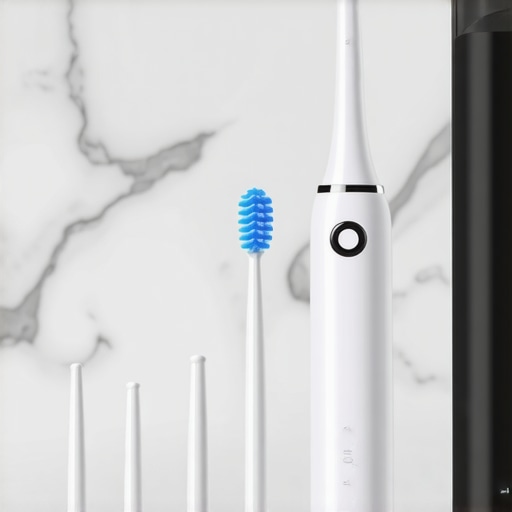
Longevity is about managing forces, not just hygiene. If you are a grinder, a custom-fabricated nightguard is non-negotiable. I have seen more veneers transformations ruined by a single night of stress-grinding than by poor brushing. You need to know 3 secrets to making your porcelain veneers last twenty years, and the biggest one is checking your ‘occlusal’ clearance every six months. As we age, our teeth naturally shift, and a ‘perfect’ bite today can become a ‘destructive’ bite in two years. This is why I also recommend a high-quality electric toothbrush with a pressure sensor. Learning how to pick a toothbrush that wont destroy your enamel is the first line of defense against the recession that eventually exposes the dark edges of your dental work.
Your Smartphone Is the Next Big Thing in Dental Care
I predict that by 2026, we won’t just be going to the dentist for checkups; we will be using AI-driven intraoral cameras at home. We are already seeing the beginning of this with the future of dental implants cutting edge techniques in cosmetic dentistry. Imagine snapping a photo of your gums and having an app alert you to 0.5mm of recession before you can even see it in the mirror. This level of ‘micro-monitoring’ will be standard for anyone with significant dental investments. In the meantime, keep an eye on dental implants 2025 innovations which focus on ‘smart’ abutments that can detect early-stage infection. My best tip for today? Buy a ‘rubber tip stimulator’—it costs five dollars and is the best tool for toughening up the gum tissue around a new crown. Try using it for two minutes while you watch TV tonight; your gums will thank you.
What Nobody Tells You About the Gap Between Your Teeth
After years of navigating the world of cosmetic dentistry, I’ve realized that the ‘perfect’ smile is a moving target. My first lightbulb moment was realizing that gum tissue is living, breathing matter that reacts to everything—from how hard you brush to the stress in your jaw. Secondly, I learned that a ‘food trap’ isn’t just an annoyance; it is a biological alarm bell telling you the fit isn’t quite right. Finally, I discovered that you are the most important member of your dental team. If something feels off, even if it looks fine on an X-ray, you have to speak up. Sometimes the solution is as simple as understanding why your gums are receding in only one corner of your mouth before it spreads across your entire bridge.
Keep Your Bridge Clean Without Destroying Your Tissue
I have curated a toolkit that actually works for someone living with high-end dental work. First, get a pack of interdental brushes with plastic-coated wire; they are far gentler on titanium and porcelain than standard metal ones. Second, I swear by a low-pressure water irrigator—it is about flushing the area, not sandblasting it. Third, I highly recommend checking out 3 secrets to making your porcelain veneers last twenty years, because those same principles of force management apply to your bridges and crowns. Lastly, if you are seeing gaps after orthodontic work, you should look into how to fix the annoying gap that appeared after your braces came off to ensure your bite is stable.
#IMAGE_PLACEHOLDER_E#
Stop Worrying and Start Smiling Again
You have already done the hard part by investing in your health and confidence. Now, it is just about the maintenance and the mindset. Don’t let a tiny gap or a bit of recession steal the joy of your veneers transformation. With the right tools and a proactive approach, you can keep that bridge looking and feeling like a natural part of you for decades. Your smile is worth the extra two minutes of specialized care every night.
Have you ever had a piece of food get stuck in your dental work that made you want to hide in the bathroom? Let me know your funniest or most frustrating food trap story in the comments below!